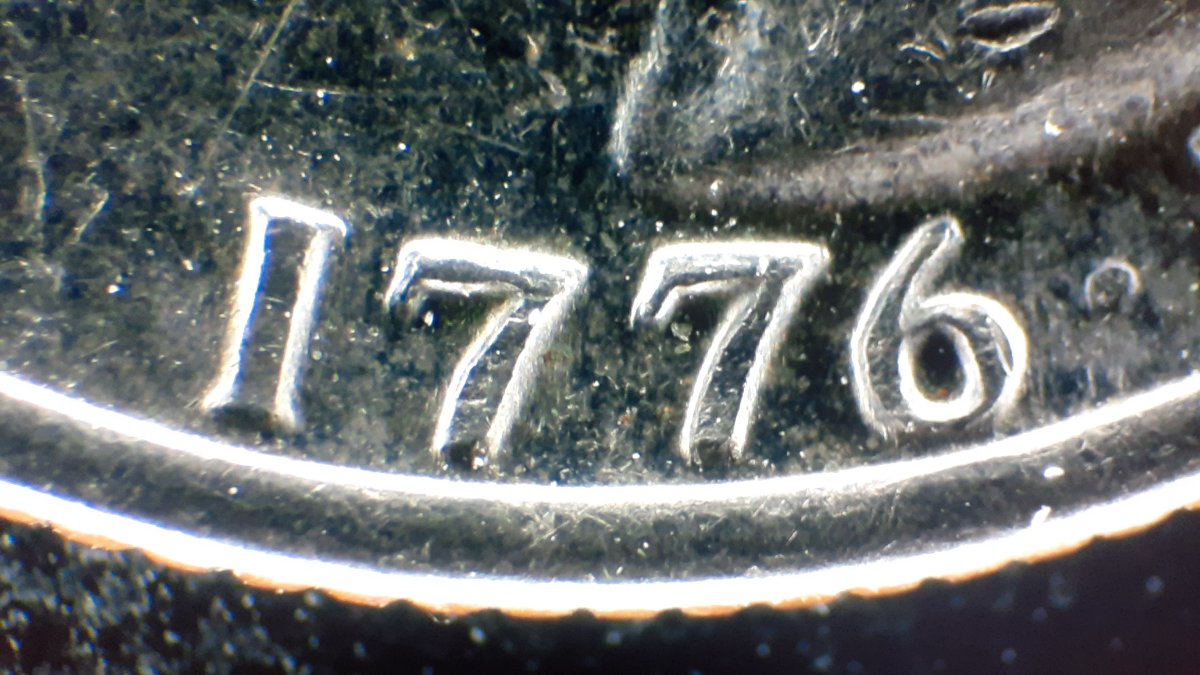
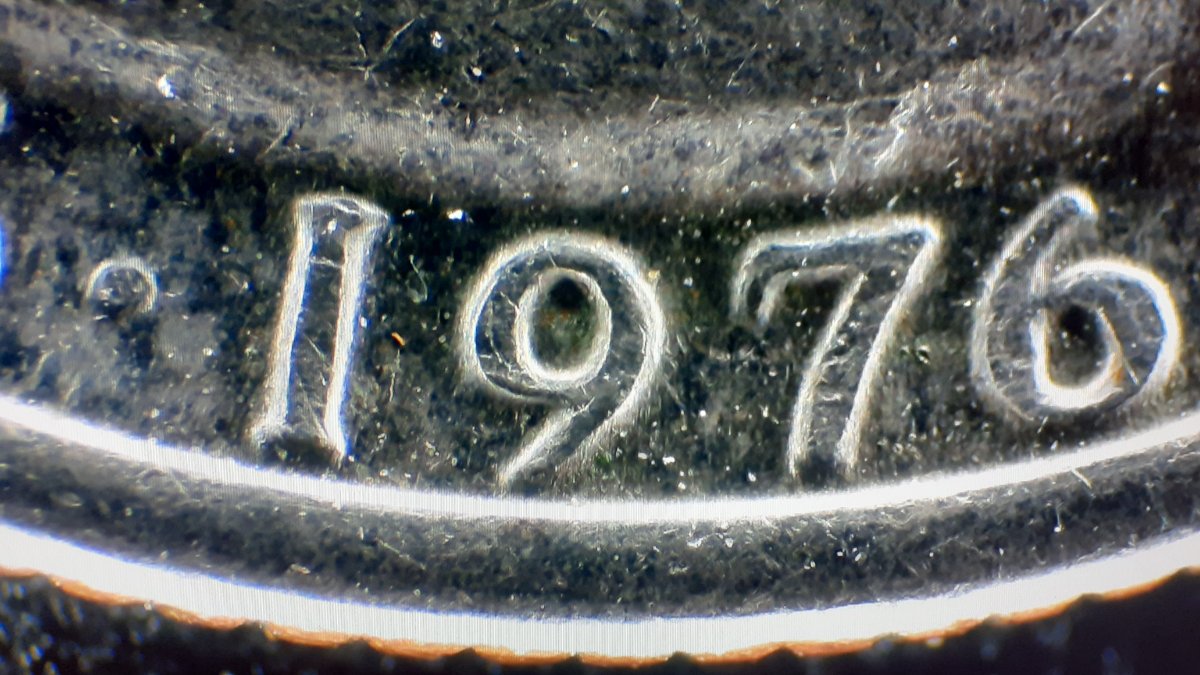
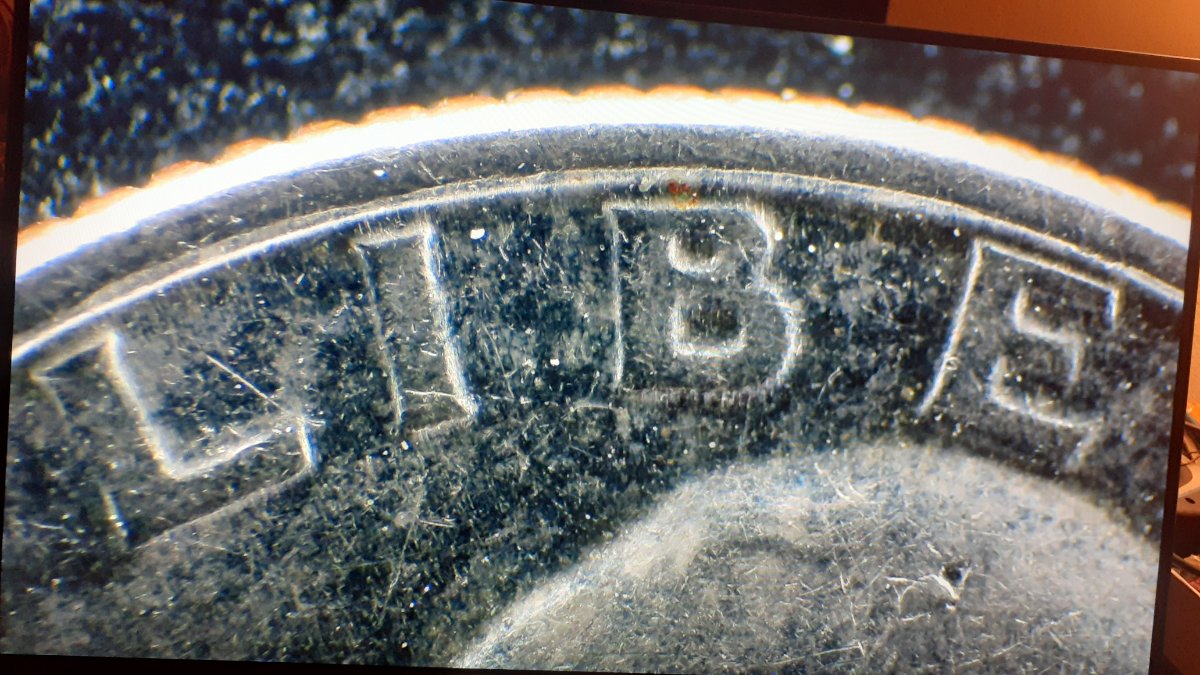
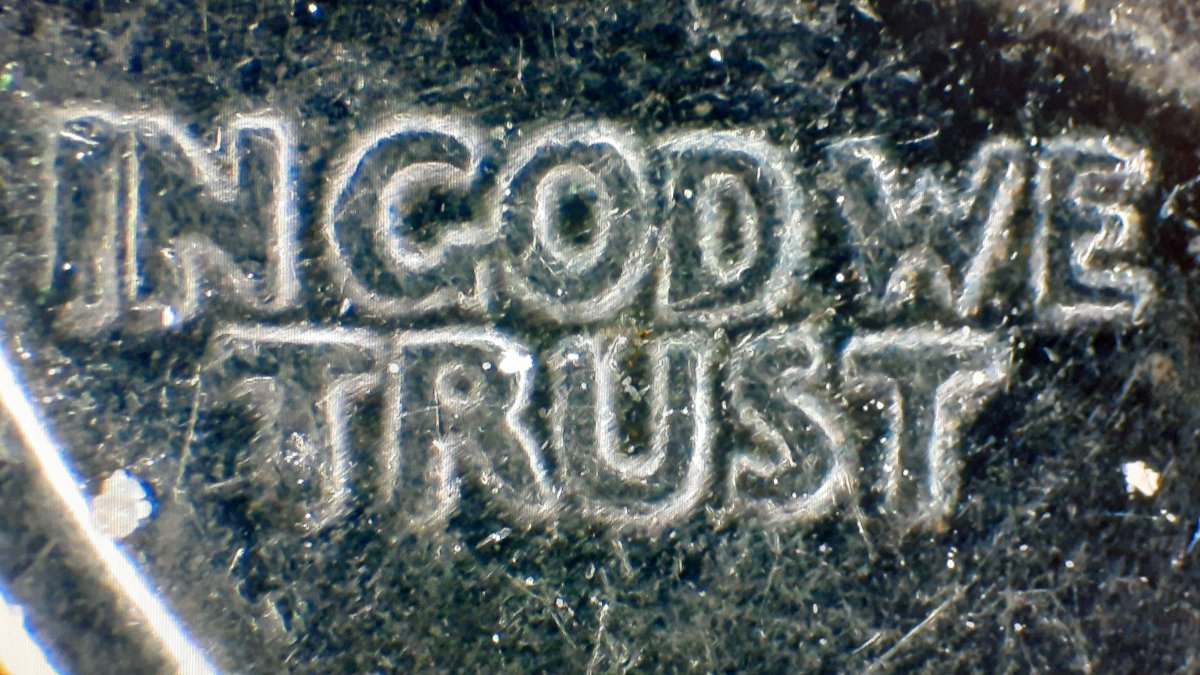
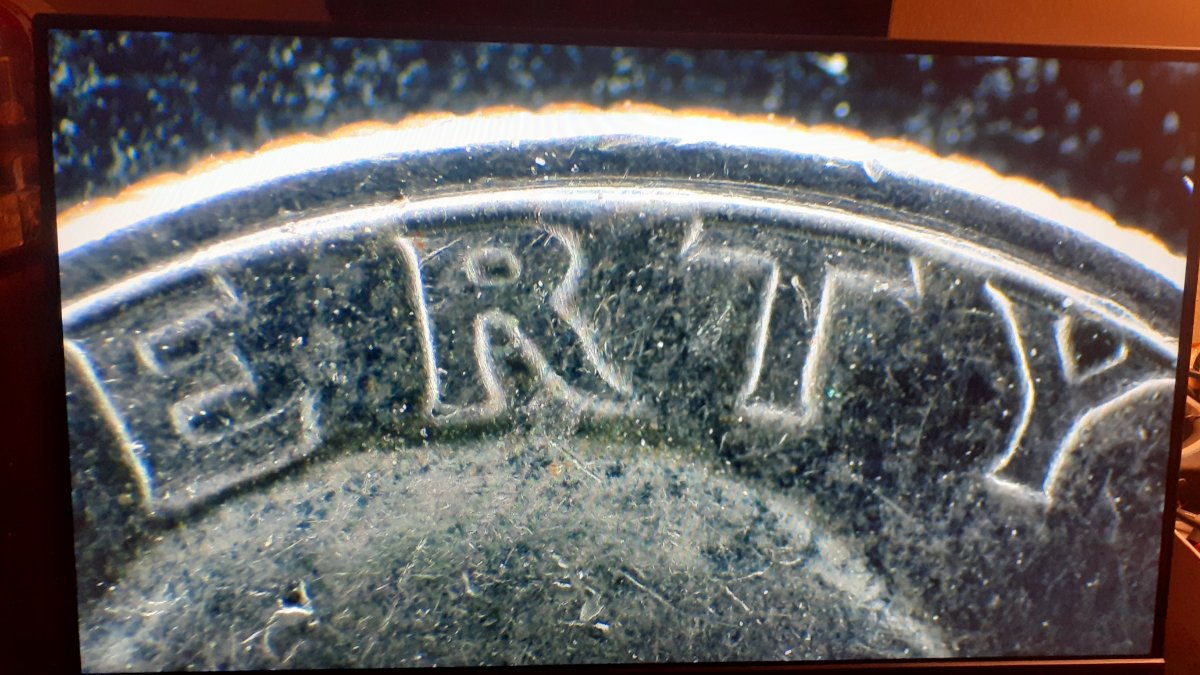
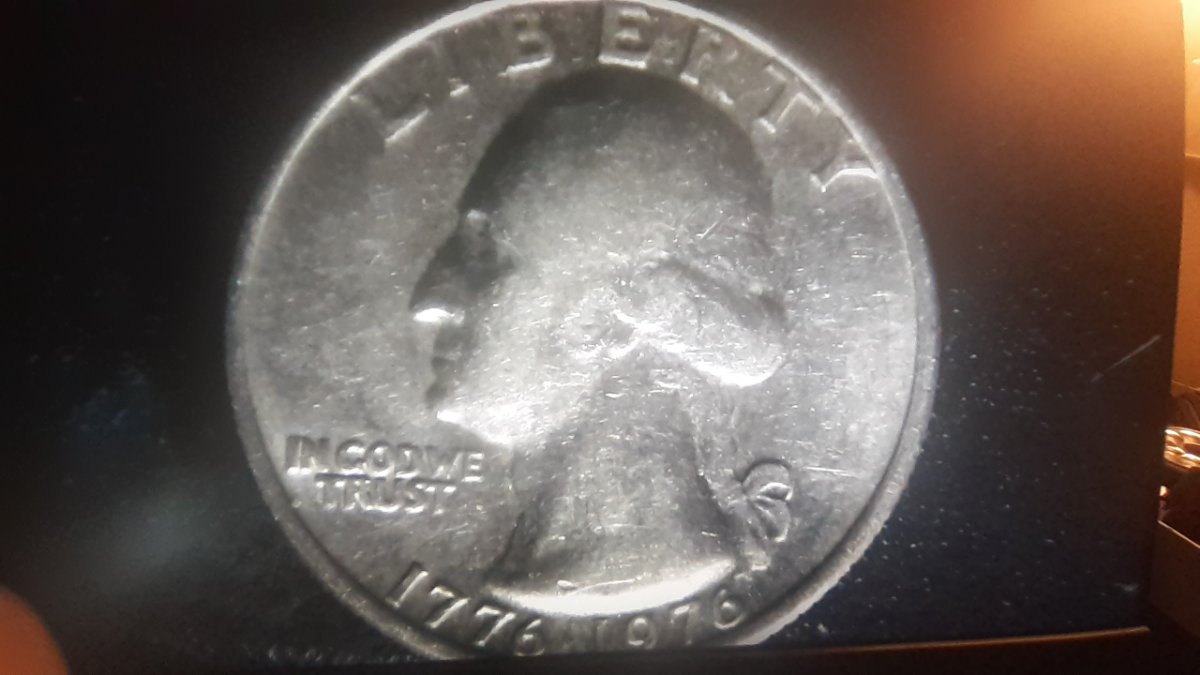
Well the lighting your using is not helping you. The angle is too low. When it is too low, it reflects off the sides of the devices. A light placed at a higher angle, but not as strong as you are using will do more just to your images. On your last image, I can tell you are using two lights. One at the right angle to (Light to the right) illuminate the coin. But the second source at 6:00 is too low making the sides of the devices reflect. On close up micro images, you only need a single light source.
Why is that better? Light and shadows show detail on the devices. Too much light will cause glare. The glare turns that area white in your images. Light and shadows show contour of the devices. A light too low, just makes reflection. Allow the light and shadows to flow across the coin creating shadows that help show definition.
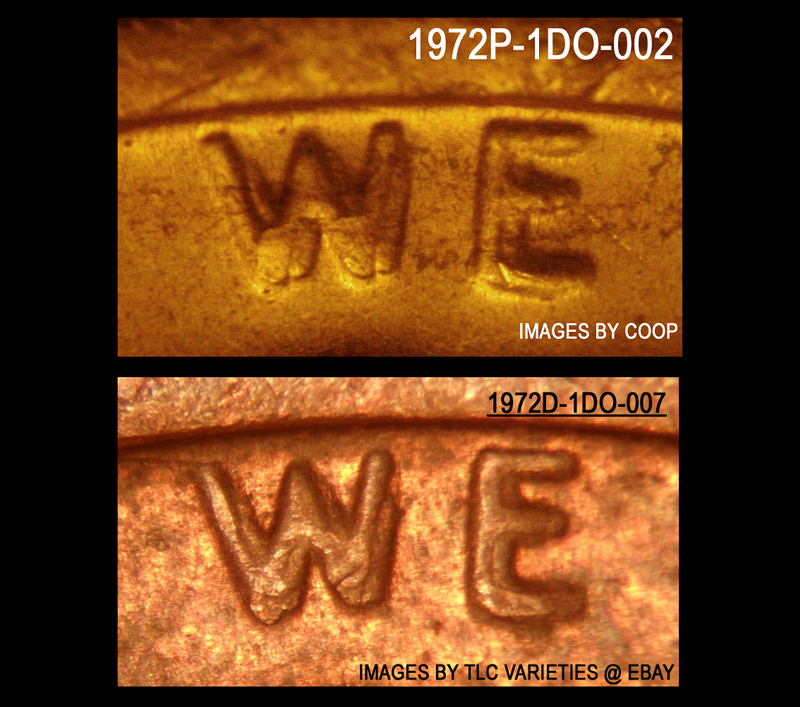
See how the light that is on the left side of the image, falls over the areas showing the spread with a shadow of light and darkness? If the light was on the right, then the areas of spread would not show the contour as well. So rather than spotlighting what you are trying to show, allow the single light to fall across the area you want to show. (The spread of the devices from the hub doubling)
From your devices I see a lot of glare. That is because of the light that is reflecting off a flat surface.
Flat surface? The
Machine Doubling removes the contour of the devices and reflects off the flattened area. I use inverted to show a side by side of how the glare hides the
Machine Doubling:
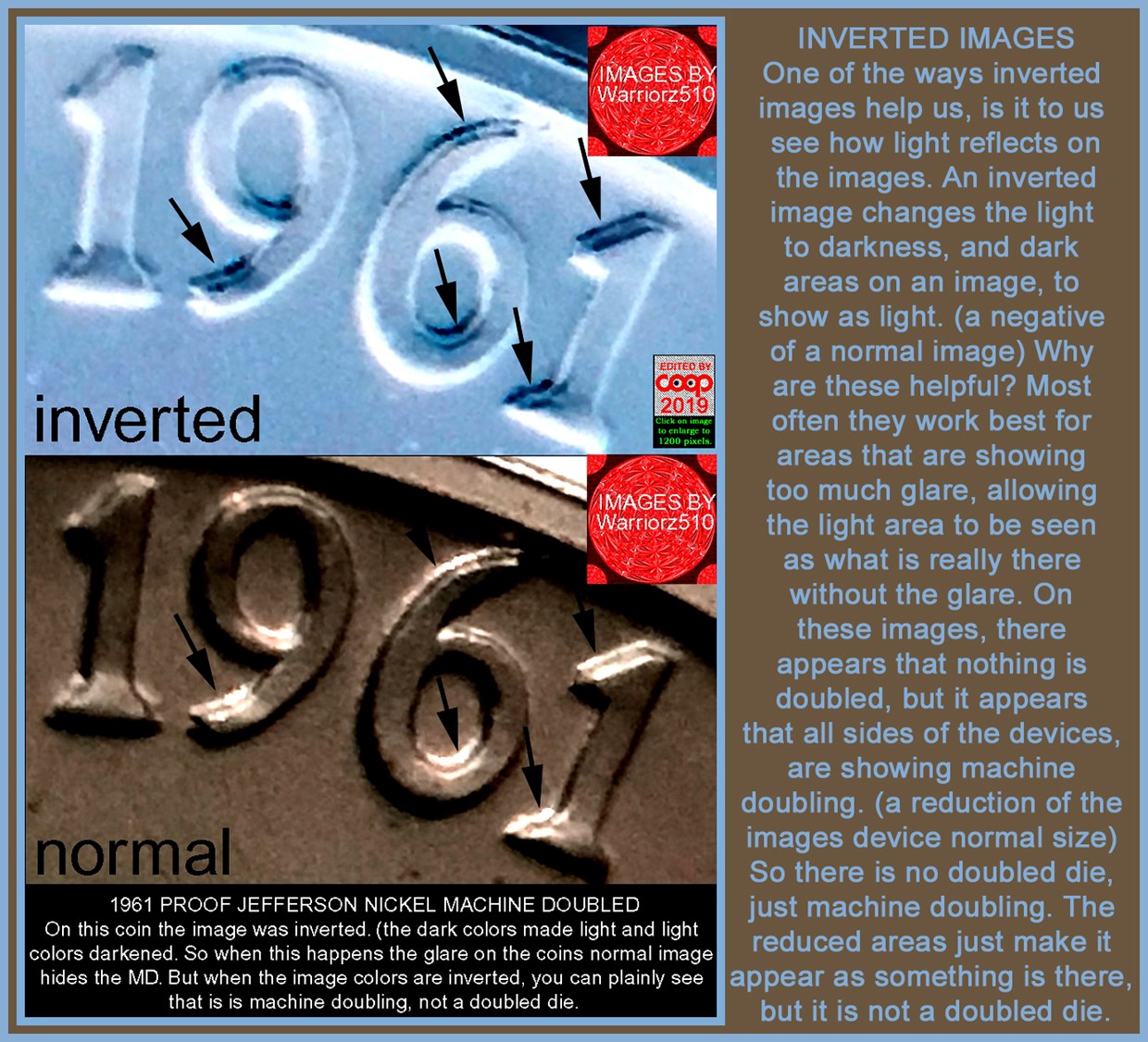
Note how the lower image does not show the MD. The coin searcher see it, but the glare from the flatten area hides it in a reflection. Note on the image on top. Inverting the colors, makes the MD show. The lower image had glare that hides this.
Machine Doubling is not hub doubling, but damage to the devices after the strike. Kind of a kick in the shins on the fresh struck devices. Hope this helps. But is not, ask more questions. That is the best way to learn.









 Posted 07/15/2020 05:10 am





