PCGS - The 1883 No "CENTS"
Liberty nickel is one of the most fabled
United States coins of the late 19th century. It came along in February 1883 to replace the
Shield nickel, which debuted in 1866 as the first circulating United States five-cent denomination with a 75% copper, 25% nickel composition. The Liberty Head Nickel retained the metallic composition of its predecessor but was slightly larger in diameter - 21.2 millimeters versus 20.5 millimeters for the
Shield nickel.
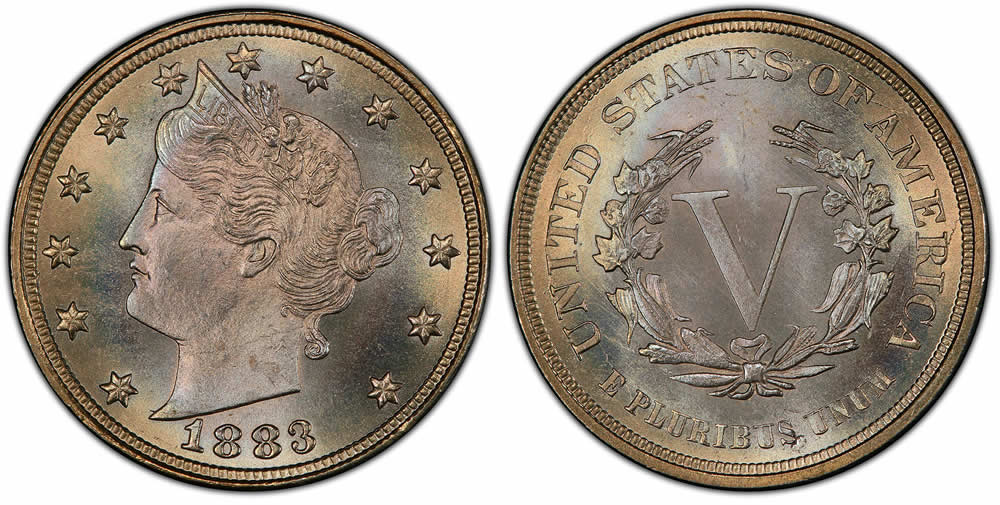
Liberty nickel, 1883 5C No CENTS, PCGS MS67+The new type, designed by Chief Engraver
Charles E. Barber, incorporates a left-facing bust of Miss Liberty on the obverse, while the reverse initially hit the streets with a simple "V" encircled within a wreath to imply the coin's five-cent denomination. The ultimate design for the 1883
Liberty nickel arose following a series of pattern coinage by Barber, who in the early 1880s was tasked by Mint Director A. Loudon Snowden to execute various patterns for a new five-cent coin.
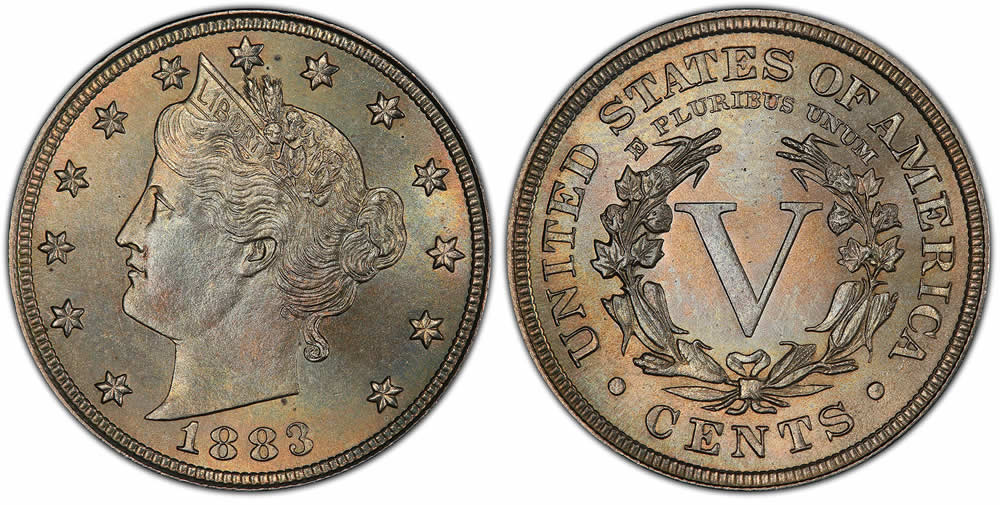
Liberty nickel, 1883 5C With CENTS, PCGS MS67+In many of Barber's patterns for a new five-cent coin, he expressed the coin's face value with a Roman numeral "V," indicating the number "five." While the Congress failed to move on approving any of these designs, Treasury Secretary Charles Folger was adamant about revamping the aging
Shield nickel design and wanted one of Barber's fresh concepts to appear on the five-cent coin.
Folger opted for a design incorporating the bust of Miss Liberty surrounded on the obverse by stars, paired with a reverse anchored by the Roman numeral "V" encircled within a wreath and the motto "E PLURIBUS UNUM," sans the word "CENTS." This design was tested on some 1882-dated patterns that were distributed to Folger and various other officials.
Read the Entire Article 





 Posted 08/18/2020 7:27 pm





