Quote:
If all errors are technically Damaged anyway. Then why would a bullion coin be any different?
Errors technically could be considered to be damage, but it is damage that occurs during striking as part of the minting process, not damage that occured afterward. The Mint tries to weed out the errors that occur during striking which makes them rarer and hence more valuable to the error collector.
But the error collector is a lot like a type collector, he doesn't need every one of them, he just wants a representative example. So if he wants a strike through error, and nice example on a
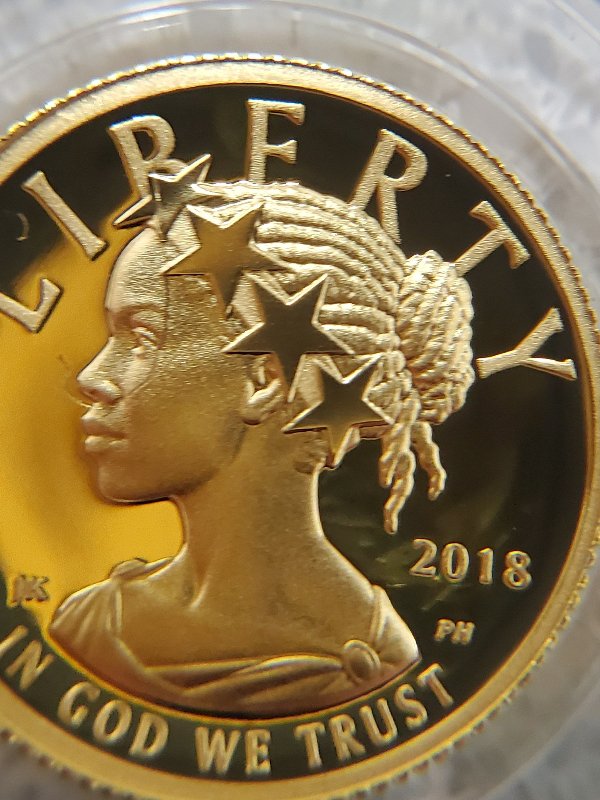
Wheat cent for $2 works just as well for him as one on a proof 1/10 gold coin that would cost over $200 just for the bullion content. So he has no interest in the gold coin. And this holds true for key and semi-key date coins as well. Why pay a high amountfor a key or semi key when a nice example can be had on a common coin for much less?
Now lets look at it from the viewpoint of an non-error collector. They are looking for a nice eye appealing example of a particular coin. So in general they are wanting as problem-free an example as possible. To them the strikethrough is a "problem". It is NOT going to entice them to pay more, especially on a key, semi-key, or proof coin. Why pay more when for less money they can get a problem free one? So if they are willing to but the strikethrough piece it will have to be at a DISCOUNT, and probably a pretty hefty one.
The only person who really wants an error on a key or bullion coin is the rare collector who is assembling a full set of a series with EVERY coin in the set having a error. Such people exist, but they are few and far between. And even with them, it would be hard to get them to pay a premium. Why should they? the error collectors don't want it, the regular collectors don't want it, if you don't sell it to me who are you going to sell it to? That put the collector at a negotiating advantage. You can ether sell it to them at their price, or you can just keep it and probably won't be able to sell it elsewhere except at an even steeper discount.
Errors on key, semi-key, and bullion coins are typically "white elephants". Interesting to see, but you don't want to have one yourself because there is nothing you can do with it.*
The pejorative "White Elephant" comes from India. White elephants do exist and were considered to be sacred and when found were automatically the property of the Rajah. If someone was a potential political threat to the Rajah he would gift them with a white elephant. Being a gift from the Rajh it couldn't be refused, but being sacred it had to be fed, housed, pampered etc. and this cost a lot of money. But also being sacred the elephant could not be used for any work that would help provide for its upkeep. The cost would often ruin the rival. If they were rich enough to handle the strain, they would be given another one.









 Posted 08/17/2020 11:11 am


 to CCF, we need