Coin Community Family of Web Sites
Royal Canadian Mint products, Canadian, Polish, American, and world coins and banknotes. Coin, Banknote and Medal Collectors's Online Mall 300,000 items to help build your collection! Vancouvers #1 Coin and Paper Money Dealer Specializing in Modern Numismatics Shop CCF Members on eBay! Shop for APMEX Bullion on eBay!


Username:
Password:
Save Password
Forgot your Password?


This page may contain links that result in small commissions to keep this free site up and running.

Welcome Guest! Registering and/or logging in will remove the anchor (bottom) ads. It's Free!

Learn Grading: PCGS - What Do RD, RB & BN Grading Designations Mean On Copper Coins?

To participate in the forum you must log in or register.
Author Previous TopicReplies: 0 / Views: 1,779Next Topic  
Press Manager
Learn More...
CCFPress's Avatar
United States
1420 Posts
 Posted 09/28/2020  5:17 pm Show Profile   Bookmark this topic Add CCFPress to your friends list Get a Link to this Message Number of Subscribers
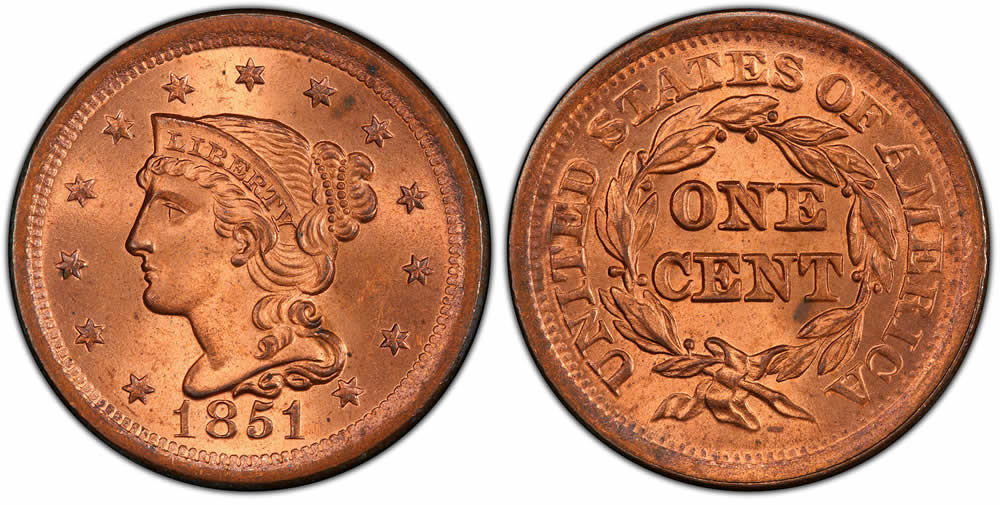
PCGS - You may have seen a variety of letter pairings attached to the grades of some copper coins and wondered what those acronyms mean. These two-letter abbreviations include "RD," "RB," and "BN" and are grading designations that tell something about the surface color of the copper coin to which the grade corresponds. But what do those letters mean, and why are they important to coin collectors?

Learn-Grading:-PCGS---What-Do-RD,-RB-&-BN-Grading-Designations-Mean-On-Copper-Coins?

Everything is Science
For decades, coin collectors have pursued copper coins not just on the basis of their numerical or adjectival grade, but also the color of the surface. Copper, after all, is a moderately reactive metal. It begins oxidizing the moment it hits air. When copper coin planchets are new, they have an orangish to orange-reddish hue - one that may appear very bright or warmer in color, depending on the quality of the copper and its composition.

This scientific phenomenon certainly isn't unique to coin planchets. Why, even the copper-skinned Statue of Liberty - the seafoam green monument standing proud in New York Harbor - once appeared dull brown, similar to an aging Lincoln Cent. Of course, when the Statue of Liberty was erected in 1886, color photography as we know it today didn't exist, so there are no photos that distinctly show the statue in color during its early years.

But over the course of the 30 years following her completion, the 305-foot-tall monument changed color - no surprise, given the assault of salty sea water, air pollution, wind-driven particulates, and seasonal temperature changes. So, let's pivot this information back to coins.

Read the Entire Article

Read More: Learn Grading Series
  Previous TopicReplies: 0 / Views: 1,779Next Topic  

To participate in the forum you must log in or register.


Disclaimer: While a tremendous amount of effort goes into ensuring the accuracy of the information contained in this site, Coin Community assumes no liability for errors. Copyright 2005 - 2026 Coin Community Family- all rights reserved worldwide. Use of any images or content on this website without prior written permission of Coin Community or the original lender is strictly prohibited.
Contact Us  |  Advertise Here  |  Privacy Policy / Terms of Use

Coin Community Forum © 2005 - 2026 Coin Community Forums
It took 0.16 seconds to rattle this change. Forums