| Author |
 Replies: 10 / Views: 1,643 Replies: 10 / Views: 1,643 |
|
|
Pillar of the Community
United States
3546 Posts |
If anyone knows the name, country, denomination and time period of this coin please speak up. Since I am doing this for a computer illiterate person they wanted to know a resource that I could use for them to look up a price on it... 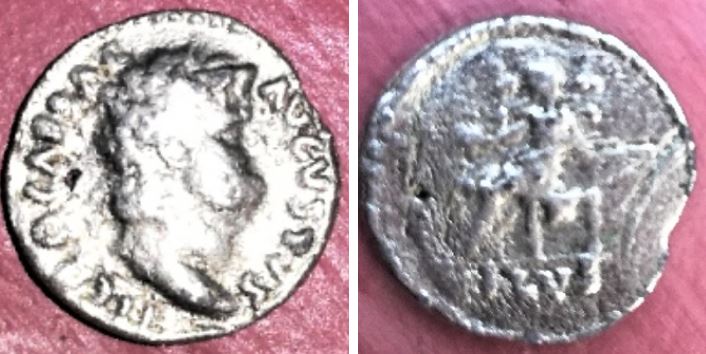 |
|
|
|
Pillar of the Community
United States
7066 Posts |
Nero denarius, Salus reverse. Could be a cast. I'm sure others will offer opinions.
|
|
Moderator
 United States
34538 Posts |
I agree that the details look very soft. @mdp, any chance of your buddy giving you a pic of the edge of this coin to post here?
"If you climb a good tree, you get a push."
-----Ghanaian proverb
"The danger we all now face is distinguishing between what is authentic and what is performed."
-----King Adz
|
|
Pillar of the Community
 United States
3546 Posts |
I am now dealing remotely with someone who owns an iPhone creating blurred pictures with excessive glare & not knowing how to use a computer.
It might be a long stretch but I'll continue to give it the ol schoolboy try.
|
|
Moderator
United States
23731 Posts |
|
|
Pillar of the Community
United States
3546 Posts |
Quote:
...a pic of the edge of this coin Here it is: 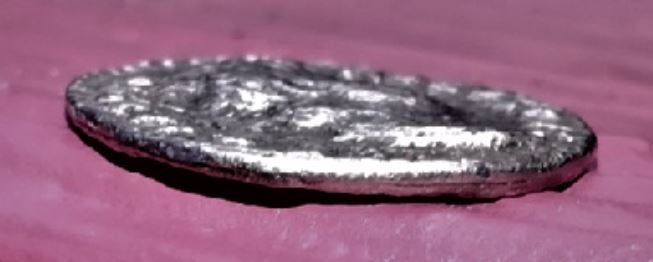 And the verdict is? |
|
Pillar of the Community
United States
7066 Posts |
There does appear to be a casting seam - although it could be a reflection. Hard to tell.
|
|
Pillar of the Community
United States
1122 Posts |
Quote:
There does appear to be a casting seam  |
|
Pillar of the Community
United States
3546 Posts |
I have always heard that a seam indicates casting. However being that the process of casting seems to be such a simple method, why could not have the mint back in the ancient days been using casting as the official type of process for their coins?
Has there ever been a case for that and is there a possibility of that for this coin?
|
|
Pillar of the Community
United States
7066 Posts |
It's an interesting question. There were a number of groups in ancient India that, it seems, produced both struck and cast coinage - although, as in the case of Yaudheyas, there has been some debate about whether the cast coins (and abundant molds that have been found) were, indeed, official. And, of course, cast cash was common in ancient China.
|
|
Pillar of the Community
United States
7066 Posts |
Quote:
is there a possibility of that for this coin? I tend to doubt it. However, cast fakes existed in antiquity too. Lots of ancient forgers' molds have been found are they are considered collectible. |
| |
Replies: 10 / Views: 1,643 |
|










 Posted 09/14/2020 8:47 pm


