PCGS - Coins are history you can hold in your hand; the knowledge of that history is up to the individual to learn and explore. One tiny coin weighing less than a gram (0.77g) has a large history to tell. The coin bears an Arabic inscription stating "Baghdad" (where the coin was minted) and shows a partial date, 033 for AH1033 or 1623 CE. What makes this coin special is the time and context it was struck in.
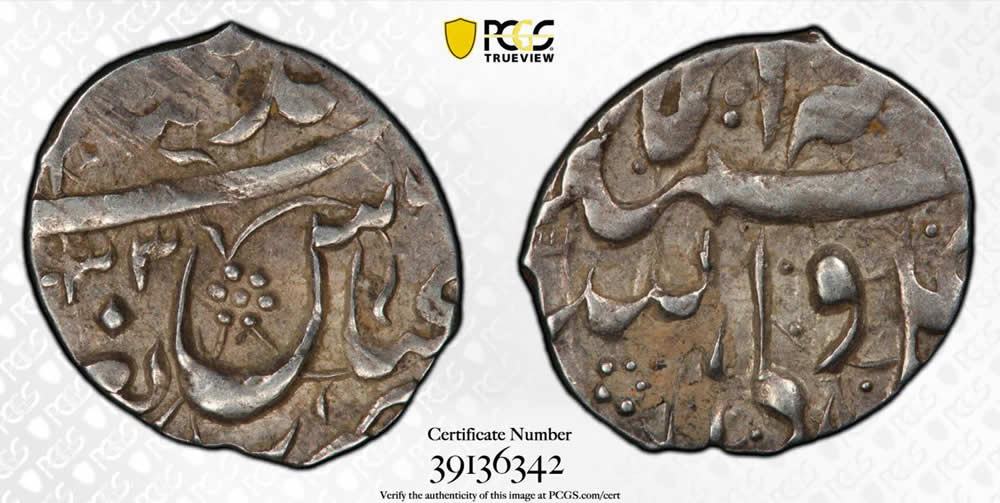
Iraq AH1033 (1623) Bisti Baghdad Mint - PCGS AU53It was made during the reign of Abbas I, also known as Abbas the Great - who was ruler of what is today Iran - during the Safavid dynasty, which lasted from 1501-1736 CE and at its height controlled what is modern day Iran, Azerbaijan, Bahrain, Armenia, Georgia, Iraq, Kuwait, as well as parts of modern-day Turkey, Syria, Pakistan, Turkmenistan, and Uzbekistan. The Safavid rule was the first native ruling dynasty since the Sasanian Empire, which ended in 651 CE. Abbas I, the fifth Safavid Shah or King, would be considered one of the great Persian rulers by his conquest and quelling of rebellions.
One of the archrivals of the Safavids was the Ottoman Empire. Abbas I had gone to war with the Ottoman Empire beginning in 1603 CE and eventually won in 1612 CE with the victory regaining the territories the Kingdom had lost at the Treaty of Constantinople in 1590 CE. War with the Ottoman Empire again was waged in 1615 CE and ended in 1618 CE with minor victories that reestablished borderlines. Abbas, not satisfied with his victories and seeing weakness with the newly accessioned Ottoman Sultan Murad IV, decided it was time to take back Mesopotamia (modern Iraq), which his grandfather had lost to the Ottomans during the Ottoman-Safavid wars of (1532-1555).
Read the Entire Article 









 Posted 10/31/2020 10:53 am


