| Author |
 Replies: 7 / Views: 1,147 Replies: 7 / Views: 1,147 |
|
|
Pillar of the Community
Australia
1623 Posts |
Hi all, Numista lists the 1942 date as having a dark and light iron but am having trouble trying to pin down what this means. I found one CC thread where it was mentioned that only 8 specimens of dark iron are known and another poster mentioned a coating. If this is true then I suspect I have a light iron specimen but am still somewhat mystified by what these 2 terms actually mean. Is it an iron alloy? If a coating, then of what?  Cheers to anyone who can satisfy this cats curiosity. |
|
|
|
Bedrock of the Community
United States
12477 Posts |
I don't have anything to add except there is one currently listed on ebay as "light iron": 392866429327Maybe that seller could answer your question?  In Memory of Crazyb0 12-26-1951 to 7-27-2020
In Memory of Tootallious 3-31-1964 to 4-15-2020
In Memory of T-BOP 10-12-1949 to 1-19-2024
Edited by spru
12/08/2020 04:46 am
|
|
Pillar of the Community
Australia
9839 Posts |
Maybe it's similar to what I have in the 1 Ore coins. This 1942 Looks light. 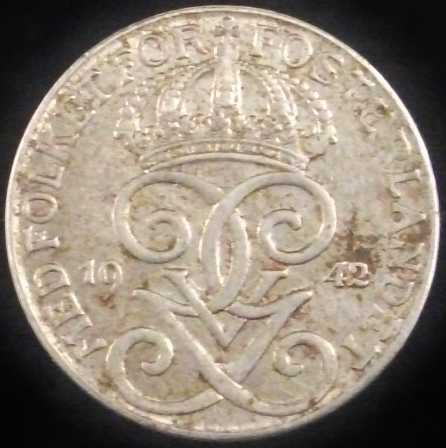 but this 1943 coin from the same series looks dark. 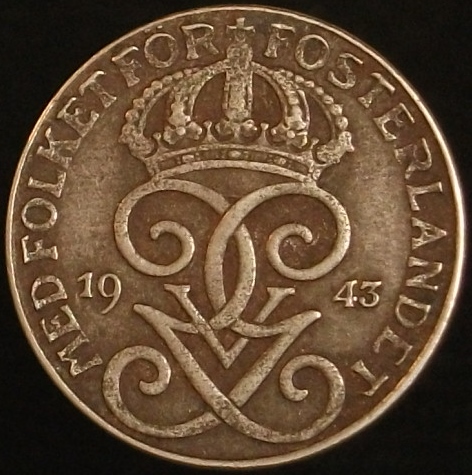 I have emailed X2an, who is Swedish member of this forum, so hopefully he might be able to enlighten us. Steve :) |
|
Pillar of the Community
 Sweden
2124 Posts |
During and for some time after the world wars, Swedish 1, 2 and 5 öre coins were made of iron instead of the regular bronze. Until 1942 the iron was light, then changed to dark (through tempering), due to complaints that the light coins could be mistaken for silver coins. So for 1942 there exists both light and dark iron coins. For 5 öre, the dark variety is slightly more unusual than the light, so prices are about twice those for light iron coins. The 1942 1 öre coin is extremely rare in its dark variety. There are a lot of forged dark iron coins, since it is quite easy to make light iron look dark, so caution is required. This page from a Swedish online auction site shows the two varieties side by side: https://www.tradera.com/item/220123...ew-item-main |
|
Bedrock of the Community
Australia
21792 Posts |
Swedish iron is a low sulfur iron ore and arguably the best ore stock in the World for steel making.
Come the war years. The Nazis stole all of the Swedish iron ore production for the manufacture of high grade steels for their armaments industry. Certainly, British steel armor was slightly inferior to the German. The low sulfur in the Swedish ore is the reason for this. It shows up in the technical reports of the performance of British Vs German armor in tank battles and battleship actions.
As far as coin manufacture is concerned, is is quite acceptable to make iron coins out of any junk scrap steel that comes to hand - especially during wartime. If a comparative XRF test is done on the coins pictured, it may well turn out that a different mixture of trace elements rather than iron, would lead to different tarnished appearance that is seen here.
It is also cannot be ignored that the possibility that these coins may have been in quite different environments, thus giving rise to the different colors as pictured.
One or both reasons may be possible in this case.
|
|
Pillar of the Community
Canada
5293 Posts |
The iron coins from WWI are listed in Krause as a different number than the WWII ones, and is often the case, no explanation of the difference is given, even though the design appears to be the same. I recall that the WWI ones were of light iron, which was evidently why they were given a different number.
I think that the best explanation needs to come from Sweden.
|
|
Pillar of the Community
Sweden
1078 Posts |
I think erafjel hit the nail on the head - 1942 (and WWI issues) are the only year light iron was used. Looking quickly in my "stock", out of 73 iron 5 Öre pieces, 3 are 1942 light iron and 2 1942 dark iron. Seeing the difference can be quite tricky however. One particular observation of mine however is that of all the pretty iron 1 öre pieces I have, they're all 1942 light iron
As to why Krause gives WWI and WWII iron pieces different numbers I have yet to understand. I can't tell of any difference between these when light iron 1942 belongs to the other. Additionally, Krause inexplicably splits the 5 Öre 1976-1984 and 5 Kronor 1976-2009 into two types aswell when there is no material difference between these
|
|
Pillar of the Community
 Australia
1623 Posts |
Thanks for all the responses. Must admit, still no closer to understanding what the difference is.  If it was owing to tempering then I can see why it would be easy to counterfeit. Does tempering cause reduction in surface oxidation? x2an - Am I correct in that you are comparing pre-and post- 1942 coins? Thanks  |
| |
Replies: 7 / Views: 1,147 |
|










 Posted 12/08/2020 05:00 am


