Theobald was the eldest son of Frederick (Ferri) III, Duke of Lorraine from 1251-1303. Lorraine was a fief of the Holy Roman Empire until 1766 (the reason NGC lists it as a German State, rather than Feudal France, where it often shows up in French catalogs)
But Frederick was also Lord of Neufchateau, a town lying in the County of Champagne, which was a fief of the King of France. Frederick passed this title to his son on the occasion of Theobald's wedding in 1281, and he held it until 1303.
According to deSaulcy (
Rechereches sur les Monnaies des Ducs Hereditaires de Lorraine), Theobald was granted the right to coin as Lord of Neufchateau by Philip IV of France in 1300, which would give this coin a very narrow date range of 1300-1303. But I see the date range for this coin listed by dealers in France variously as 1281-1303 (the full date range for Theobald's holding the title) or 1291-1303.
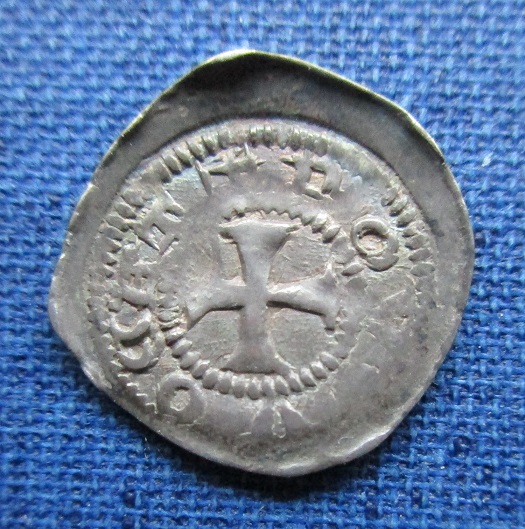
Theobald decided to distinguish the Neufchateau coinage from the Lorraine ducal coinage of his father, by using a cross on the reverse of the Neufchateau coins with the Latin name of the town (some version of NOVOCASTR), whereas the ducal coinage of Lorraine usually showed an unsheathed sword reverse at this point in time.
Not a rare coin (examples are available on both
ebay and MA-shops), but I managed to pick up this nicely struck example for a very good price from a U.S. dealer on
ebay recently:
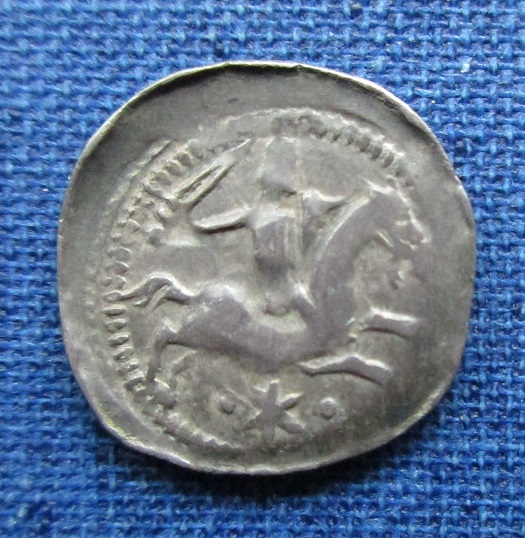
Obv: Duke on horseback, star with dots on either side below.
Rev: Short cross inside beaded circle,+ NOVOVOCAT.
Ref: Flon p.305, Bd.1454, deSaulcy III,12 var. there are many variants of the reverse spelling, and this specific spelling is depicted in deSaulcy XXXVI,17 a plate which shows coins from the hoard of Ancerville.







 Posted 12/10/2020 1:36 pm





