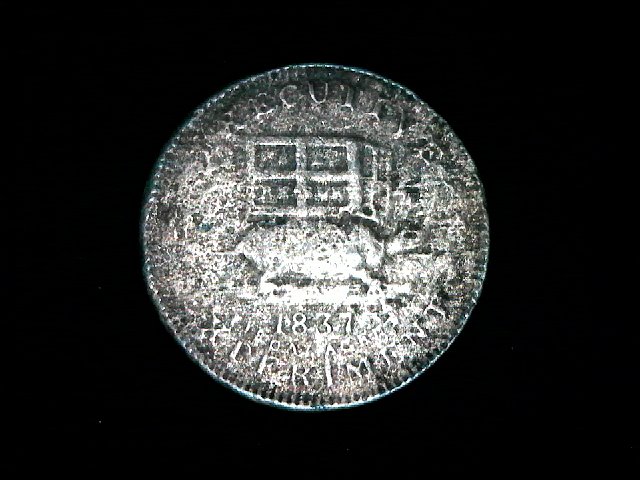
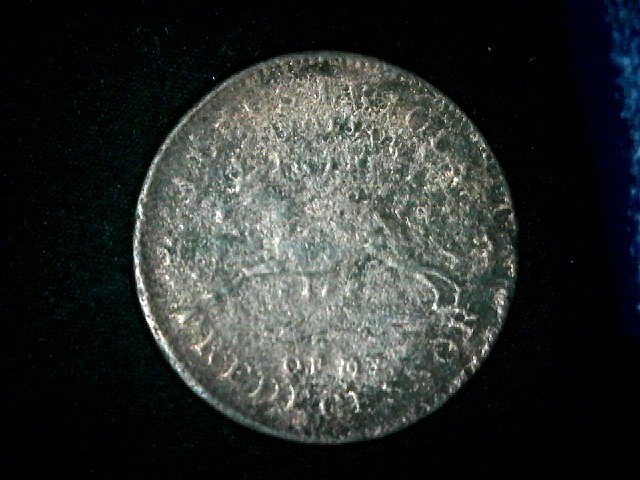
You are looking at a Great 1837 Hard Times Token-Cent Executive Experiment - Illustrious Predecessor
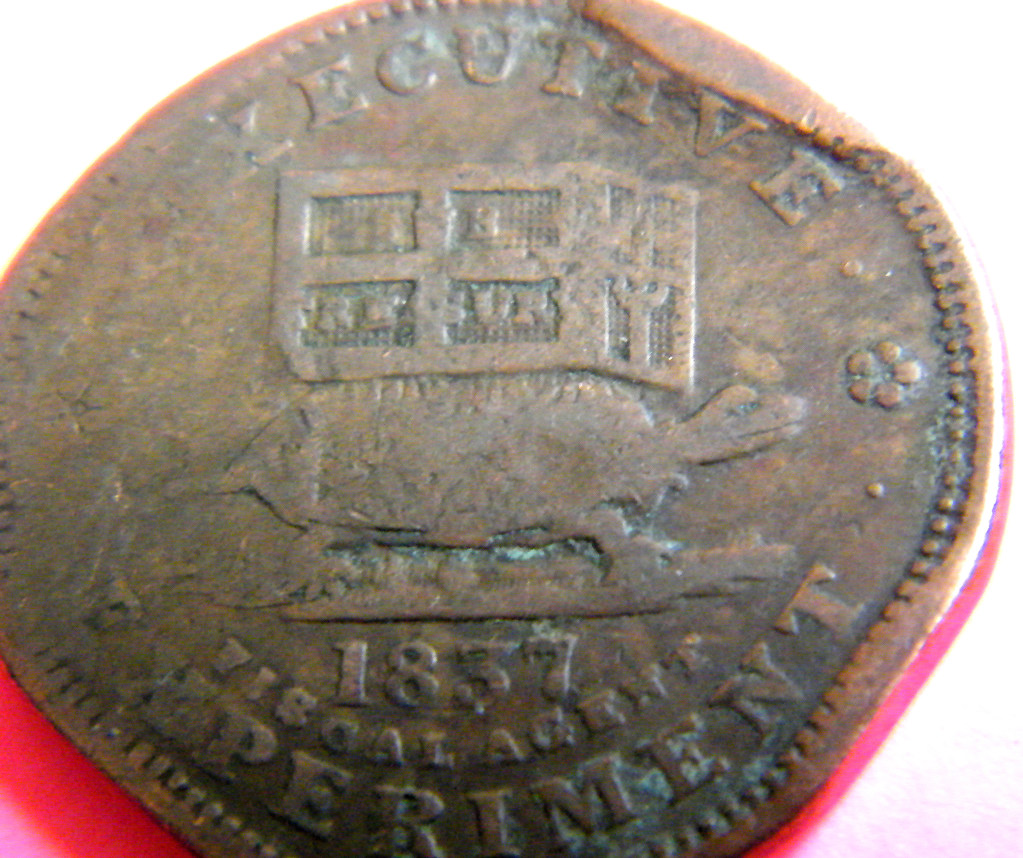
Obverse: Turtle - "Executive Experiment", "SB Treasury", "Fiscal Agent" - 1837
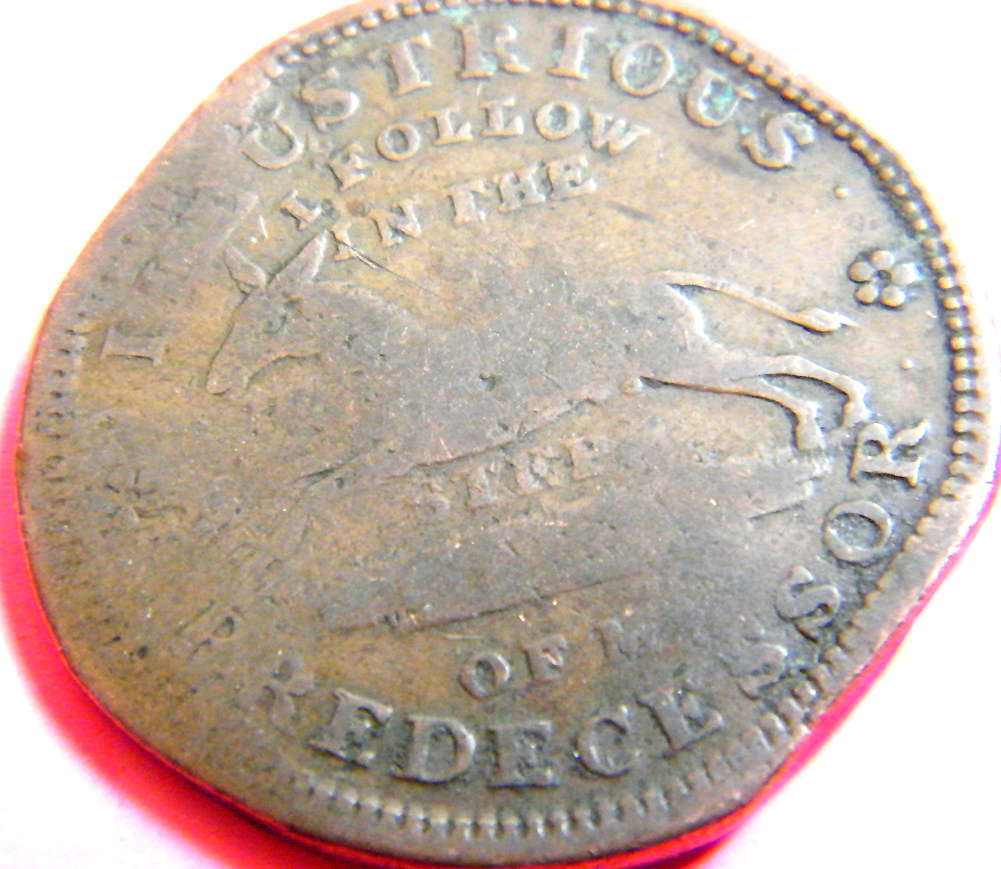
Reverse: Donkey - "I follow in the steps of my illustrious predecessor"
Where is the quote on the reverse coming from?
The period between 1832-1844 was a turning point in the history of the United States and centered around the controversy over whether public funds should be kept in a privately controlled institution. President Andrew Jackson began the controversy by vetoing a bill in 1832 to continue the existence of the private Bank of the United States past its charter expiration in 1836. An economic depression began in 1837 when even state banks proved to be unworthy places to keep the country's funds. A whole category of collecting centers around the "Broken Bank Notes" of this period.
Emotions ran high and as the economy worsened, the population hoarded gold and silver. Small transactions became difficult. The government hadn't the capacity to supply copper coins to substitute for the hoarded money. Hundreds of large cent size tokens began to appear to take the place of small silver coins. These tokens had advertising messages or political statements as their themes.
Your Hard Times token, know as "

running" is one of the first instances of the symbol of the "Democratic party" of Andrew Jackson. The issuer is critical of the policy of eliminating the Bank of the United States (I FOLLOW THE ILLUSTRIOUS STEPS OF MY PREDECESSOR). The obverse legend says: 1837 EXECUTIVE EXPERIMENT, and above FISCAL AGENT referring to the tortoise. On the tortoise's back is a treasure chest, representing the funds of the United States and on the chest is SB TREASURY, which refers to the independent "sub-treasury" system that the government established.
I guess the tortoise represented what the critics thought the government would make out of the economy, slow. The critics were nostalgic for the high flying boom that was fueled before 1832 by worthless paper money and overextended credit.









 Posted 12/23/2020 5:25 pm