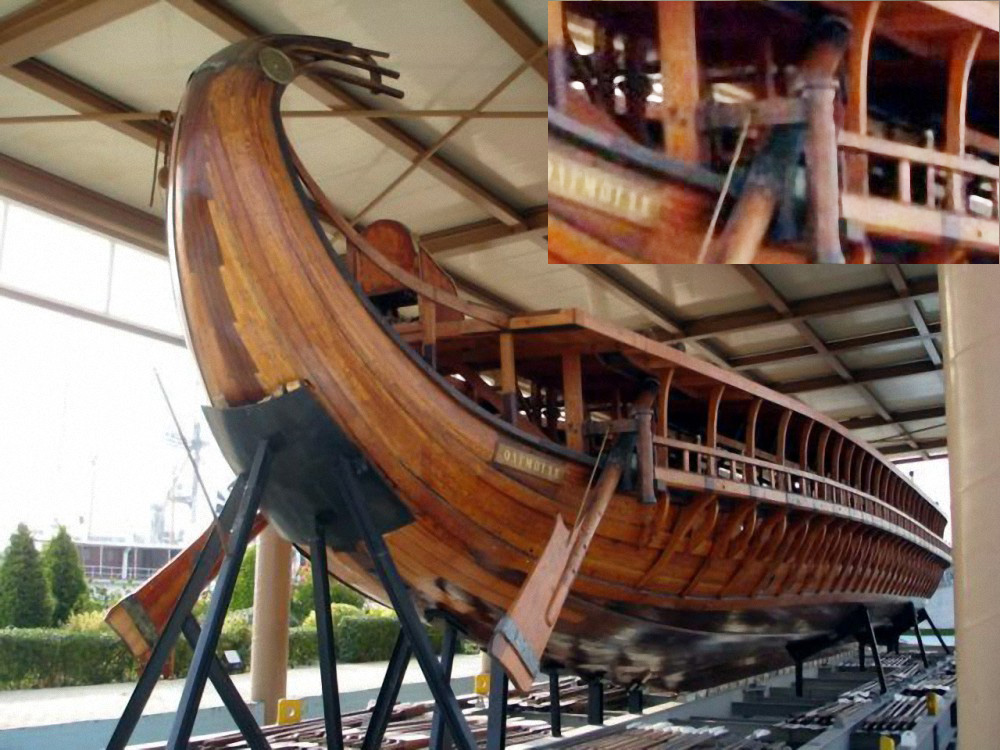
Having been at sea all my working life, anything with a nautical flavour tends to catch my eye. The rather elegant rudder on this Roman Spanish provincial from Carteia certainly did. The Germanicus in the obverse legend (off flan on this coin), was the father of Caligula and the brother of Claudius.
The Phoenicians were known to have settled in Cerro del Prado, about 2 km north-west of Carteia in the 7th century BC. In the 4th century BC, their descendants, the Carthaginians, or the Punics, founded the city known as Carteia. The new city was on a promontory near the mouth of the river Guadarranque, a commanding location offering control over what is now known as the Strait of Gibraltar, and shelter within the bay of Algeciras.
After Rome defeated Carthage in the Punic Wars in the 3rd century BC, the Romans occupied and enlarged the city, and built numerous monuments. The people born there, (the offspring of Hispanic women and Roman soldiers), were not recognised by Rome as citizens. Carteia sent a delegation to Rome requesting a solution to this problem, and obtained the title of "Colonia Libertinorum" from the Senate in 171 BC. Carteia was then the first Roman colony outside of Italy.
The city got involved in internal conflicts, including the one that pitted Caesar against Pompey at the end of the 1st century BC. The inhabitants of Carteia supported Pompey, the loser of the war, for which they suffered the consequences.
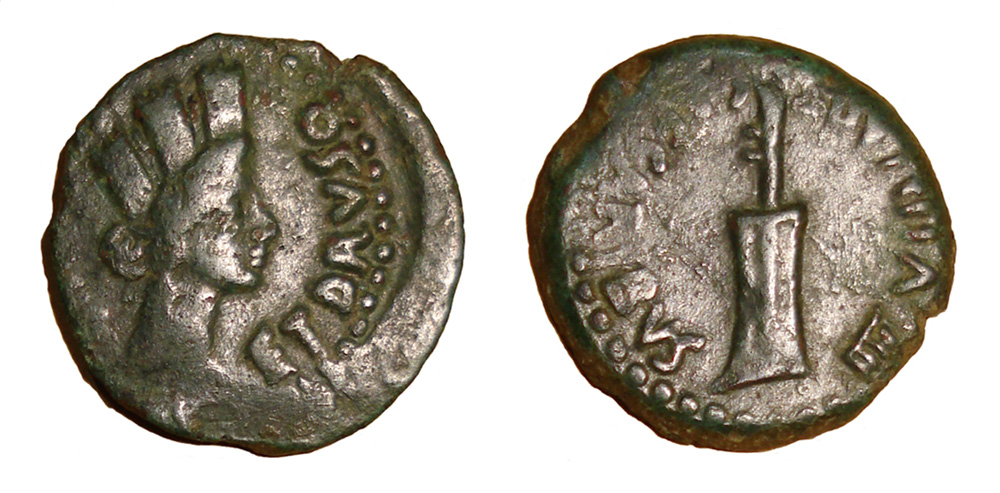
Germanicus and Drusus. Hispana, Carteia. 2nd - 1st cent. BC.
Obverse: Turreted head of Tyche right, GERMANICO ET DRVSO inscription around. Reverse: Ship's rudder, CART CAESARIBVS IIII VIR inscription around. Bronze. Diameter 19 mm. Weight: 3.98 gr.
SNG UK 1734. Lindgren II 82.







 Posted 01/08/2021 09:20 am