



Coin Community Family of Web Sites Join Thousands of Coin, Bullion, & Money Collectors
Specializing in Modern Numismatics Join Thousands of Coin, Bullion, & Money Collectors Royal Canadian Mint products, Canadian, Polish, American, and world coins and banknotes. Vancouvers #1 Coin and Paper Money Dealer Coin, Banknote and Medal Collectors's Online Mall Shop for APMEX Bullion on eBay!300,000 items to help build your collection!


Username:
Password:
Save Password
Forgot your Password?


This page may contain links that result in small commissions to keep this free site up and running.

Welcome Guest! Registering and/or logging in will remove the anchor (bottom) ads. It's Free!

"Invasion" Follis Of Emperor Diocletian

To participate in the forum you must log in or register.
Author Previous TopicReplies: 2 / Views: 1,033Next Topic  
Pillar of the Community

United States
3438 Posts
 Posted 02/09/2021  9:37 pm Show Profile   Bookmark this topic Add FVRIVS RVFVS to your friends list Get a Link to this Message Number of Subscribers
In AD 293 the "new" Caesar of the West Constantius Chlorus was assigned to the formidable task of clearing Gaul of the German Franks
The Franks had been allied against Roman interests with the British usurper Carausius but when the channel port city of Gesoriacum (Boulogne) was finally besieged and taken by Constantius it meant the inevitable doom to the independent British kingdom and Carausius found himself undone by his number two Allectus
Constantius knew well the difficulties involved in any invasion of the Britain and spent two years in planning and preparation for the crossing of the channel
The invasion preparation required more than just ships
It required money
Lots and lots of money
The generally accepted theory is that Constantius "borrowed" a section of the Lyons mint and set up a new temporary mint in Boulogne
The result of this are the enigmatic "Invasion" folles with the distinct portrait style of Lyons and the missing mint mark we generally associate with the later Londinium series after it was retaken by Constantius
Anyway they do tend to be difficult for a cheapskate like myself to acquire
Fortunately I found a seller that had misattributed the little beastie ....
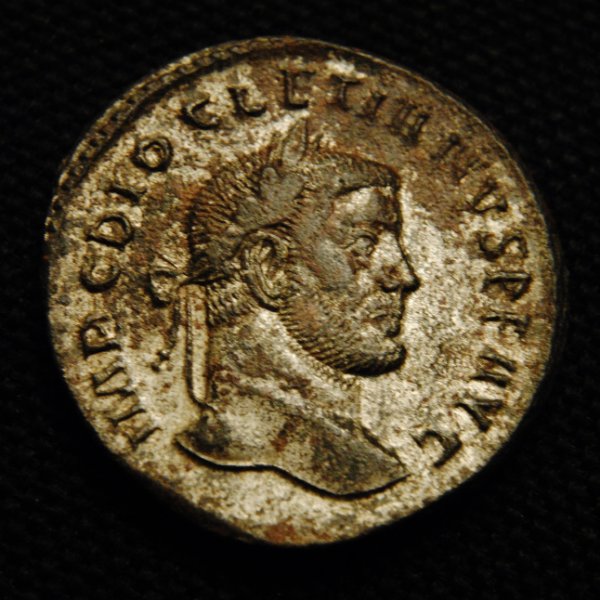
Poor old Diocletian he was looking a bit worse for wear too
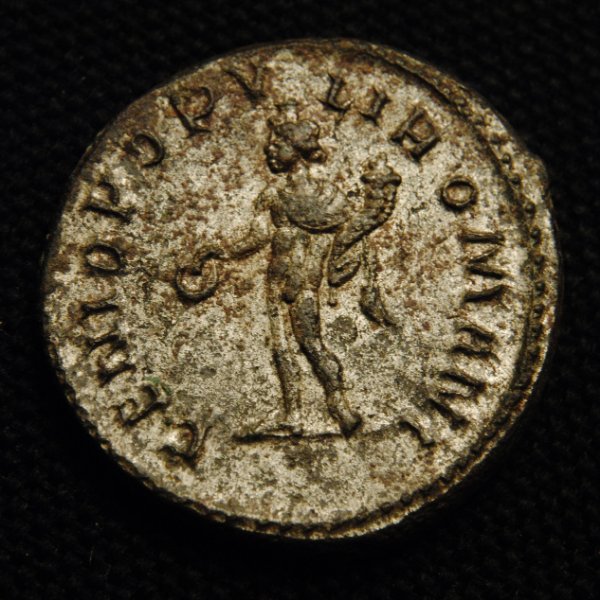
But after a bath and bit of massage he is almost his old self again
Lucky him !

Billon Follis Diocletian
Obv. IMP DIOCLETIANVS P F AVG
Laureate bust right
Rv. GENIO POPVLI ROMANI
Genius with modius on head standing left holding patera and cornucopia
AD 295-6
10.57 grams 27-8mm
RIC VI 14a


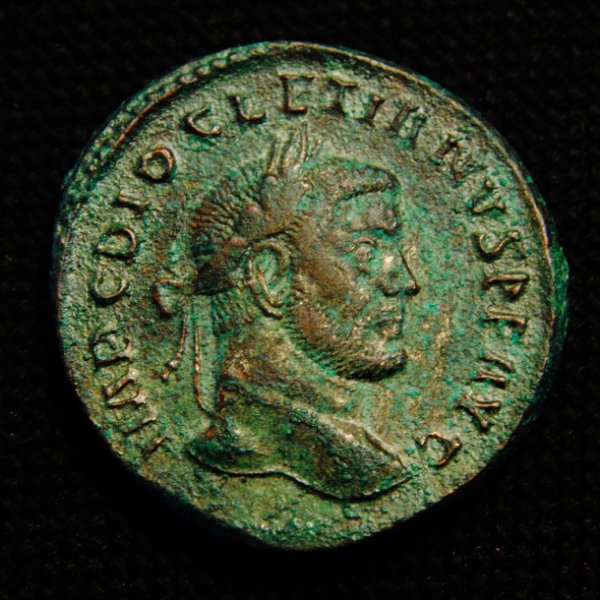
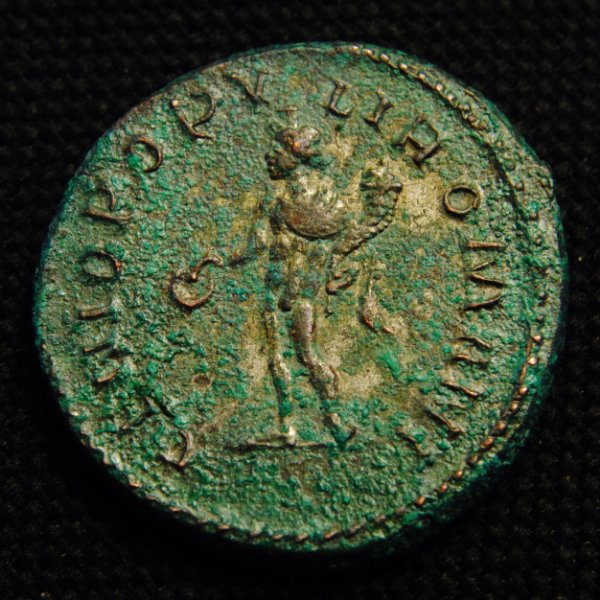
Just a few days ago he was looking very different
I know some collectors prefer the green and venerable look
But sometimes I cant help wondering what might happen if I peeked beneath it all
Oh well either way I was going to be happy with this one
He pairs up quite nicely with the Maximianus I have
Now if only to find those two missing Caesars !


Pillar of the Community
Learn More...
erafjel's Avatar
Sweden
2124 Posts
 Posted 02/10/2021  2:04 pm  Show Profile   Bookmark this reply Add erafjel to your friends list Get a Link to this Reply

Quote:
The generally accepted theory is that Constantius "borrowed" a section of the Lyons mint and set up a new temporary mint in Boulogne

That is interesting, then I learnt something new today! I will have to look into these coins, I think

I agree Diocletian looks better without that green stuff smeared over his face.
Pillar of the Community
Learn More...
erafjel's Avatar
Sweden
2124 Posts
 Posted 03/23/2021  6:24 pm  Show Profile   Bookmark this reply Add erafjel to your friends list Get a Link to this Reply
I can now complement with Diocletian's caesar, Galerius Valerius Maximianus, from the same series of coins.

Obverse: G VAL MAXIMIANVS NOB C
Reverse: GENIO POPVLI ROMANI
AD 296
10.36 g, 26 mm
RIC VI Lugdunum 17b
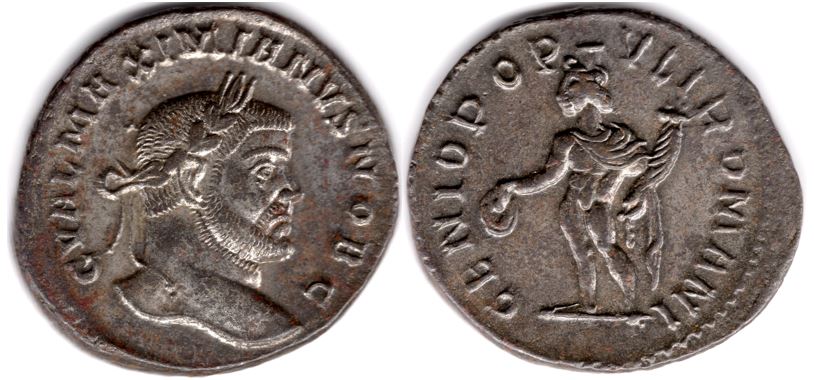


Looking for more info on these coins, I found that there are alternative theories. On the one hand, we have (as proposed by Bastien in 1959) that they were minted in a military mint set up in Boulogne, with mint workers from Lyon. On the other hand, and more recently (Drost, Revue Numismatique, 2014), it has been argued that they were actually minted in Lyon, as the first coins after Diocletian's monetary reform of 294. (This coin would then be minted in 294-95 rather than 296, as stated in RIC.) The absence of a mint mark would be due to that there was then a single mint (officina) in Lyon, so distinguishing mint marks were not necessary.

I don't know what to believe. To me, either story is interesting in itself, although it would of course be great to know what was the actual case.

Any thoughts on this?
  Previous TopicReplies: 2 / Views: 1,033Next Topic  

To participate in the forum you must log in or register.


Disclaimer: While a tremendous amount of effort goes into ensuring the accuracy of the information contained in this site, Coin Community assumes no liability for errors. Copyright 2005 - 2026 Coin Community Family- all rights reserved worldwide. Use of any images or content on this website without prior written permission of Coin Community or the original lender is strictly prohibited.
Contact Us  |  Advertise Here  |  Privacy Policy / Terms of Use

Coin Community Forum © 2005 - 2026 Coin Community Forums
It took 0.2 seconds to rattle this change. Forums