| Author |
 Replies: 14 / Views: 5,950 Replies: 14 / Views: 5,950 |
|
|
New Member
United States
6 Posts |
|
|
|
|
Bedrock of the Community
United States
94367 Posts |
Sending out the Steve in Tampa signal!
|
|
Pillar of the Community
United States
600 Posts |
Very cool faulty alignment find. Condition is going to bring the value down. You can find what similar notes have sold for on ebay...or just whatever Steve says. |
|
New Member
 United States
6 Posts |
So Steve is the guy I need to talk to around here? Lol
|
|
Moderator
 United States
56855 Posts |
|
|
Pillar of the Community
United States
4637 Posts |
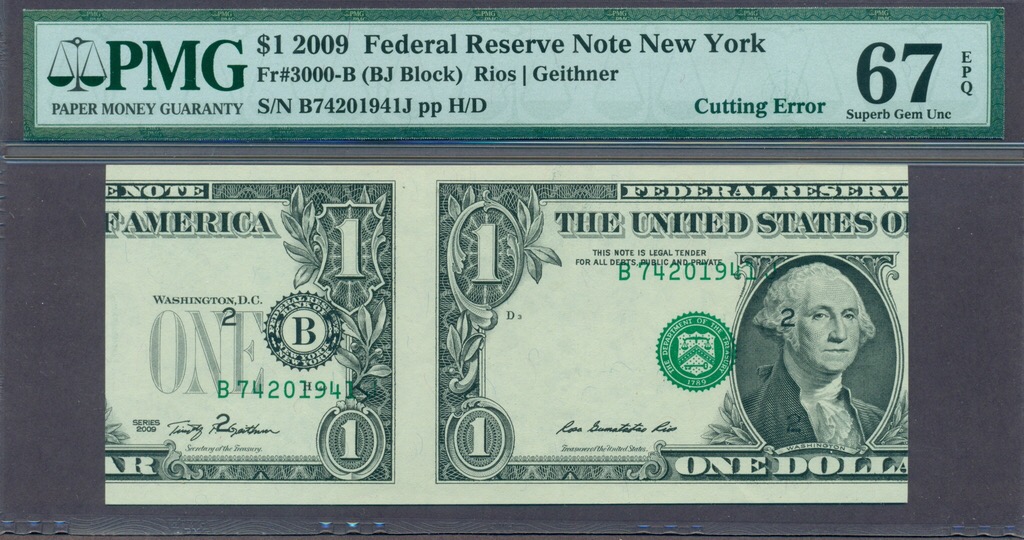
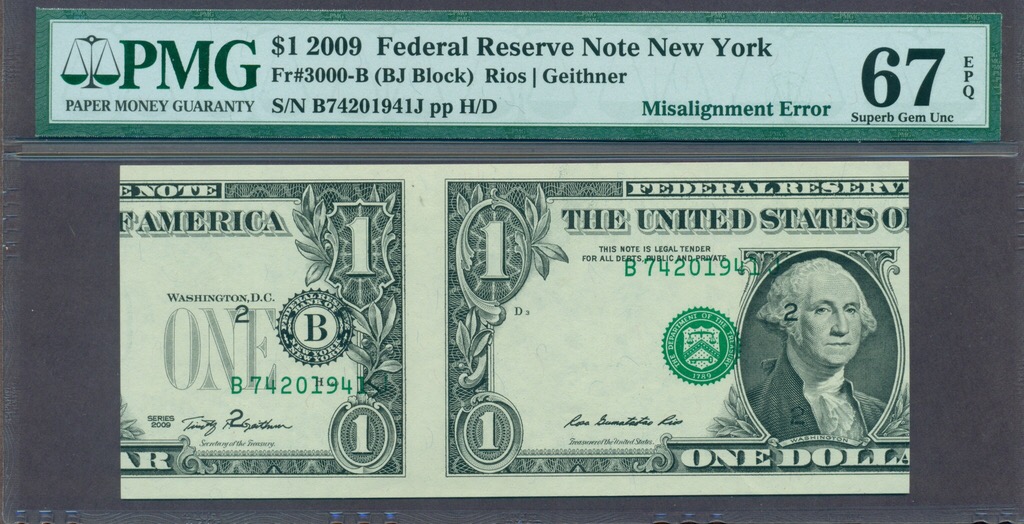
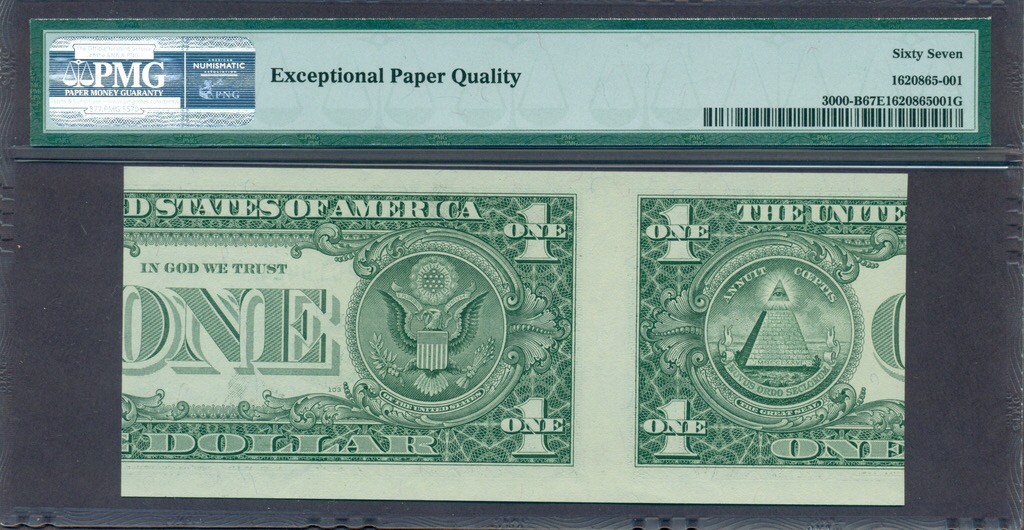
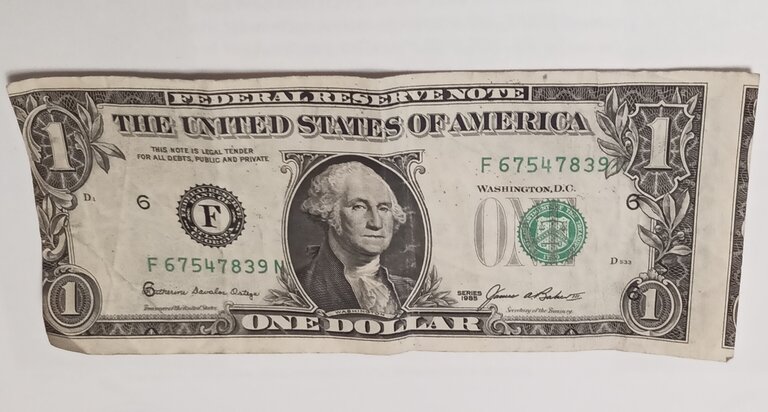
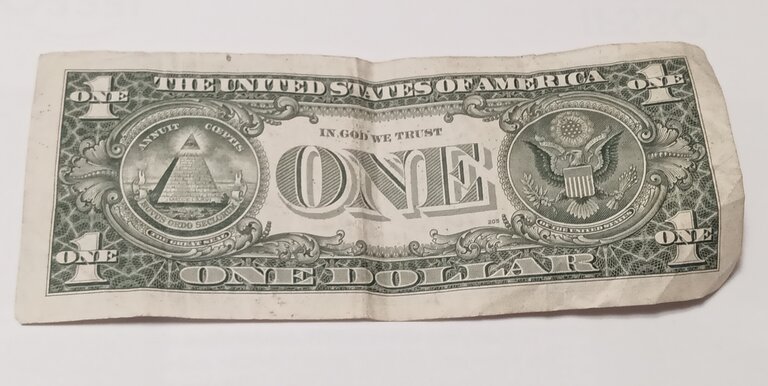
Very cool misalignment error. The first print (back) was good, but the sheet was miss-fed when it received the second print (face). The third print looks fine but because the second print was off, it looks shifted. This error is borderline between minor and major in my opinion. I would value it at between $300-$500, maybe more if authenticated. Uncirculated major errors can bring thousands of dollars. 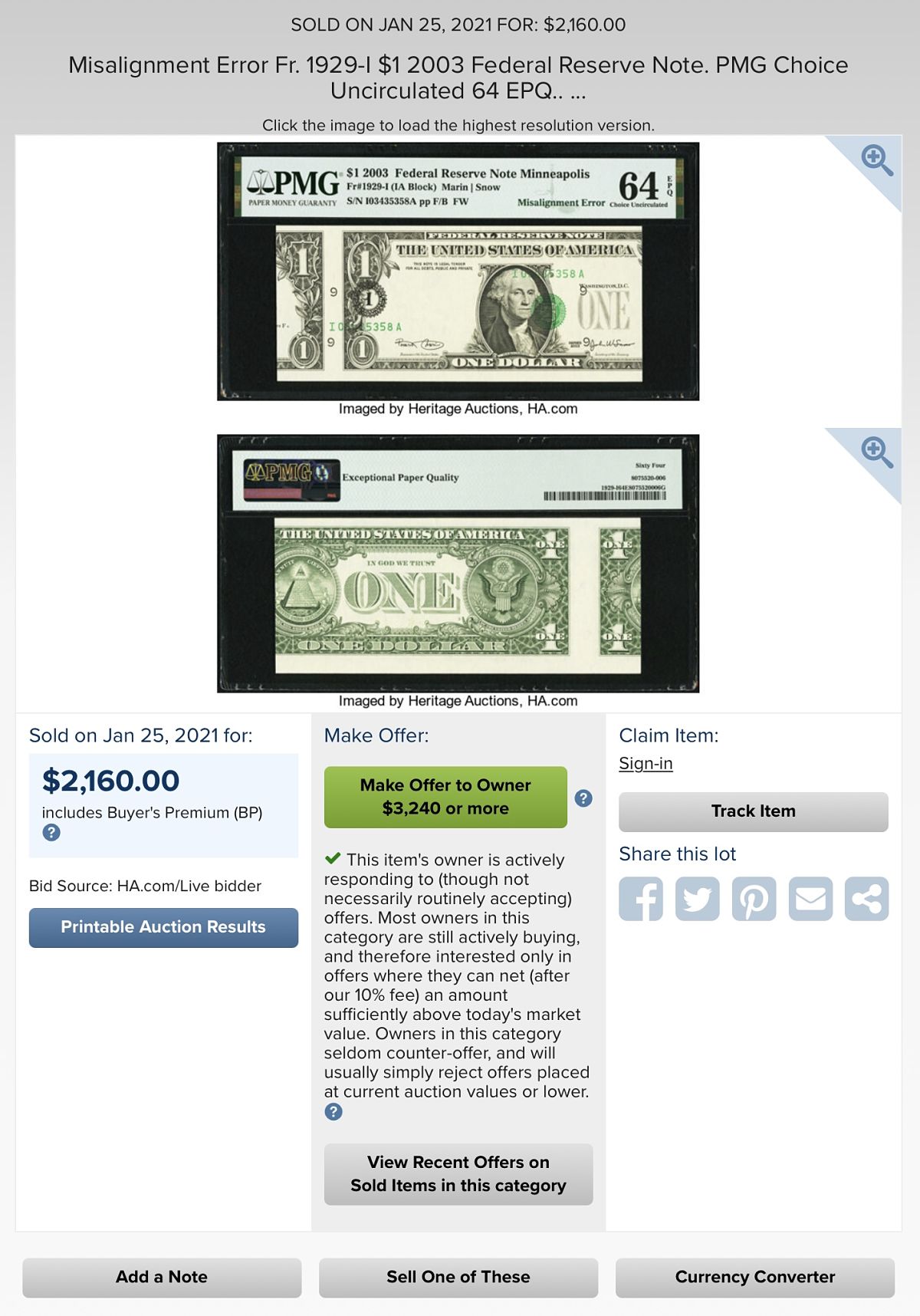 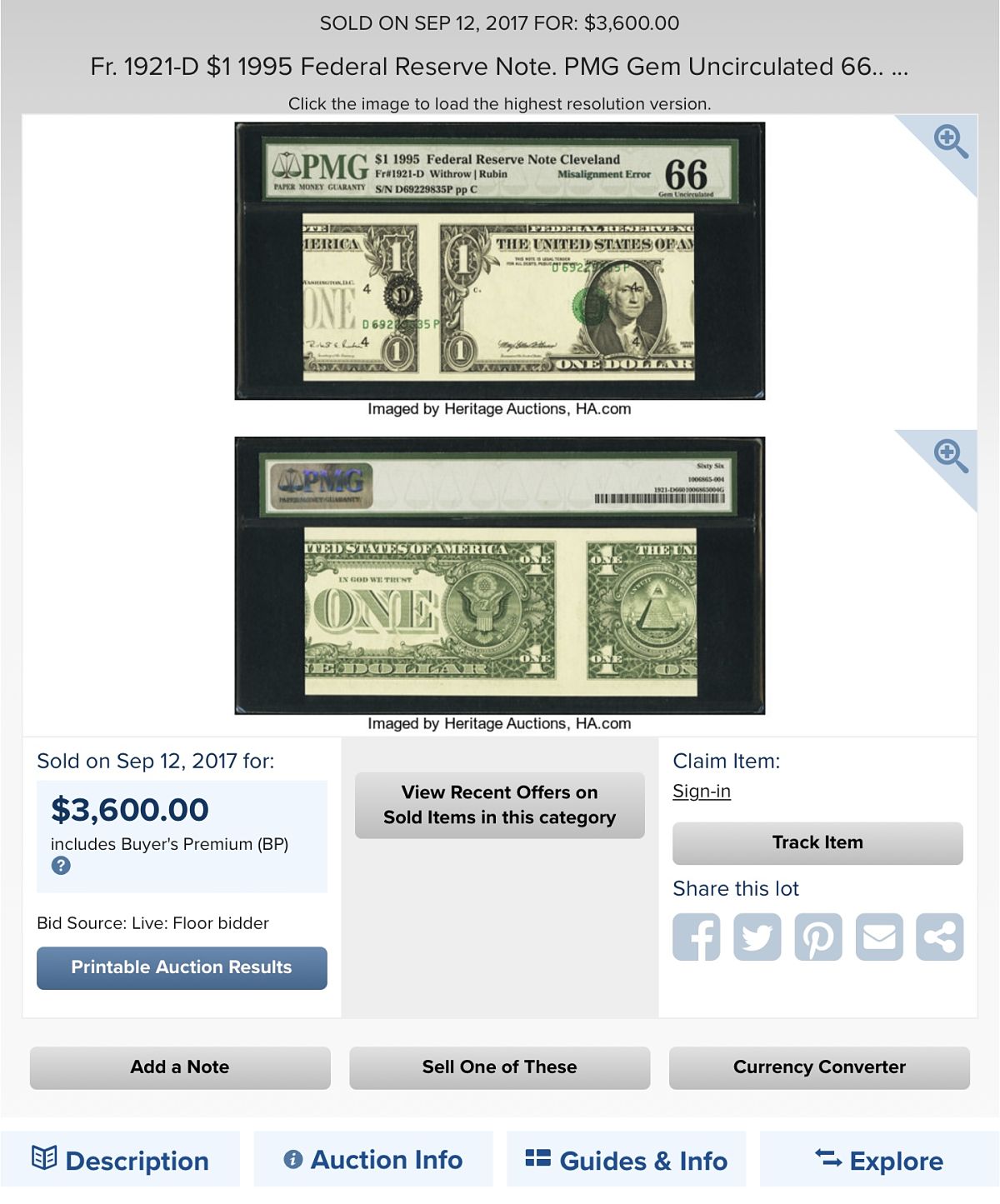 |
|
Valued Member
United States
163 Posts |
First of all I like @SteveInTampa. He is very knowledgeable about paper money. I learn more about paper money from reading his posts like Gilbert paper. In this case however, I have to disagree. Maybe after reading this he will change his opinion about this error note. First the 2003 $1 Minn district in PMG 64Q for $2,160 is a major 2nd print shift error. The seal and serial numbers are both in Washington's portrait- there is a major bump in price for that. The 2nd note is the same major error but with an even more extreme 2nd print shift and it's a Gem 66Q- that's why it's a $3000+ dollar note. Not a lot of Gems to around.
What we have here is about a 20% face print shift on a circulated note. Similar 20% face print shifts in Ch CU sell for about $160 to $200 in major auctions. So a circulated 20% 2nd print shift error would go for about $80 to $100. The price on these types of errors rise dramatically the greater the shift. The difference between a 20% shift and a 30% shift can be almost double in price. There are a lot more 20% face print shifts available than the major shifts where the seal and serial numbers are inside the portrait. That is why the difference in price is so dramatic.
|
|
Valued Member
United States
163 Posts |
I probably should add that the note post above is a Type 1 error with a normal back and the two HA examples are Type II errors. The difference in price on the two types doesn't vary by much from note to note.
|
|
Pillar of the Community
United States
4637 Posts |
|
|
Moderator
United States
194970 Posts |
 to the Community! |
|
Valued Member
United States
163 Posts |
Misalignment error is the more accurate term because both the the 1st and 2nd print are out of alignment. Print shift is commonly used when only one of the prints is out of alignment like the the overprint or just the face print like in the OP's note.
|
|
New Member
United States
6 Posts |
Thank you for the help. I will post it on ebay and see if anyone is interested in it. Thanks again! Was very surprised when I found it not sure how it has gone circulated this long without being noticed by someone. |
|
Pillar of the Community
United States
4637 Posts |
You're welcome, but may I suggest that you try to flatten the note a little, unfold the corners and take new photos before posting auction photos. Like put in under a book for a day or two. The better presented, the better you're results may be.
|
|
New Member
United States
21 Posts |
So, an error like this is put out in circulation?
|
|
Pillar of the Community
United States
4637 Posts |
Yes. There's not as many as there used to be. The BEP has computers examining the sheets as they're printed, but some still get through.
|
| |
Replies: 14 / Views: 5,950 |
|








 Posted 05/16/2021 2:54 pm