PCGS - Many collectors want to know what the differences are between a coin that grades AU58 and one that is MS60. It's a question that comes up rather frequently, especially when some AU58 coins offer better eye appeal than a similar specimen that grades MS60. In the realm of coin grading, the difference between AU58 and MS60 is strictly about the presence (or absence) of wear. An MS60 will exhibit no circulation wear, whereas an AU58 will yield a small amount of wear or rubbing on the highest points of the coin.
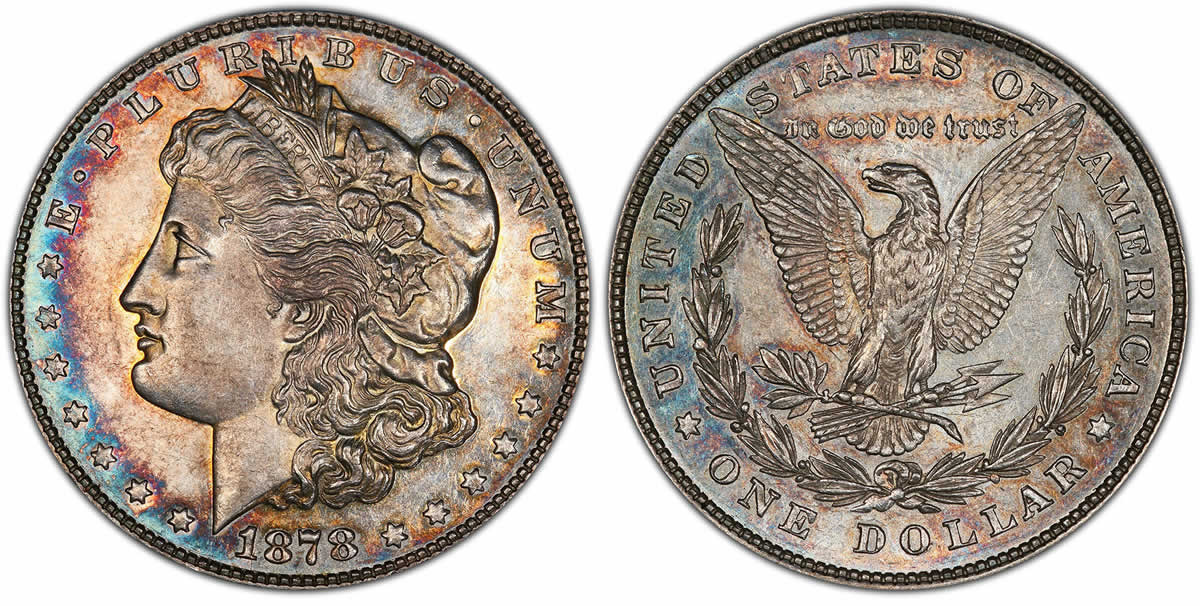 An 1878 8 Tailfeathers Morgan dollar in the grade of PCGS AU58. Click image to enlarge.
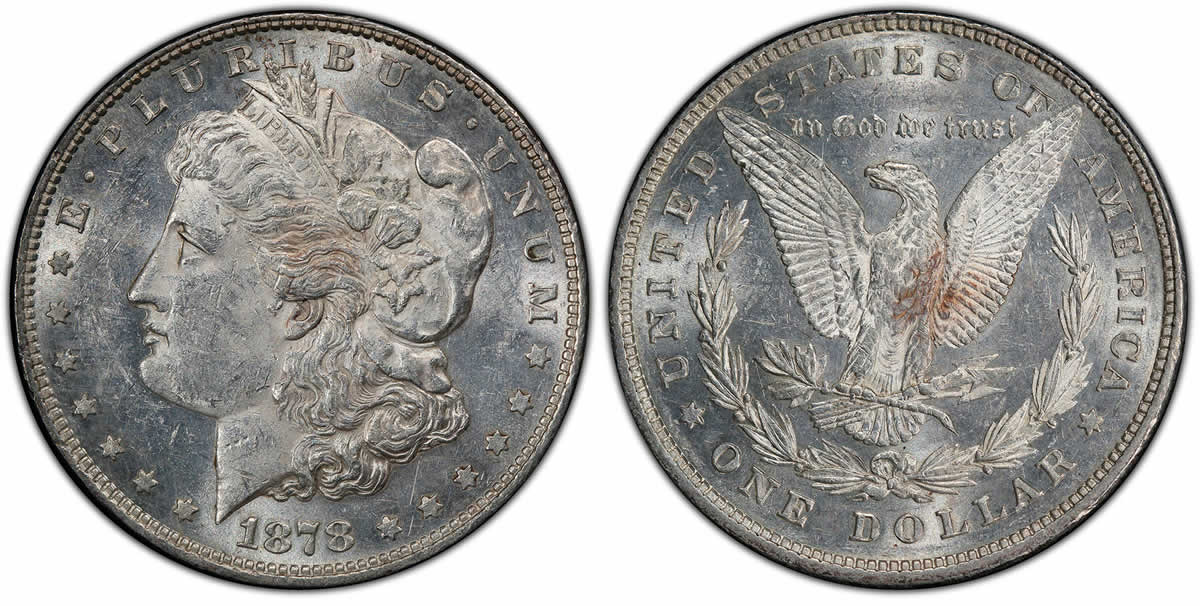 An 1878 8 Tailfeathers Morgan dollar in the grade of PCGS MS60. Click image to enlarge.
PCGS defines the AU58 and MS60 grades this way:

AU58 - "[The coin] will show full detail with minor friction on only the highest points."
MS60 - "[The coin] will have no wear on the high points. There may be many heavy marks and abrasions. Strike may not be full, luster may be very dull, and/or eye appeal may be quite negative."
In other words, the technical differences between AU58 and MS60 in terms of wear may be the slightest whiff of circulation rub on the jawline of Abraham Lincoln on the
Lincoln Cent or the cheek of Miss Liberty on the
Morgan dollar on the lightly worn specimen. However, some collectors might notice that some coins with a wear-based grade of AU58 may have other redeeming qualities that could in fact make it a more attractive coin than an equitable MS60, the latter no wear but perhaps possessing negative issues affecting its surface quality or eye appeal.
Despite the unequivocal objective, wear-based differences separating an AU58 coin from being an MS60, there are many subjective reasons why some collectors may prefer an AU58 over its MS60 counterpart. The awarding of an MS60 label doesn't guarantee that the given coin will necessarily look especially nice for its grade, and there are many cases in which a collector might find a nicely preserved AU58 the superior specimen from the standpoint of eye appeal. Furthermore, the AU58 will also likely cost less than the similar MS60 specimen, due to its lower technical grade.
Then again, when it comes to raw numbers, the MS60 does offer the collector the higher technical grade. Consequently, in the case of the PCGS Set Registry, the MS60 at the most basic level provides a higher score to the collector than the equitable AU58 could mathematically offer. Yes, the MS60 might cost slightly more - maybe much more - than its AU58 counterpart, depending on the coin. But at the end of the day, the MS60 does afford the collector potentially better positioning for their collection on the PCGS Set Registry, and this can mean the difference between an award for having the best set and being a runner up.
Thus, both AU58 and MS60 grades offer their own sets of benefits to the collector. As with all other aspects of collecting coins, in the case of grade it's up to the hobbyist to decide what purchase might be more advantageous to them and their unique collecting goals.










 Posted 09/09/2021 1:52 pm


