| Author |
 Replies: 11 / Views: 2,390 Replies: 11 / Views: 2,390 |
|
|
New Member
United States
5 Posts |
I have some Platinum Eagles $25 with the reverse proof strike, but cannot find anything about them.  My coins don't have paperwork or grading, nor have I found anyone selling these dates with reverse proof strike -with paperwork. I cannot find anything about reverse proof platinum eagles during these years on the web, except an article telling how difficult they were to make before the mint started using lasers to etch the field area (2006-W). None of these coins, (of course) have the W mint mark. I have 1997, 1998, 1999 x4, 2001 x2, 2002 x3, and 2003 x7 with this strike. They seem to be extremely rare, at least in the documentation of their existence... Does anyone know anything about them? -Curtis 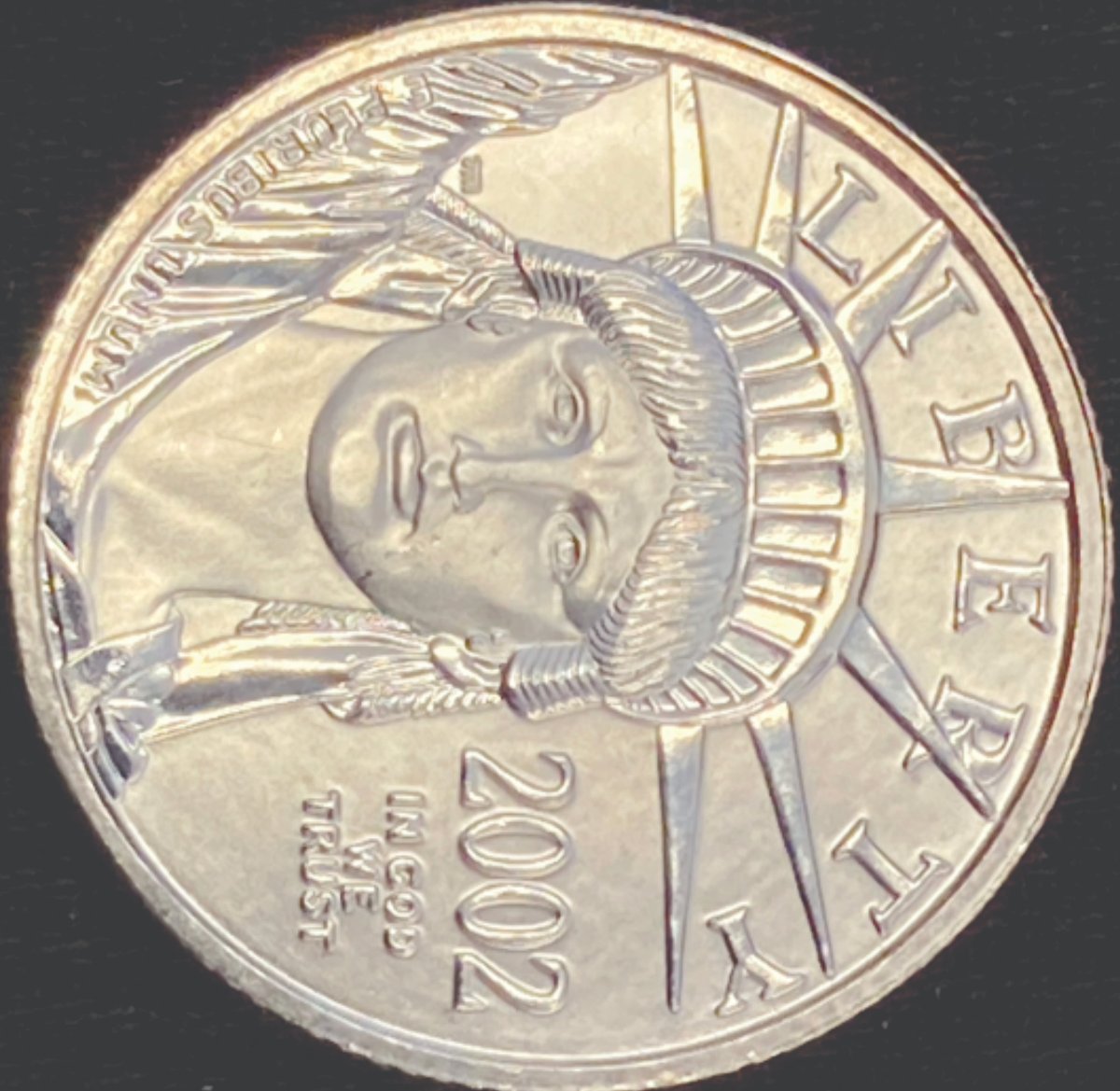 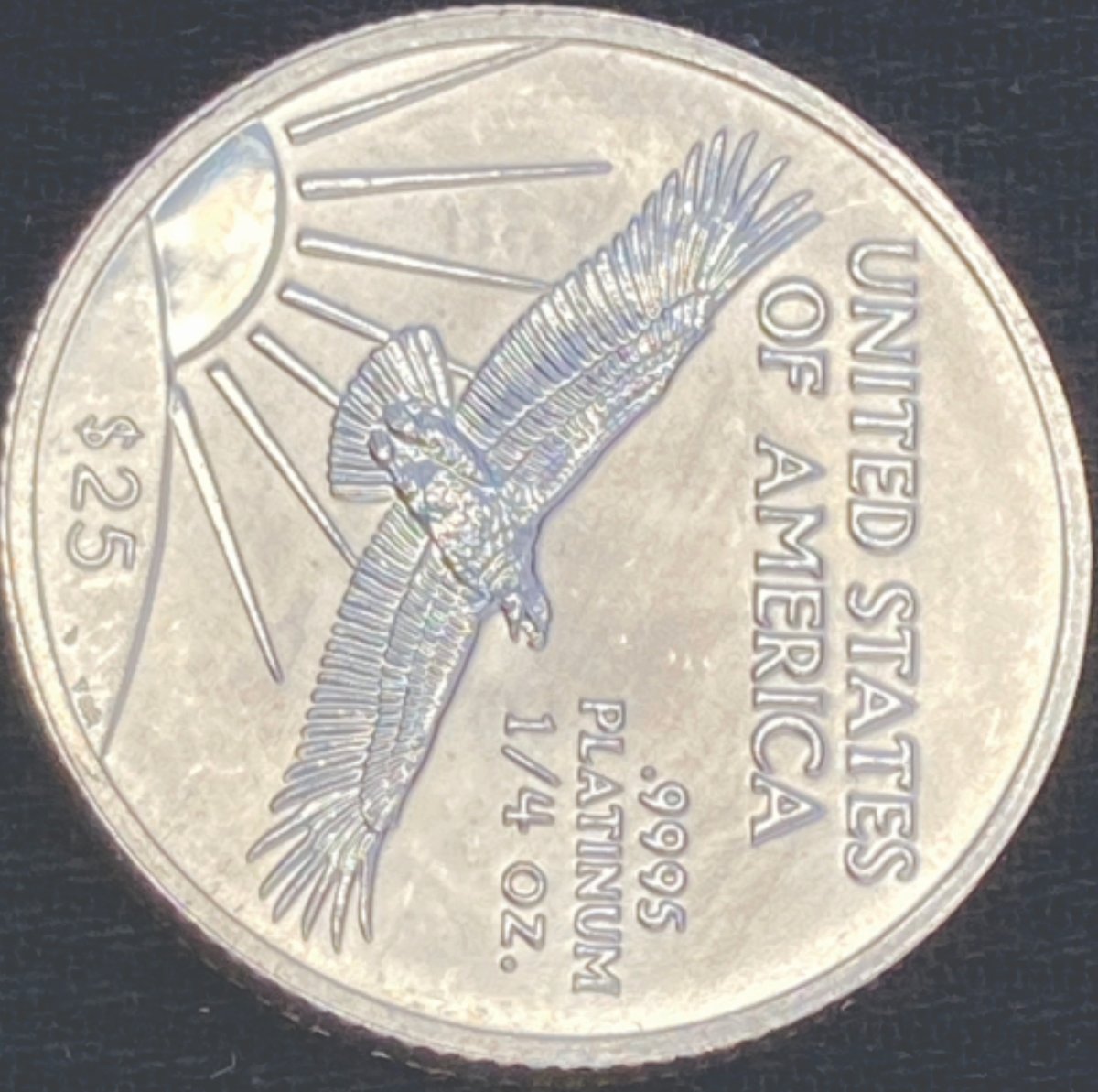 I'm sorry the photos don't show the mirror finish, I've never learned how... |
|
|
|
Pillar of the Community
United States
7575 Posts |
Sorry, there's no way to help you without a life like, true color pictures.I'm sure it is a beautiful coin.
|
|
Moderator
 United States
56855 Posts |
 . Where did you obtain them? John1  |
|
New Member
 United States
5 Posts |
I inherited them from my parent's estate. I received them among a roll of 40 platinum $25 eagles. I'm sorry, but there really shouldn't be much in need of true color photos, (How do you do that, anyhow?), but if you've seen any reverse proof coin, you've seen the finish of these coins where the fields are frosted and the devices are mirrored. I'm not asking anyone to appraise them from such a crummy photo, OK? I'm hoping someone may have some experience with and/or information about them. They are beautiful coins, but until I learn how they were made, the mintage figures, etc. I fear it will be hard for them to be appraised by even by my local appraisers, who so far haven't had this question come on their radar. The consensus seems to be that if it's not a 2008-W or later (when the mint started using lasers for the field frosting) with paperwork, nobody wants them. If find that answer unlikely and implausible for such a beautiful coin. So... Am I out of luck on this forum? -Curtis |
|
Pillar of the Community
United States
4680 Posts |
This one looks like a regular strike 2002 P to me, minted in Philadelphia. These are bullion coins, so even though their mintages are "low" in the 20,000's, they're not worth much more than their weight in platinum, unless you're dealing with MS70 examples. Here's a link to PCGS, just click on each year, it will pull up individual mintage. https://www.PCGS.com/prices/detail/.../most-activePull up sold listings on ebay, recent sales hover around $340-$370. Nice inheritance to acquire. |
|
New Member
United States
5 Posts |
Thank you!
That PCGS link does answer my questions, except that all of the series are called 'regular strike', even the dates that have the reverse proof strike feature.
I can clearly see in the photos on the PCGS site that my coins look just like theirs (except for the condition in some cases).
None of the literature I have found addresses this, which remains a curiosity. (I did find one site that described a masking process performed on the die that was tedious and difficult to do. The introduction of the laser burnishing made it much easier to do.)
I will assume for now that they are nothing special (price-wise).
Thank you for leading me in the right direction.
-Curtis
|
|
Pillar of the Community
United States
1667 Posts |
A more realistic image may indicate if someone tampered with the finish on the coins. the only ones that are reverse proof are 2007W from the 10th anniversary platinum eagle set.
I can't make a judgement based on this picture but it shouldn't exist for any of those dates mentioned. I can tell you the mint didn't do it if it looks like that. so either it been worked to make it look reverse proof, or you've got uncirculated finish and just thinking it's a reverse proof because it's not a proof.
Edited by Big-Kingdom
07/07/2021 09:09 am
|
|
New Member
United States
5 Posts |
Thank you for your interest in adding some value to this conversation. I took your cue to do my own inspection for evidence of tampering on my coins. I used a 30X inspection microscope in my aerospace metals testing laboratory (good lighting, but it's an old fart like me, and has no ability to obtain photos to publish) and carefully examined some of the coins (1997 1ea., and 1999 4ea.). Overall they look flawless, like the photos on the PCGS website. The precision of the work done to polish the edges of the glossy area was within 0.005mm (that's 1/2 the diameter of a human hair). In addition, I examined 1999, 4 coins, and found coin-to-coin and overall precision was even better. No-one could do this quality work by hand on an already struck coin without spending months using very specialized tooling, if such even exists. The work to produce the frosted fields on the dies for these coins, in my judgement, is indicative of the skills I would expect the US Mint would require for their pride and joy of our US coinage. Easy for me to judge their work as flawless. My coins were most certainly not monkeyed with. Hence, they were minted with the high gloss strike on the devices and frosted in the fields. I found confirmation by inspecting the photos for the years 1997-2003 and comparing those with the coins in the years 2004-2006 on the PCGS website. There is a clear difference, and the earlier years were most certainly what I am calling 'reverse-proof', and the later years do not have any glossy areas. Their photos were taken with much better cameras and expertise than I have and show very well the original quality and features of the coins I have. Yes, the 2007-W I found on ebay for sale is a reverse proof, and shows the devices with a high gloss, just like my coins and the ones on the PCGS website for the years 1997-2003, but nobody seems to call them 'reverse proof', why? (Except one seller of an uncertified 2001 $10 US 1/10th oz Platinum Eagle Coin, sold on auction on 4/24/2021 for $175.50) So, I remain confused and uneducated: Is a coin 'reverse proof' only if the mint says so (and maybe paperwork is provided) to authorize someone to call it a 'reverse proof', or is it a reverse proof if the devices have a high gloss and the field is frosted, as struck by the mint? If it needs a pedigree to call it a reverse proof, what do you call the coins with the glossy devices and frosted fields, to distinguish them? 'Reverse Proof-like'? Are there people, perhaps at the mint who could shed some light on this? (Academic at this point, maybe, as these coins don't seem to have any extra numismatic value, which perplexes me.) Maybe it simply that the platinum coins never really took off as having much numismatic interest. Thanks again, -Curtis |
|
Pillar of the Community
United States
4680 Posts |
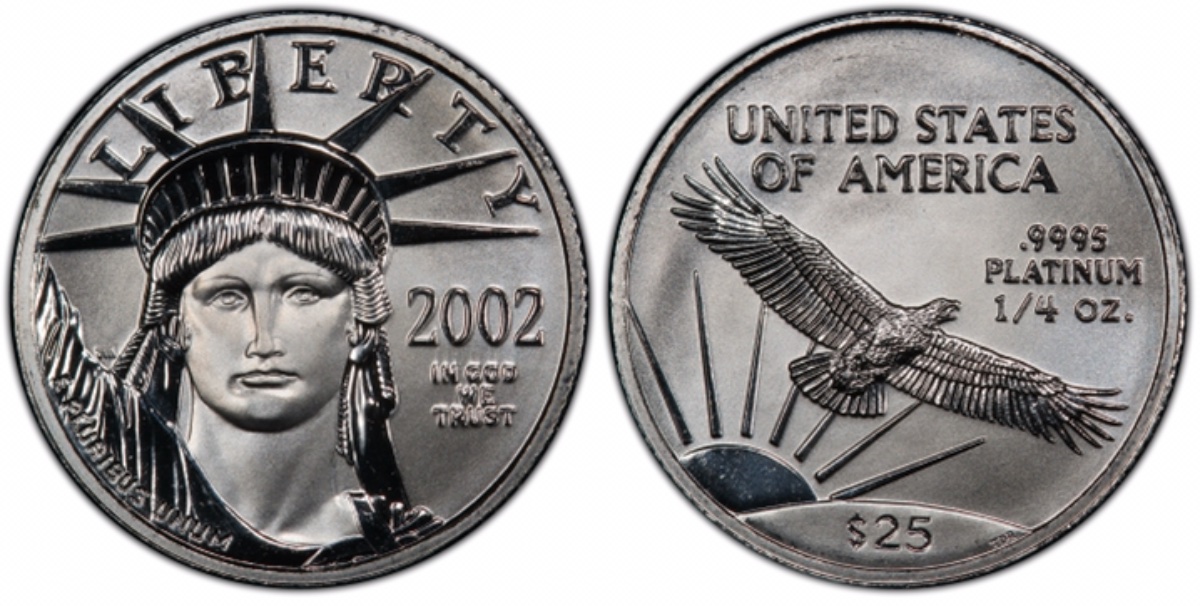 Above image of a Regular Strike 2002 for reference to others as to what your example looks like. That said, since this was the intended design with the frosted fields and some of the devices mirrored, and the fact it is not a proof, it would not be considered a reverse proof. Just the way they designed it. Prooflike designations we're designed for coinage that was not intended to be prooflike, but due to polishing of dies, took on a prooflike affect/appearance. And again, since this was the intended design and not unintentionally created on some dies that were given a little more attention, they would receive no designation other than what they are.. a regular strike. Quote:
as these coins don't seem to have any extra numismatic value, which perplexes me.) Maybe it simply that the platinum coins never really took off as having much numismatic interest. Couple notes on this one. As with a lot of bullion, a couple factors that keep premiums up/down are mintage, survival, grade, and yes, popularity/interest. Most bullion coins have relatively high survival rate to mintage ratios, and are for the most part, in high grades. Whereas your business strike coinage, intended for circulation, varies quite a bit, and of course survival rate (especially in high grade) is less, therefore more rare. I've never been a collector of platinum, but IMO, especially in more recent years, has become less popular. Gold and Silver always in the forefront. Silver Eagles are a good example of popularity creating premium. Mintage numbers are wayyy higher than any other bullion in gold, platinum, palladium etc. and have always been very liquid and brought a decent premium, more-so in recent years. Hope this made some logical sense as I'm just rambling after a long day of work!!  |
|
Moderator
United States
194611 Posts |
to the Community! Your post was moved to the appropriate forum for the proper attention.  |
|
New Member
United States
1 Posts |
I can tell you with assurance that the 97-03 MS Platinum Eagles were struck in reverse proof fashion. I work with these coins closely on a daily basis and it has not been confirmed with the grading companies or mint yet, however, if you compare 04 on to anything MS 97-03 you will see the reverse proof effects. Hang on to those and get them graded.
|
|
Moderator
United States
194611 Posts |
to the Community, coinz22! |
| |
Replies: 11 / Views: 2,390 |
|







 Posted 07/06/2021 8:42 pm





