Coin Community Family of Web Sites Join Thousands of Coin, Bullion, & Money Collectors
Vancouvers #1 Coin and Paper Money Dealer Specializing in Modern Numismatics Join Thousands of Coin, Bullion, & Money Collectors Royal Canadian Mint products, Canadian, Polish, American, and world coins and banknotes. Coin, Banknote and Medal Collectors's Online Mall Shop for APMEX Bullion on eBay!300,000 items to help build your collection!


Username:
Password:
Save Password
Forgot your Password?


This page may contain links that result in small commissions to keep this free site up and running.

Welcome Guest! Registering and/or logging in will remove the anchor (bottom) ads. It's Free!

Possible Boston Forgery 8 Reales

To participate in the forum you must log in or register.
Author Previous TopicReplies: 4 / Views: 1,307Next Topic  
New Member

United States
6 Posts
 Posted 08/12/2021  6:58 pm Show Profile   Bookmark this topic Add qfabius to your friends list Get a Link to this Message Number of Subscribers
I was looking through some of the very informative posts on this forum made by swamperbob and others and thought I'd try to look over some of the coins in my collection.

The coin in question (pictured below) is ~39.5 mm in diameter and weighs 26.73 g. This weight seems slightly suspicious because the minimum allowed weight was 26.8646 g and the coin does not seem to have any heavy wear.

There aren't any features that stand out to me on the obverse or reverse except for the stress marks at about the 3 o'clock mark on the reverse.

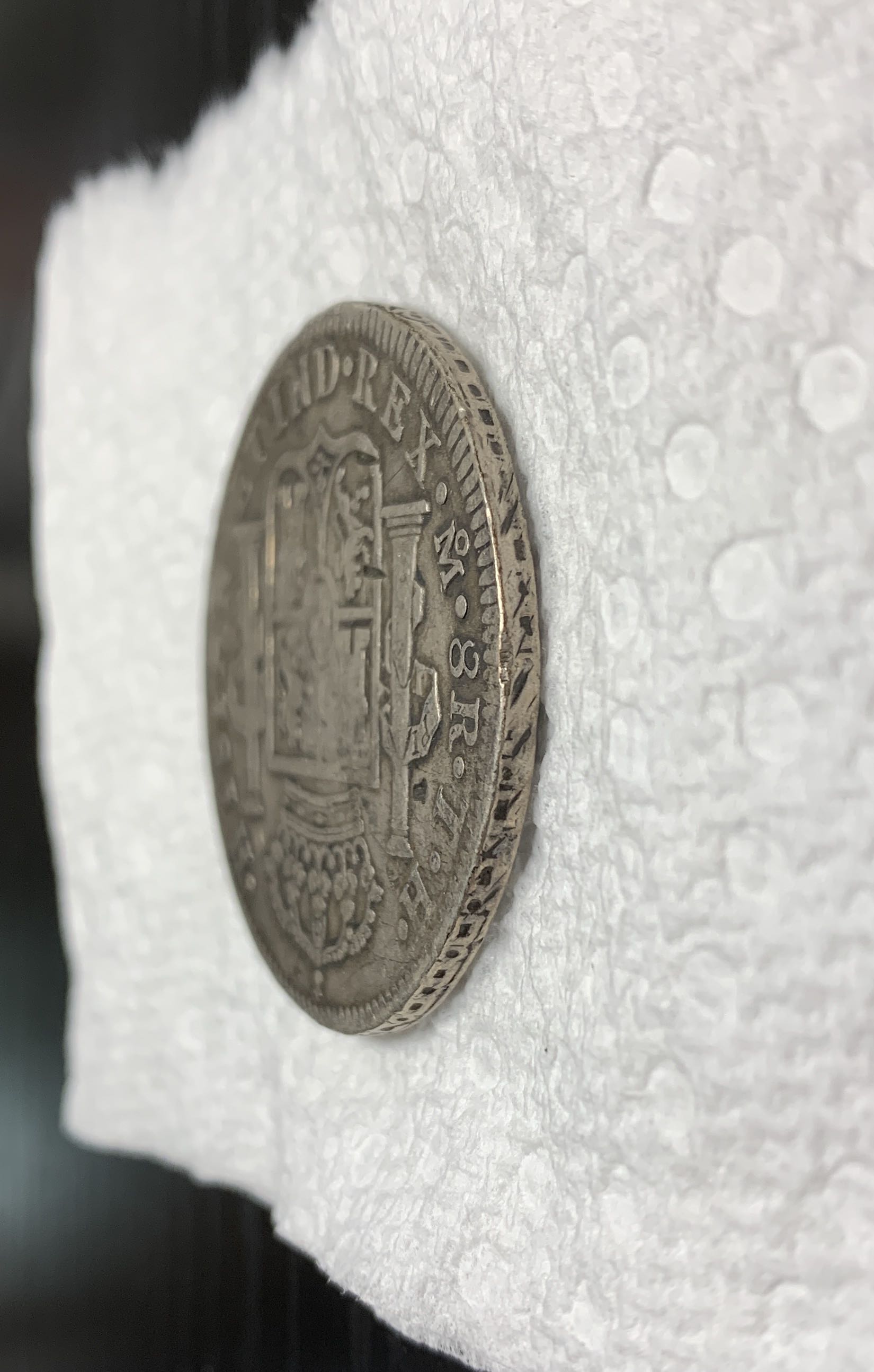
The edges are quite interesting in my opinion. I believe the first edge picture shows the diagonal cut marks characteristic of counterfeits from Boston. It is also interesting to see how the edge pattern is pulled apart and the two sides don't match. Not sure if that is considered an overlap?

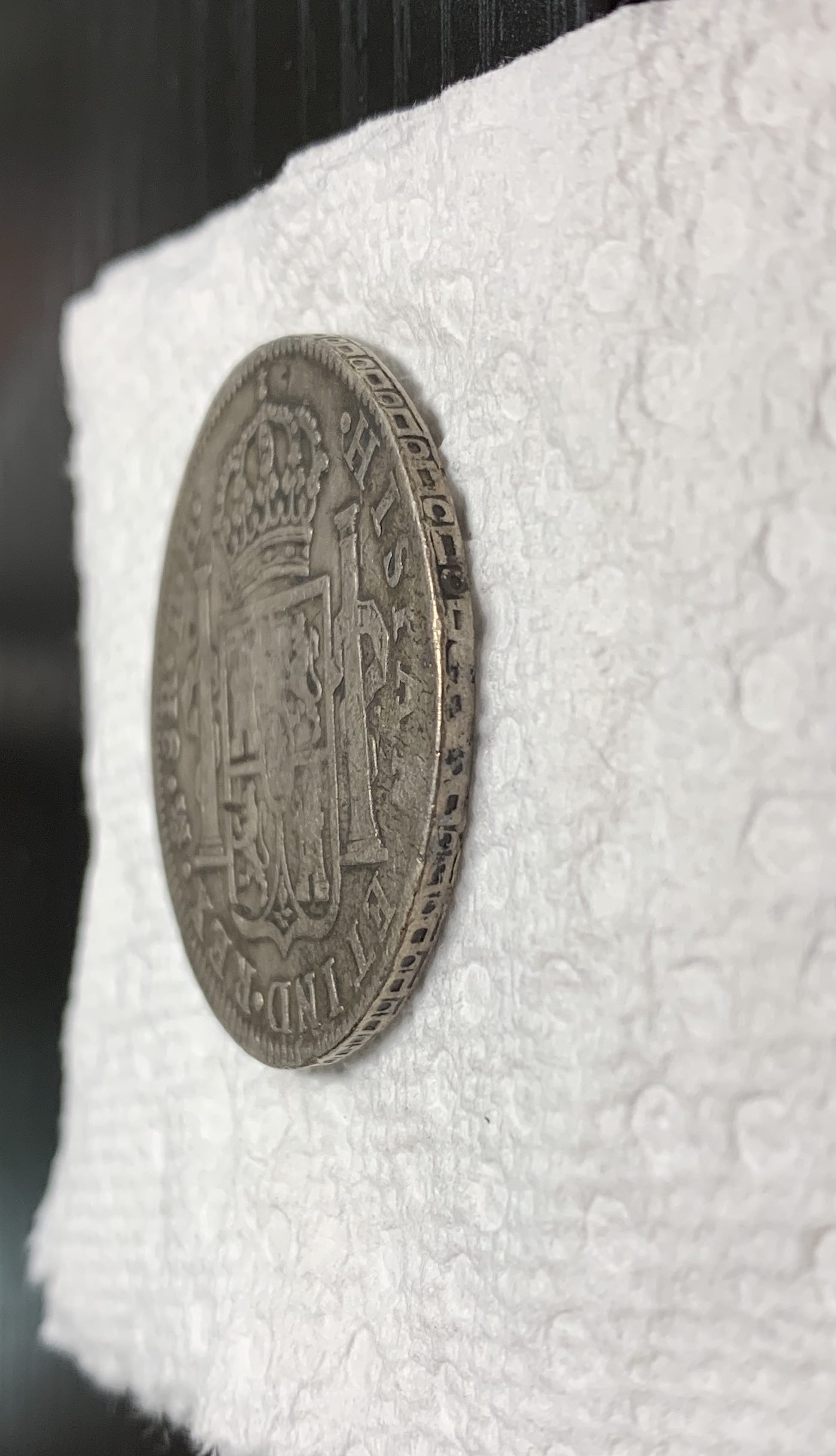
The second edge picture shows the section directly opposite to the section shown in the first edge picture. The edge pattern in the center of the picture seems abnormal and appears to show a second overlap, although I can't really tell with the amount of wear.

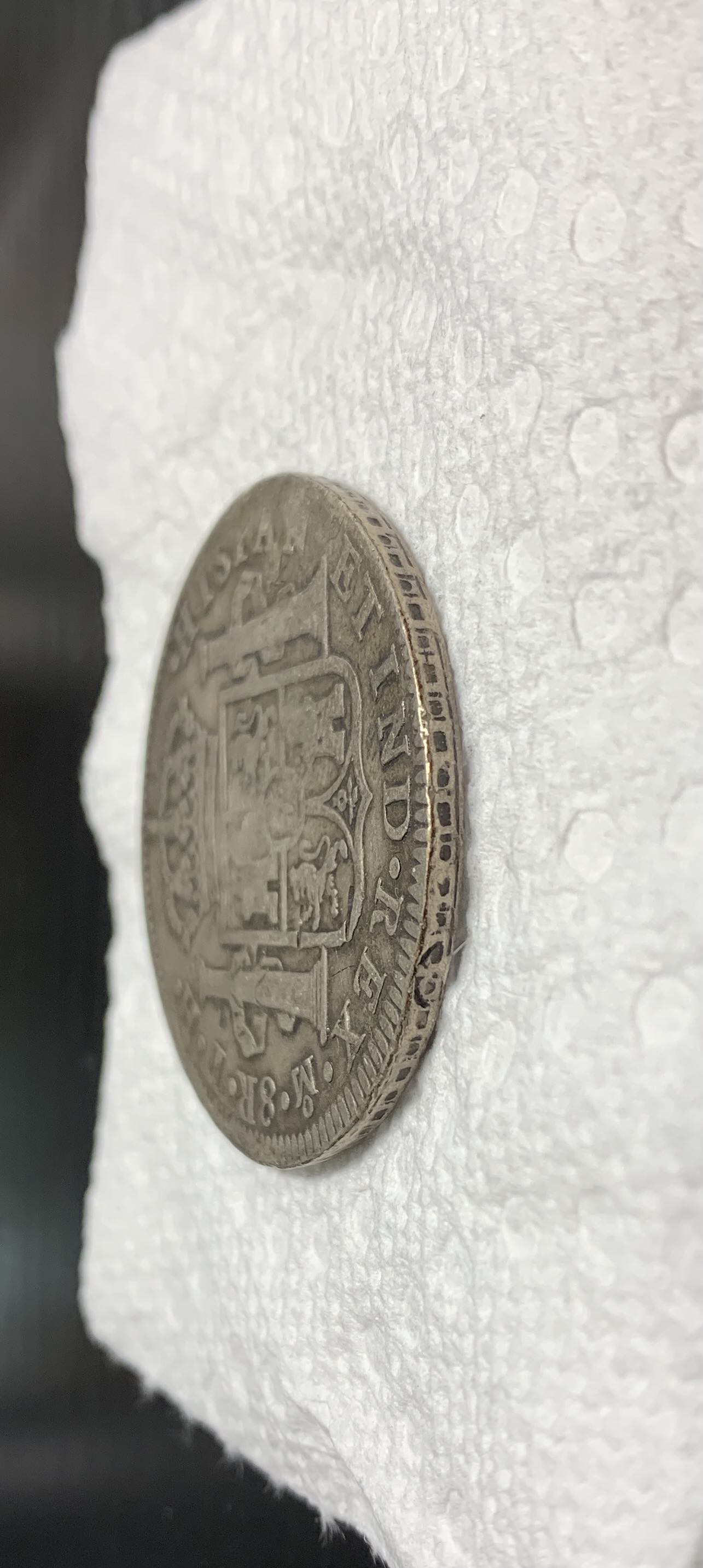
The third edge picture shows similar abnormalities to the ones in the second edge picture, as well as highly irregular circles and rectangles.

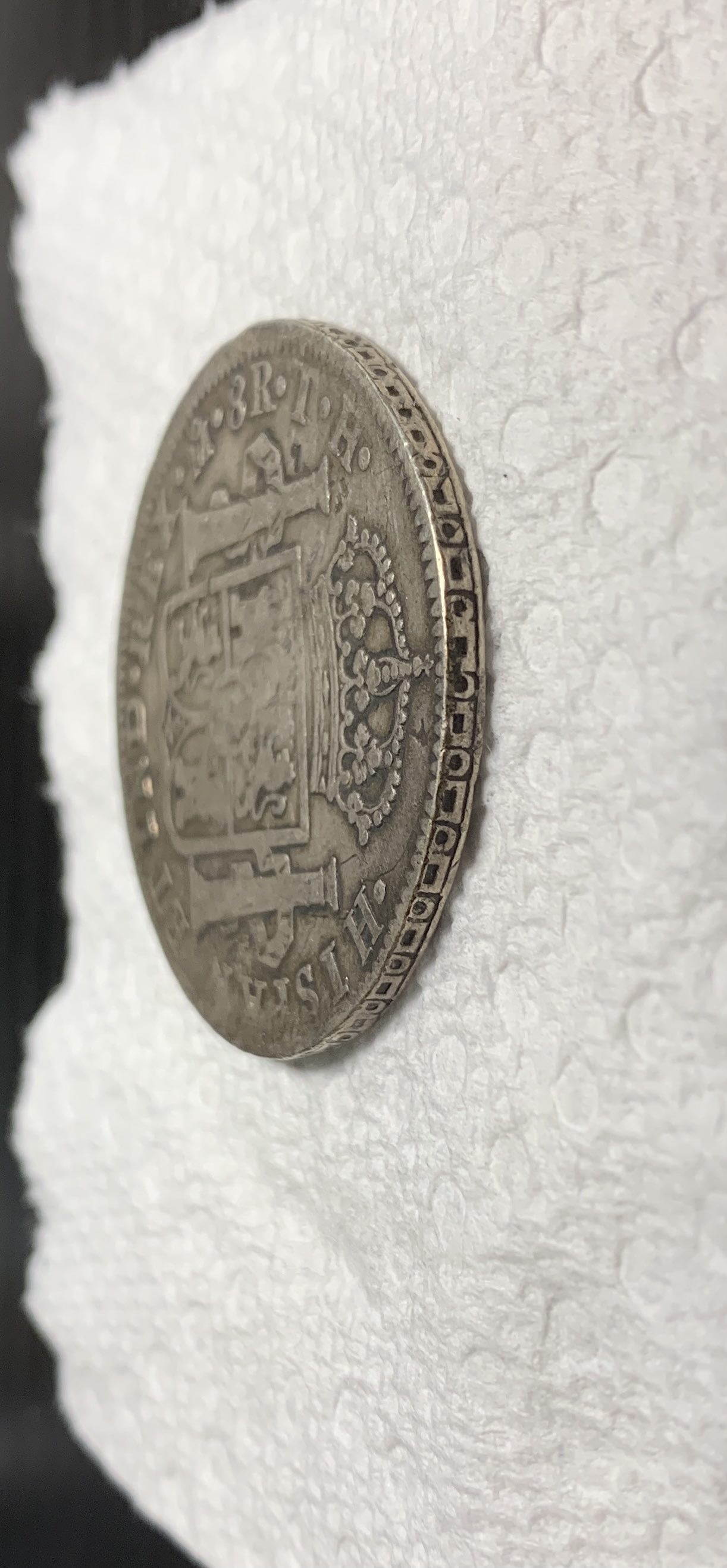
The fourth edge picture, showing the section directly opposite to the one in the third edge picture, seems normal to me.

I would love to have any of your opinions on this coin. Is it genuine? Is it a Boston forgery? Is it a modern fake?
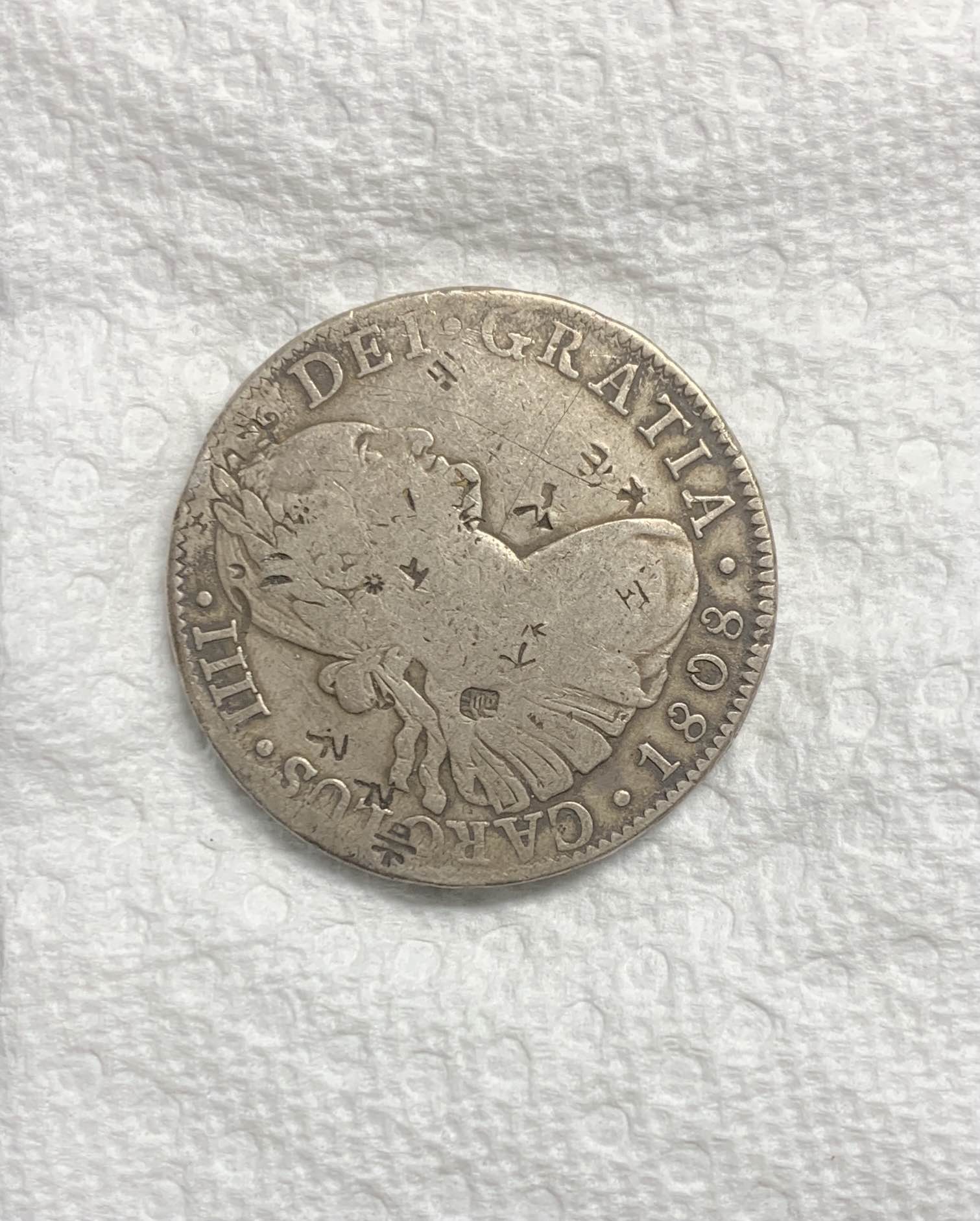
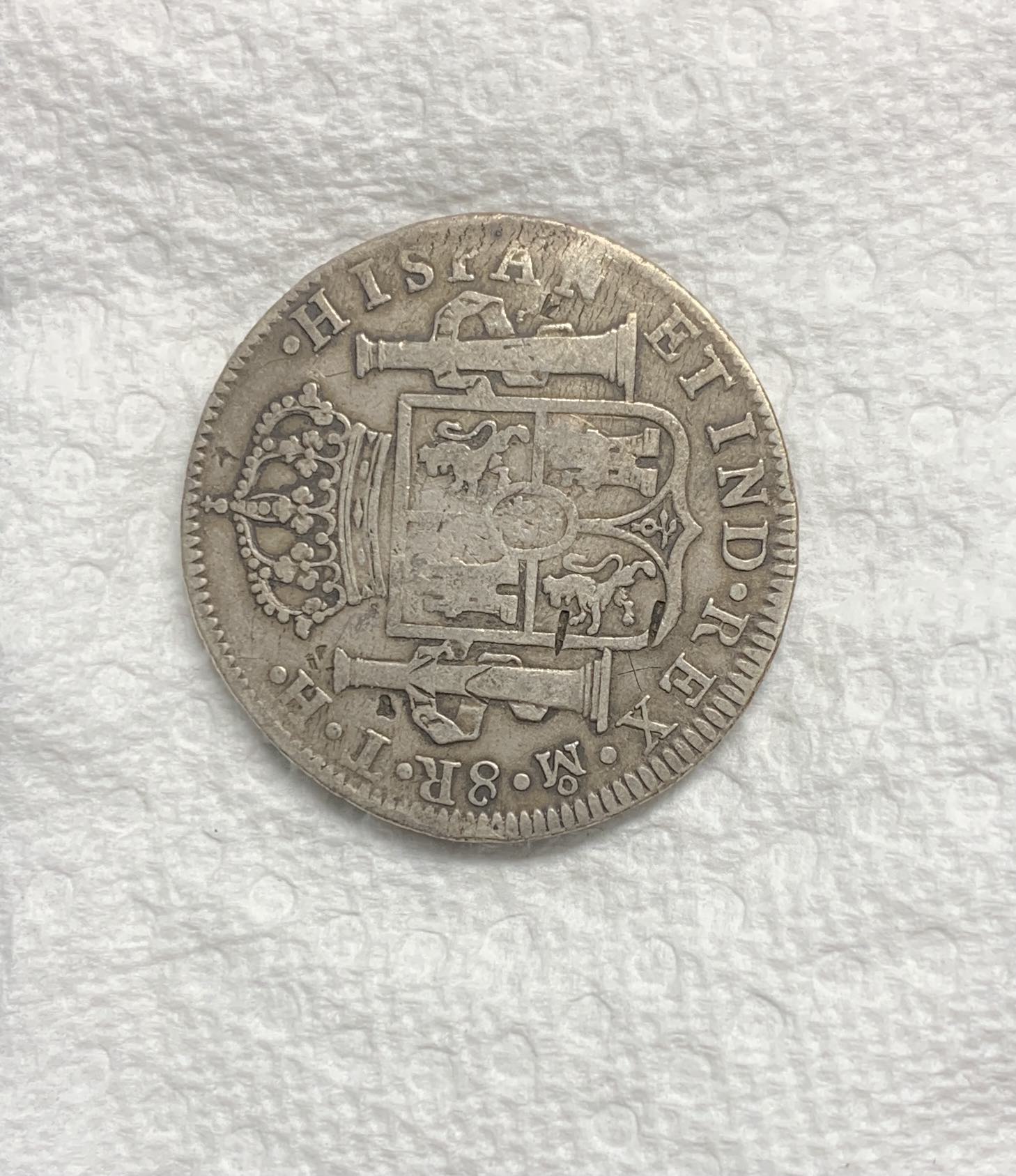
Possible-Boston-Forgery-8-Reales
Edited by qfabius
08/12/2021 6:58 pm
Pillar of the Community
Australia
1610 Posts
 Posted 08/12/2021  9:31 pm  Show Profile   Bookmark this reply Add David Graham to your friends list Get a Link to this Reply
gfabius - not my area but the coin does have wear and 0.5% loss of weight would seem about right. Studies of heavily circulated coins suggest modest weight loss of 3-5% with some studies suggesting up to 10-12%. I am also a bit dubious as to where the exact figure of 26.8636g comes from. I suspect it is a conversion from a non-metric unit and this combined with the inability (I suspect) of balances in the early 1800s to weigh a tenth of a milligram raises questions on it's reliability.
New Member
United States
6 Posts
 Posted 08/12/2021  11:39 pm  Show Profile   Bookmark this reply Add qfabius to your friends list Get a Link to this Reply
@David Graham I don't have a primary source for the 26.8646 g figure, but there have been posts in this community and others that mention it as a minimum allowed weight (e.g. http://goccf.com/t/66360). However, I would agree that the weight itself on this coin is not really a red flag.
Pillar of the Community
swamperbob's Avatar
United States
5362 Posts
 Posted 08/14/2021  12:20 am  Show Profile   Bookmark this reply Add swamperbob to your friends list Get a Link to this Reply
qfabius

Based on the appearance of the edge, I would suggest doing an XRF test to look for gold. The edge does have the appearance of a made for the China trade coin. A CCSC (Contemporary Circulating Silver Counterfeit) is rather common and since they were made for and circulated in China they will often be seen with small chop marks.

The gold trace does vary, however, it was relatively stable at the Mexico City mint for the first twenty years of the nineteenth century using silver from Guanajuato for 60% of the total output. Mexico City would have used cupellation to achieve a 99.9% pure silver as a starting point. The last tenth of a percent hides the tell-tale gold and other key trace contaminants that can determine approximately when the silver was refined. Depending on the accuracy of the XRF apparatus used, a reading of under 0.02% gold 200 ppm is in my opinion a CCSC (Boston) type - no doubt.

Some laboratories specializing in authenticity of Mexican artifacts use a higher threshold of 400 ppm or 0.04%, but I have only seen higher gold levels in some of the branch mints. The Guanajuato mint seem to be the mint with the naturally highest gold levels. All of the examples I have tested based on having several of my visual clues have tested No Gold on a handheld unit that reads to 0.01% 100 ppm. Some of these I have retested using a laboratory level XRF which detects all elements from Carbon to Uranium at a 10 ppm minimum level. Most still show no gold but readings as high as 20 ppm have been seen which is consistent with 1880's methods in the US which could produce 99.999% fine silver.

Above 400 ppm (0.04%) gold does NOT guarantee the coin is genuine - it just gives an indication that the coin could be genuine. Other trace element tests and visual inspections are needed to exclude other later forgeries.
New Member
United States
6 Posts
 Posted 08/15/2021  11:40 pm  Show Profile   Bookmark this reply Add qfabius to your friends list Get a Link to this Reply
@swamperbob Unfortunately, I don't have access to a handheld XRF scanner at the moment. Although that test would probably give me the most definitive answer, could you tell me more about what you see on the edges and the surfaces that indicate the likelihood of it being geniune or a CCSC? Additionally, what other trace elements would you test in addition to gold?
  Previous TopicReplies: 4 / Views: 1,307Next Topic  

To participate in the forum you must log in or register.


Disclaimer: While a tremendous amount of effort goes into ensuring the accuracy of the information contained in this site, Coin Community assumes no liability for errors. Copyright 2005 - 2026 Coin Community Family- all rights reserved worldwide. Use of any images or content on this website without prior written permission of Coin Community or the original lender is strictly prohibited.
Contact Us  |  Advertise Here  |  Privacy Policy / Terms of Use

Coin Community Forum © 2005 - 2026 Coin Community Forums
It took 0.25 seconds to rattle this change. Forums