Quote:
Seems to me that fresh dies would exhibit sharper devices rather than mushy ones?
They do. But they are
not distorted when the dies are fresher.
Quote:
As far as a polishing issues, would that not effect the laser etched frosting on the devices smoothing them out?
The dies are opposite of a coin. The fields are the outside of the die, the devices are deep into the devices. So when dies are polished, it affects the fields not the tops of the devices.
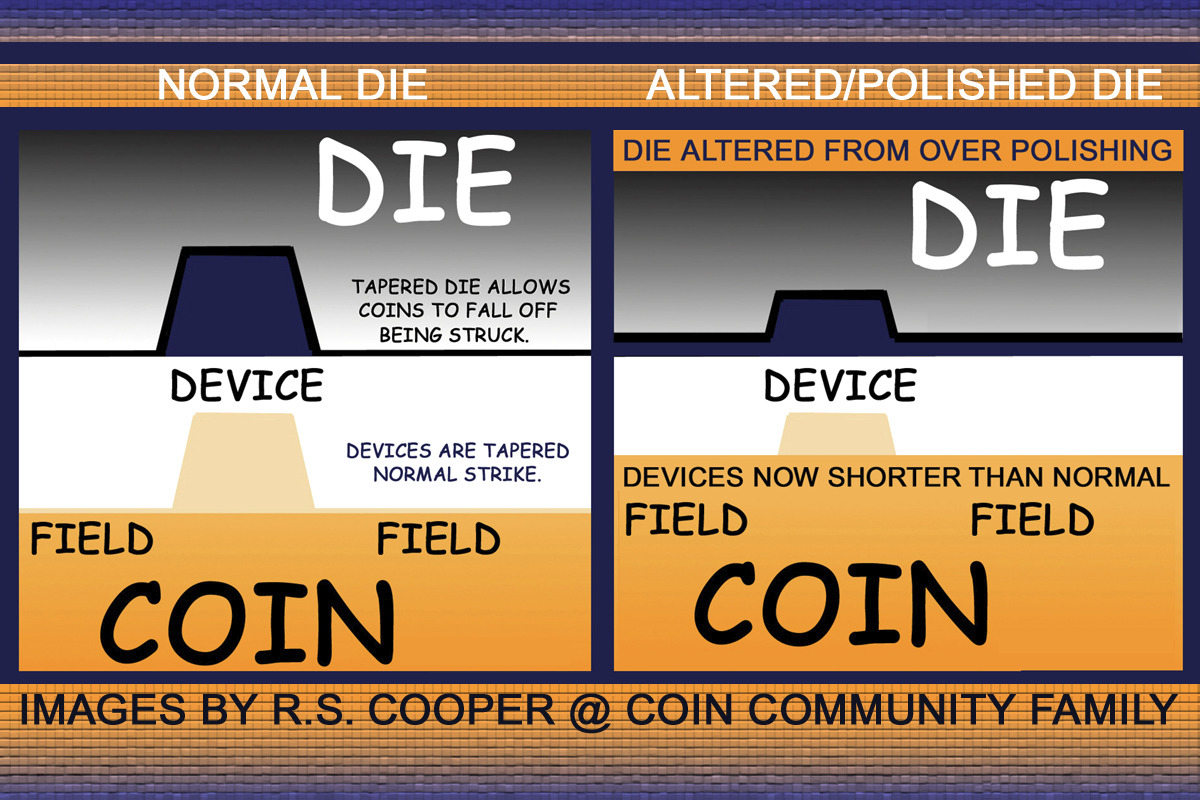
On the newer dies, when the frosting does fade, they can be laser etched again to produce that surface on the tops of the devices again.
Quote:
Coop, can you explain to me, concerning the PCGS images you provided, how you were able to determine which ones were polished and which ones were not.
On one pair, the polished one retains the original frosting. On the other pair, the polished example shows a lack of frosting.
On the older dies, they only etched the devices once after die creation. As it wore off the die, the coins didn't have the cameo any longer. (Thus the higher prices for the cameo and Dcams of the past)
Quote:
wouldn't polishing the dies between runs be more likely to widen the devices as well since they are tapered. If the surface is reduced, then the devices would become wider and the frosting effect would be removed in the process as well.
It is not the coins that are polished, but the dies are polished. True if you took a proof coin and polished it, it would remove the definition on the coin:
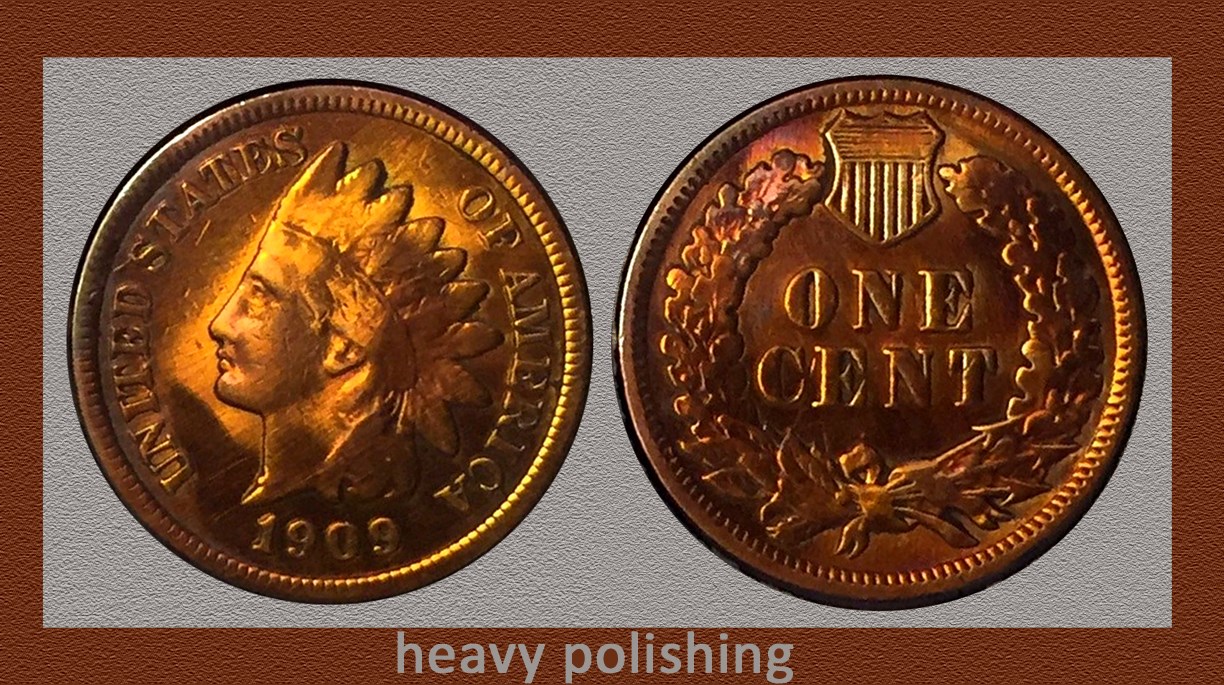
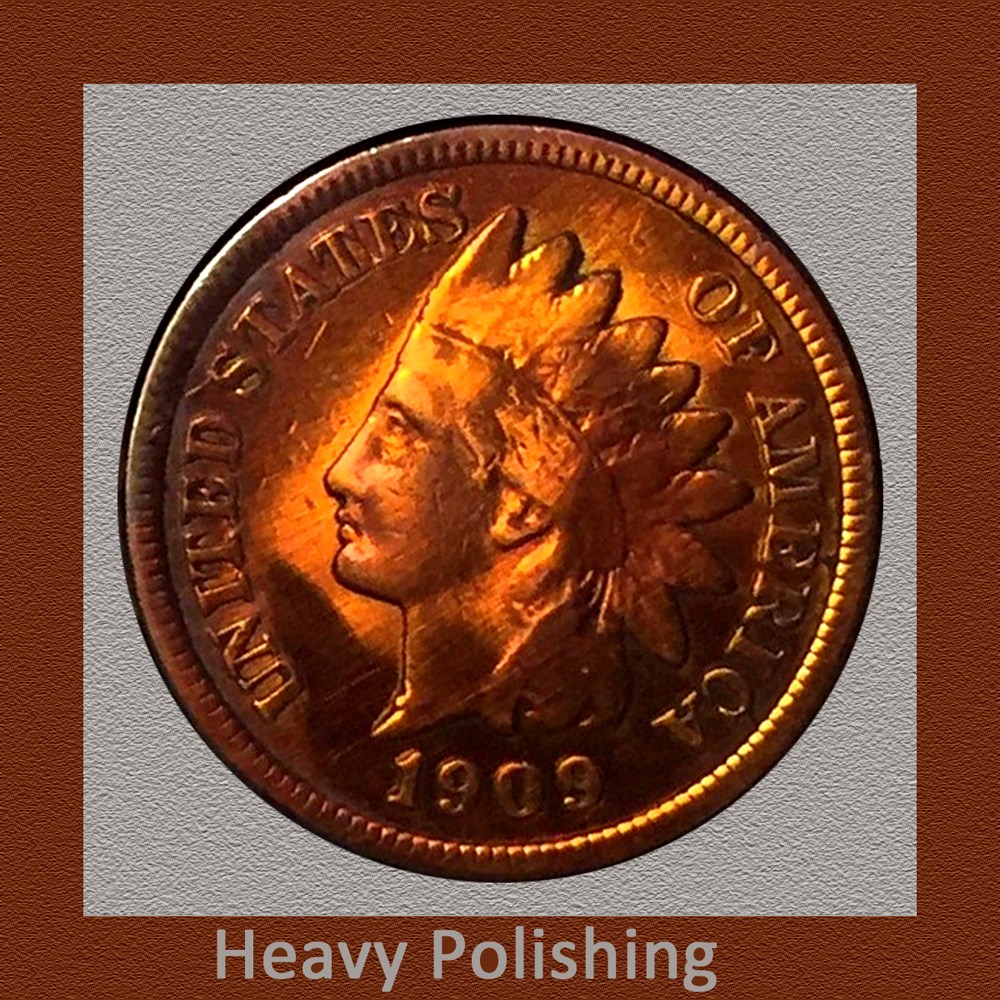
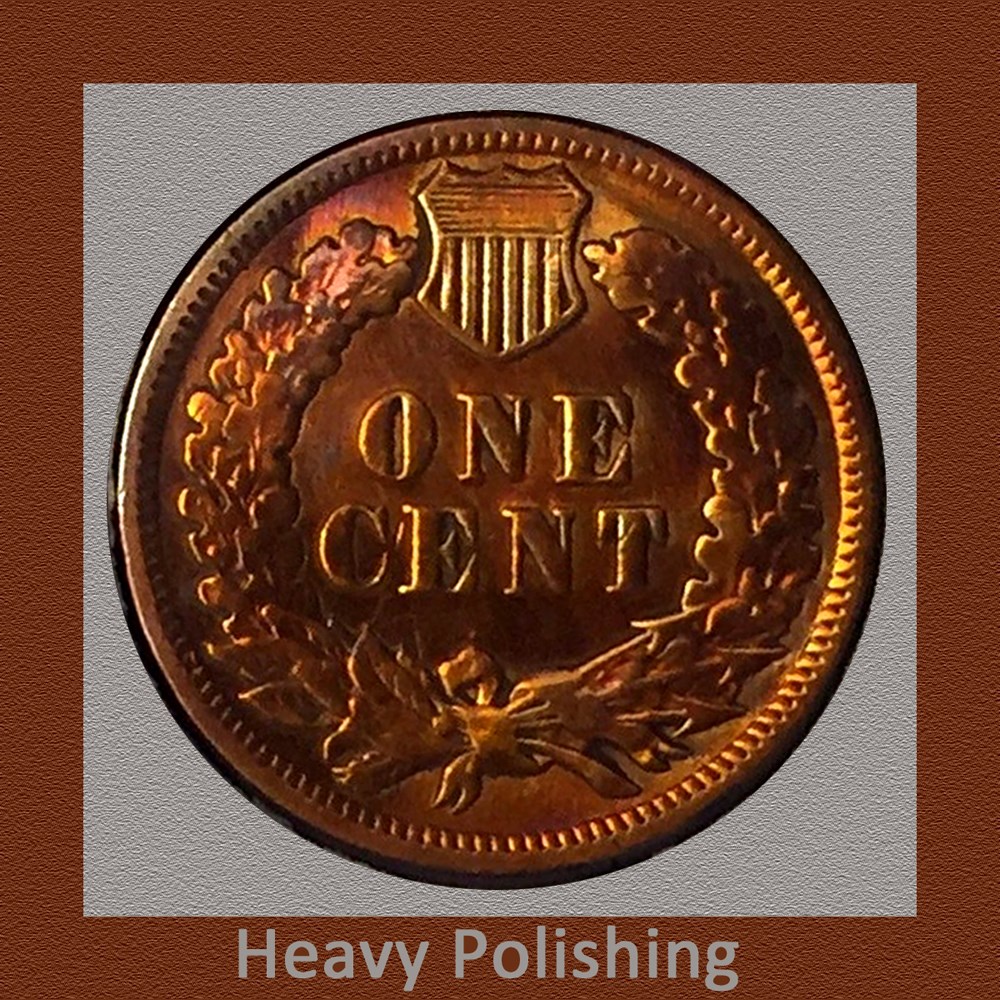
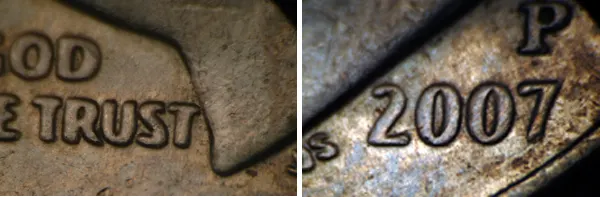
Note while the coin is shiny, the design goes away. When a die is polished the fields are affected reducing the height/width of the devices, even shorting them. Take a look again at the set of 2006-S,2007-S images. The full shaped devices are the fresher die examples. The thinner and distorted devices happened because of the polishing. Just the tops of the devices are still present, the height is reduced making them shorter. Once this is done on the die, there is not going back. The devices can be re-etched to put back the frosting, but the die was altered and all coins for the rest of that dies life will show that the die was altered.
Quote:LDS
DDD seems to be a more plausible answer at this point. Just conjecture.
Proof coins only strike 3K coins. (6K strikes as each proof coin is struck at least twice. Some denominations are struck more with a higher relief) So there is no
DDD issues on proof coins. They can be over polished and redone more than once, but because the strong strikes the die strikes are done when they reach there 6K limit.
Quote:Also why do you continue to bring up cost/value/slabbing. I have addressed this issue a couple of times in previous replies stating I have no concern or desire to do so.[quote]
Examples in the past had a premium if they were high grade coins. So when an example of the highest grade PR-70 and DCAM, only sells for $15, why spend $50 to have it put in a slab? A lot of people don't realize this. Somehow on the internet everyone fields a coin should be put in a holder. But if the coin is less value than the it will sell for, I know I wouldn't do it. If I buy a coin that is in a holder, I pay nothing extra for that coin than what I feel it is worth. The holder means nothing to me. But out there on the web, they go gaga over these coins because they don't know either the cost or have the knowledge of the coins. So I warn all to get the know the coin, before you buy it. Down the road when they go to sell their coins, they will realize then that they wasted their money on the child proof containers.
[quote]That leaves
DDD as the most plausible explanation. I am sure that my opinion will be refuted in favor of another.
Each has their own opinion. Which has the facts?





 First Page




 Posted 09/27/2021 01:23 am


