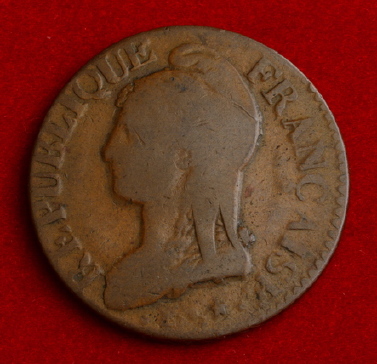
"Ghosting" is not a "mint error" in the same sense as a die clash or mis-strike. It's caused by coin dies having a large, high-relief area (often a large portrait) striking a flan that's too thin and hard at too high a speed, so in effect it's proof of a systemic flaw in the actual design process and method of striking those coins. Certain coins are susceptible to ghosting; for those coins, the entire type is normally affected: almost all specimens will show ghosting to some degree. In such cases, only the most extreme, spectacular examples of the effect, or coins which don't show the effect at all, will command a premium.
British pennies are an excellent example of a design that was susceptible to ghosting. In the 1920's the portrait of George V was specifically modified to try to minimise the ghosting effect.
Don't say "infinitely" when you mean "very"; otherwise, you'll have no word left when you want to talk about something really infinite. - C. S. Lewis










 an8bbo2.jpg
 an8bbr2.jpg

 Posted 01/17/2009 12:17 am


