Coin Community Family of Web Sites Join Thousands of Coin, Bullion, & Money Collectors
300,000 items to help build your collection! Vancouvers #1 Coin and Paper Money Dealer Specializing in Modern Numismatics Royal Canadian Mint products, Canadian, Polish, American, and world coins and banknotes. Coin, Banknote and Medal Collectors's Online Mall Royal Estate Auctions - $1 Coin AuctionsJoin Thousands of Coin, Bullion, & Money Collectors


Username:
Password:
Save Password
Forgot your Password?


This page may contain links that result in small commissions to keep this free site up and running.

Welcome Guest! Registering and/or logging in will remove the anchor (bottom) ads. It's Free!

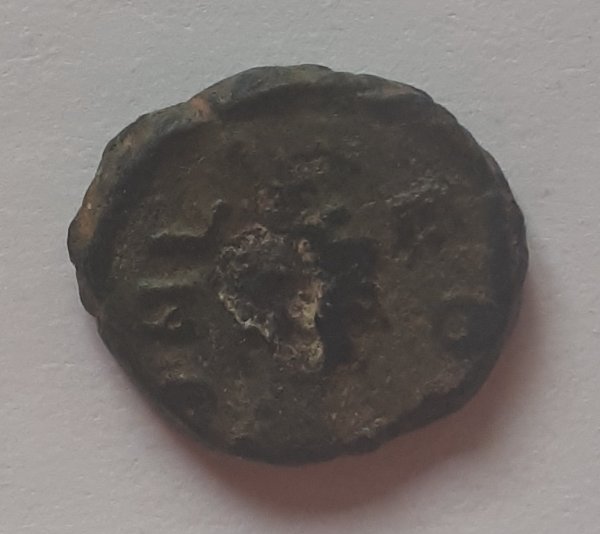
Weird Leo I Ae4 - Planchet Flaw Or Remnants Of Ancient Nail?

To participate in the forum you must log in or register.
Author Previous TopicReplies: 1 / Views: 641Next Topic  
Pillar of the Community

Russian Federation
5186 Posts
 Posted 10/26/2021  2:10 pm Show Profile   Bookmark this topic Add january1may to your friends list Get a Link to this Message Number of Subscribers
...I almost wrote "planchet flaw or PMD" but decided that it would be too silly.

Weird-Leo-I-Ae4---Planchet-Flaw-Or-Remnants-Of-Ancient-Nail? Weird-Leo-I-Ae4---Planchet-Flaw-Or-Remnants-Of-Ancient-Nail?

Eastern Roman Empire
Leo I (457-474)
AE4 (12x10 mm), 1.29 grams
Obverse DN L/EO; not sure of the reverse

Had this coin for a few years, apparently never bothered to make a photo.

I always thought that the bit in the middle is the remnant of an ancient nail that somehow stuck through the coin many centuries ago.
Now that I think about it, though, it might also be a weird planchet flaw.
So I decided to turn to the good people of CCF for their opinion

For the record, the middle bit does attract a neodymium magnet, which is what used to be my argument in favor of the nail theory. But maybe a planchet flaw could result in that as well.
Bedrock of the Community
sel_69l's Avatar
Australia
21789 Posts
 Posted 10/26/2021  6:41 pm  Show Profile   Bookmark this reply Add sel_69l to your friends list Get a Link to this Reply
It may have bee a flan flaw initially, but that has provided the site for accelerated corrosion in that area.
A common occurrence on ancient coins, and more particularly bronze and billon coins.
  Previous TopicReplies: 1 / Views: 641Next Topic  

To participate in the forum you must log in or register.


Disclaimer: While a tremendous amount of effort goes into ensuring the accuracy of the information contained in this site, Coin Community assumes no liability for errors. Copyright 2005 - 2026 Coin Community Family- all rights reserved worldwide. Use of any images or content on this website without prior written permission of Coin Community or the original lender is strictly prohibited.
Contact Us  |  Advertise Here  |  Privacy Policy / Terms of Use

Coin Community Forum © 2005 - 2026 Coin Community Forums
It took 0.2 seconds to rattle this change. Forums