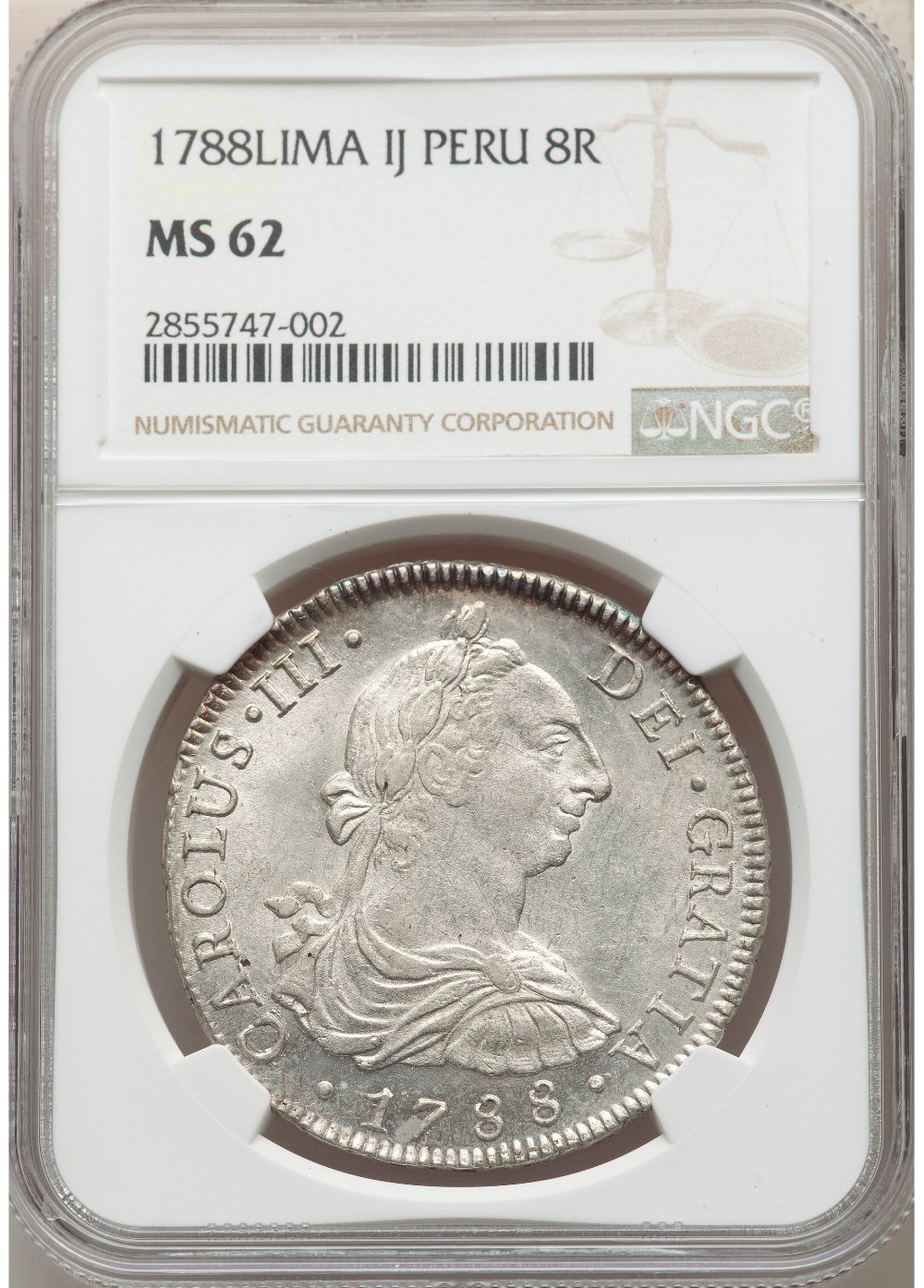
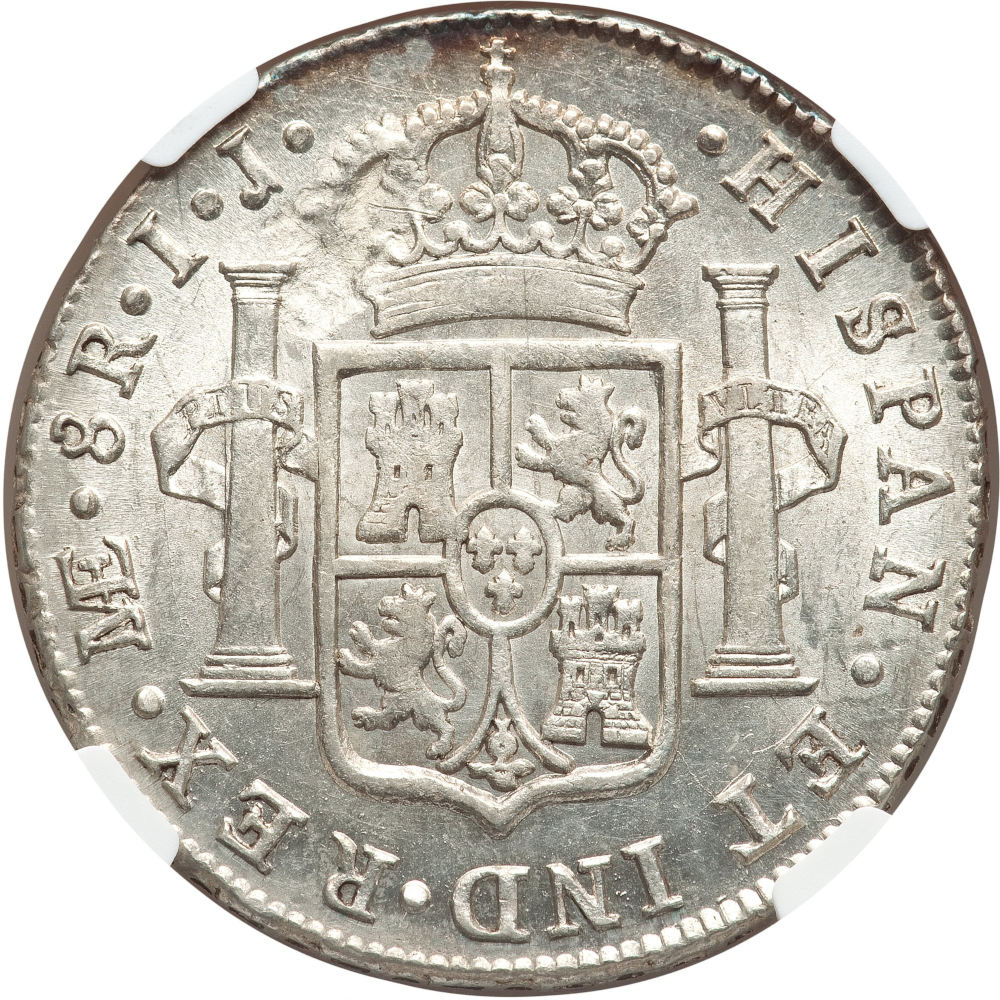
I acquired this coin because it was an important part of U.S. history. The Spanish milled dollar or 8 reales coin was effectively the reserve currency of the world at the time and that applied to all other denominations of Spanish coinage. Until 1857, Spanish gold and silver coins were legal tender in the U.S. This 8 Reales coin is the Silver counterpart to the US Dollar and also to the two 8 Escudos coins I acquired in this related thread:
http://goccf.com/t/410014 Smaller silver Spanish coinage circulated widely in the colonies and the United States alongside other foreign coins as locally produced coinage was scarce. The 8 Reales coins were chopped into 2, 4 or 8 "bits" to make change.
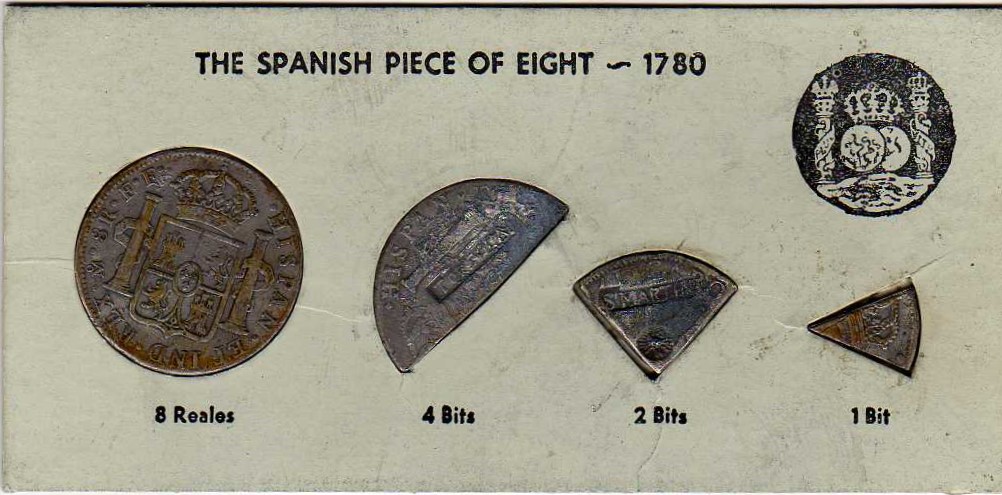
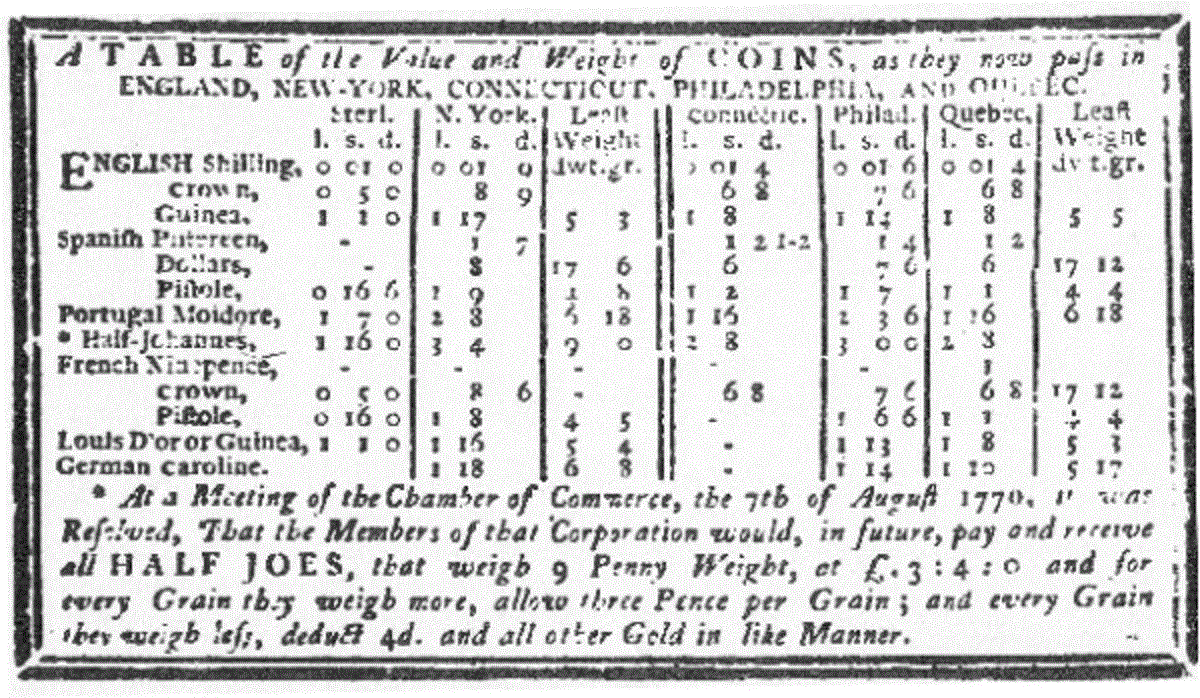
Many of these intact silver majors also sat in bank vaults like gold coinage and served as reserves backing paper currency and notes issued, which were more practical to carry around and exchange. This example looks like it sat in a bank vault for a long time. Below is an image of posted exchange rates in North America for foreign coinage published by Michener.
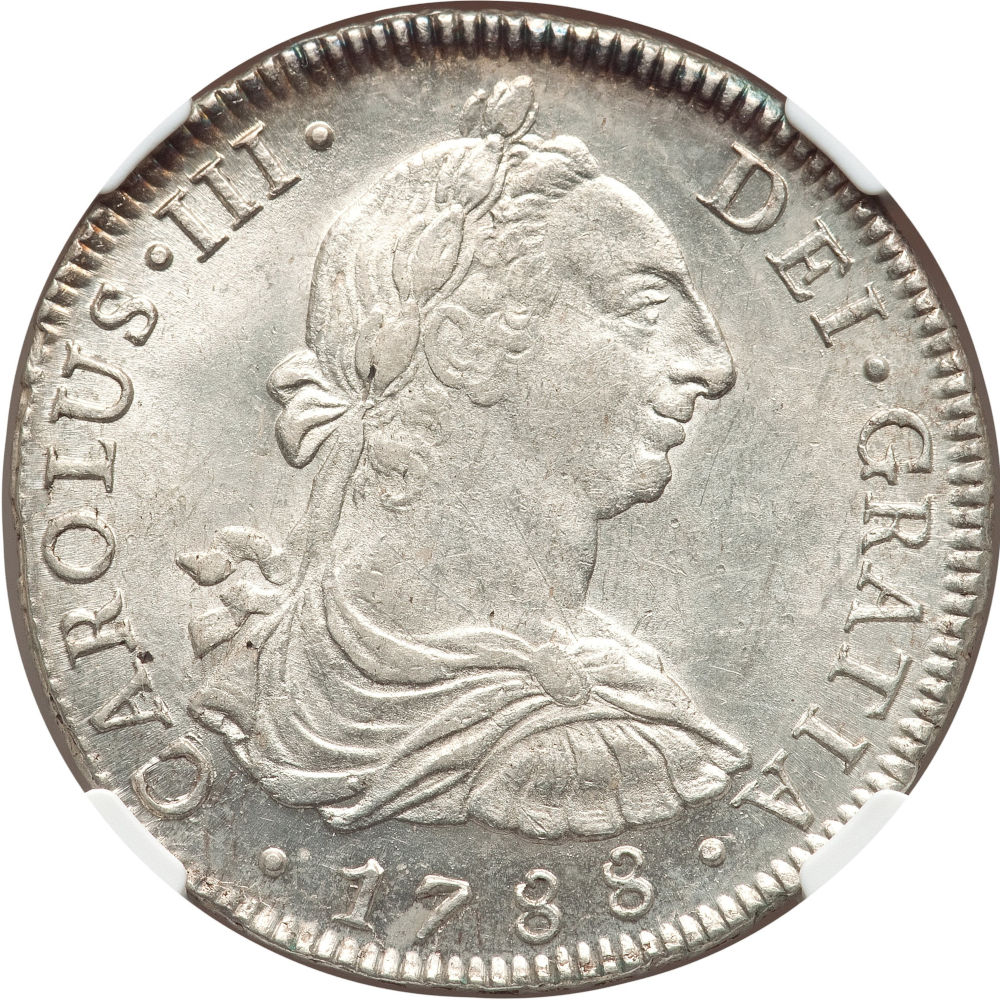
NGC says that this particular type issued during the reign of King Carlos III (
Latin Carolus or Carol for short - Pictured Below) in 1788 at the tail end of his reign (1759-1788) had a huge mintage of 3,467,000 coins in far away Lima, Peru. This belies the huge silver discoveries in the New World and why these distant colonies were so valuable to European sovereigns. These were struck after the American Revolutionary War and prior to the establishment of the U.S. Mint. This coin would have been used as money all over the world, but primarily in the colonial trade in the New World.
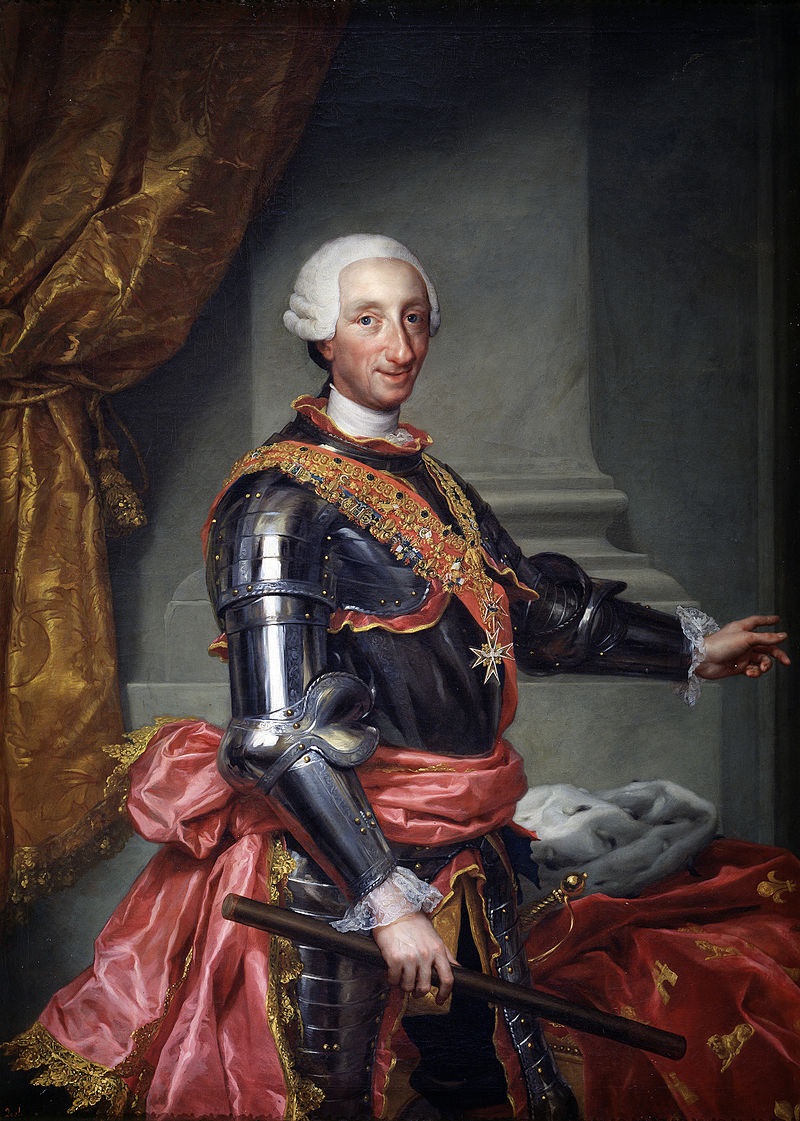
Do the engraved portraits of Carlos III in the coins reflect the painted portraits of his image?
Thoughts? Thanks!











 Posted 10/30/2021 11:08 pm