Coin Community Family of Web Sites Join Thousands of Coin, Bullion, & Money Collectors
Coin, Banknote and Medal Collectors's Online Mall Vancouvers #1 Coin and Paper Money Dealer 300,000 items to help build your collection! Royal Estate Auctions - $1 Coin AuctionsSpecializing in Modern Numismatics Join Thousands of Coin, Bullion, & Money Collectors Royal Canadian Mint products, Canadian, Polish, American, and world coins and banknotes.


Username:
Password:
Save Password
Forgot your Password?


This page may contain links that result in small commissions to keep this free site up and running.

Welcome Guest! Registering and/or logging in will remove the anchor (bottom) ads. It's Free!

8 Reales Carolus IIIi 1808 PTS Pj, Questionable Autenticity

To participate in the forum you must log in or register.
Author Previous TopicReplies: 10 / Views: 1,867Next Topic  
New Member

Ukraine
7 Posts
 Posted 02/03/2022  3:13 pm Show Profile   Bookmark this topic Add aliquis to your friends list Get a Link to this Message Number of Subscribers
Cheers to the community!

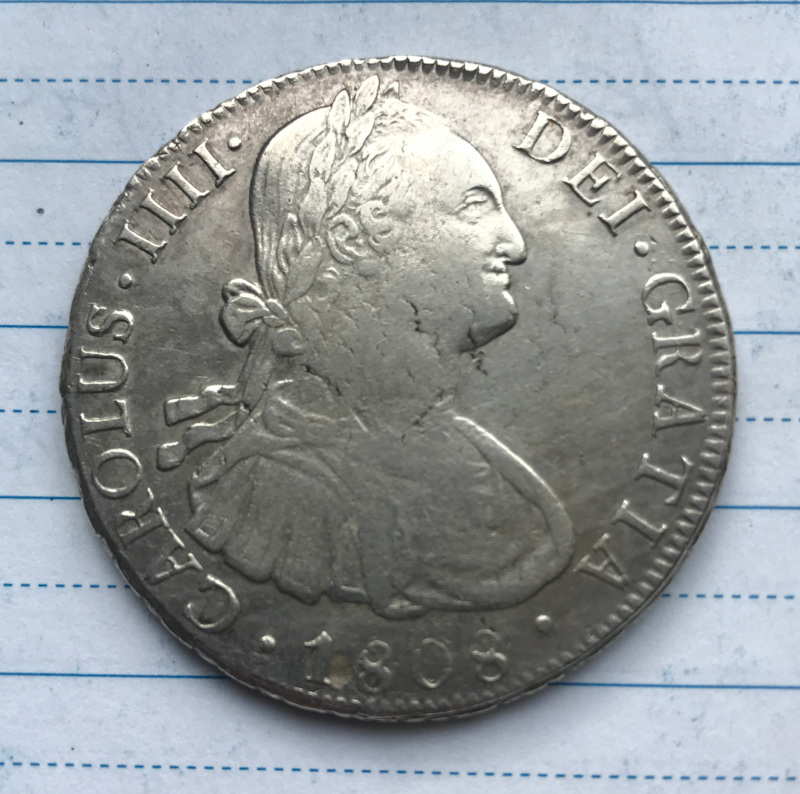
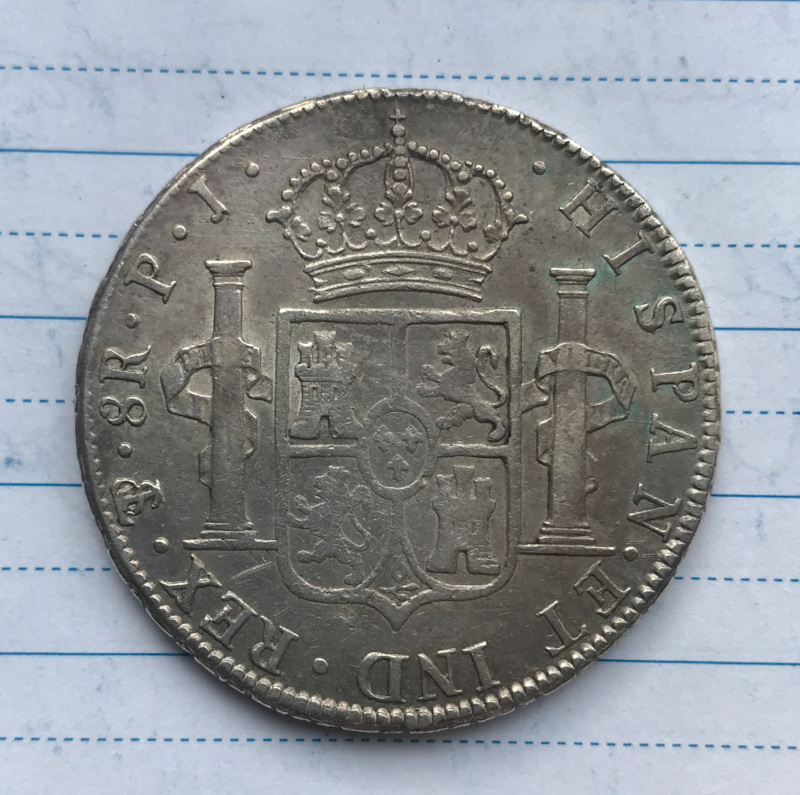
I have an 8 reales piece (Carolus IIII, Bolivia, 1808) for which I have some doubts and will greatly appreciate comments from the people more experienced than myself.

Coin parameters (all measured by myself, so may be not extremely precise):
1. Diameter 39.3 - 39.7 mm
2. Rim thickness 1.9 - 2.4 mm
3. Weight 27.05 g
4. Density (specific weight) 10.285 g/cm3
5. Reaction to the magnet is typical for silver and other non-ferromagnetic metals with high electric conductivity: not attracted to a static magnet, but "follows" a fast moving magnet
6. Ping: for me sounds more or less like other silver coins
7. A wet AgNO3 pencil leaves no traces on the surfaces

What is suspicious:
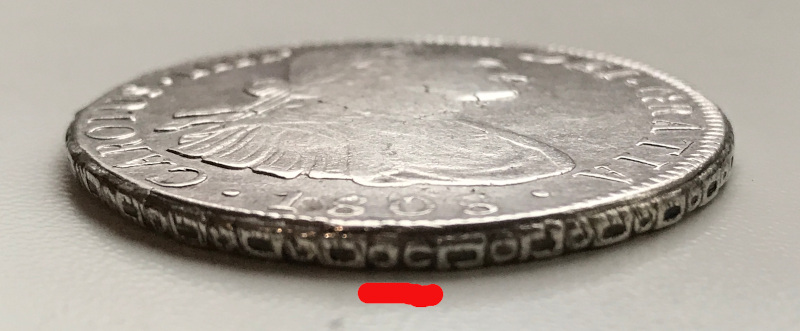
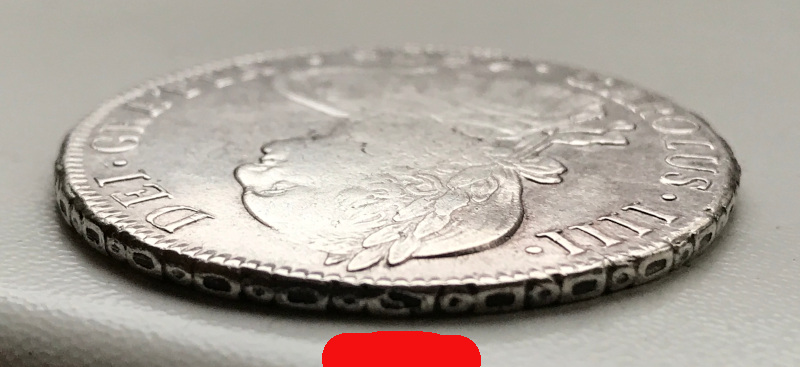
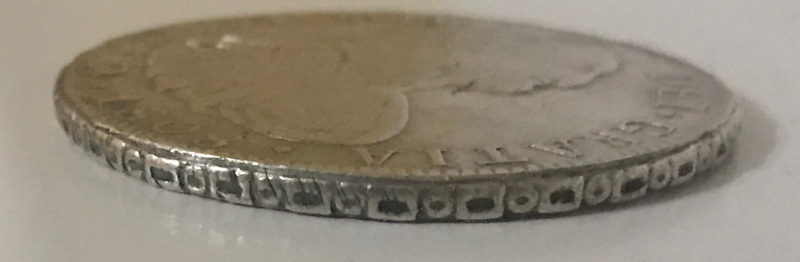
1. Uneven rim thickness
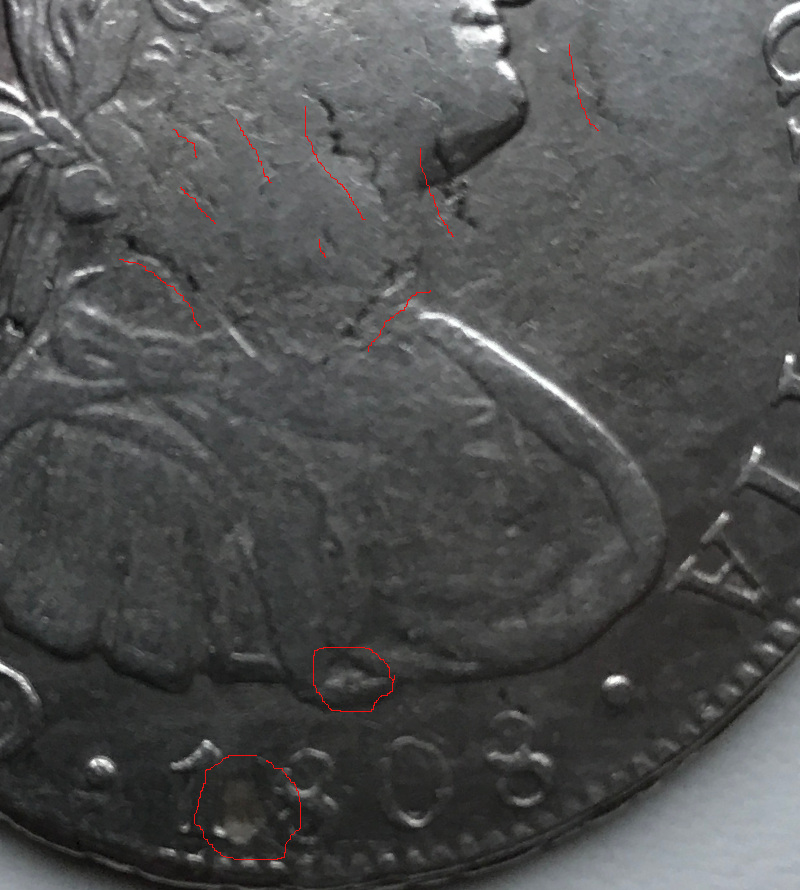
2. Cracks on the bust (obverse)
3. A depression which looks like a casting blister between 1 and 8 in the date (obverse)
4. The look of the border/transition between the edge and the faces

Please take a look at the attached photos and kindly help me to convert my doubts into some form of knowledge :)

P.S. The obverse is slightly convex, the reverse is slightly concave - as it should theoretically be.


8-Reales-Carolus-IIIi-1808-PTS-Pj,-Questionable-Autenticity
Edited by aliquis
02/03/2022 3:58 pm
Moderator
Learn More...
jbuck's Avatar
United States
188770 Posts
New Member
Ukraine
7 Posts
 Posted 02/04/2022  3:17 pm  Show Profile   Bookmark this reply Add aliquis to your friends list Get a Link to this Reply
Jbuck, thank you for the welcoming message!

I have discussed what the coin could possibly be with some friends of mine (none of them a coin expert, so just our logical considerations).

Based on the measurements and tests listed in the top post, the coin seems to have a correct weight, overall dimensions and chemical composition, but the quality of at least the blank seems poor. So the possible choices we could come up with are:

1. An original. Is it possible, that Bolivian mint at the time cared about the weight and composition, but otherwise allowed the quality of the blanks to vary?

2. A circulating counterfeit. Unlikely, little sense to make it of a correct alloy with a correct weight.

3. A relatively old counterfeit produced by a foreign entity out of convenience for use in the international trade. Is any country or private company known to have imitated Bolivian 8R pieces like US did to their Mexican analogs?

4. A relatively modern numismatic fake. Not sure why to undertake the effort to imitate the alloy and weight correctly, but miss the quality issues which affect the looks of a product and will be the first thing to alert a potential buyer?

Will greatly appreciate if any of the forum's subject matter experts reviews my findings and considerations and shares their own educated opinion.
I'll not bump this topic anymore, not to bother the readers with it if it happens to be of a little interest for them :)

P.S. After extensively reading this forum and other materials, I'm inclined to conclude that mine is an original piece. No one seems to have cared to counterfeit Potosi in silver with the correct weight and composition in the old times, and probably no one will bother to fake it in good silver now. So high chances it is an original made on a worn screw press with somewhat tilted dies of a blank of a mediocre quality, not much against Potosi traditions. Washing the coin in acetone to remove the green PVC stain and putting it to the album with an easy heart.
Edited by aliquis
02/05/2022 07:18 am
Pillar of the Community
jgenn's Avatar
United States
1156 Posts
 Posted 02/06/2022  11:02 pm  Show Profile   Bookmark this reply Add jgenn to your friends list Get a Link to this Reply
Spanish Colonial coins were run through a parallel edging device that leaves a telltale overlap (or potentially a gap, but that is not seen on portrait issues) at two spots directly opposite each other. Your edge photo is quite nicely done -- can you find the overlaps and post photos of those, too.
New Member
Ukraine
7 Posts
 Posted 02/07/2022  01:37 am  Show Profile   Bookmark this reply Add aliquis to your friends list Get a Link to this Reply
Jgenn, a good point!

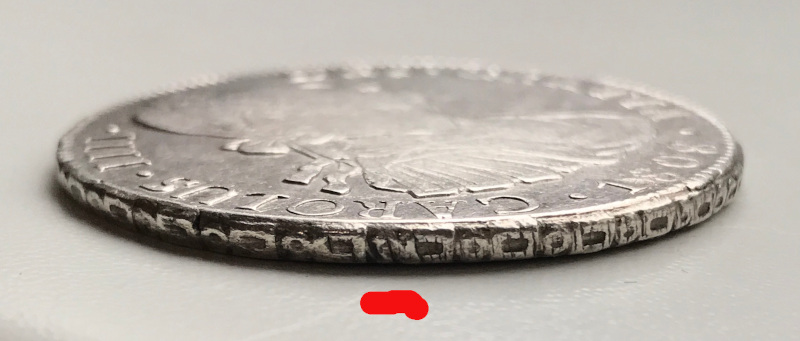
These are the irregularities I found on the edge.

The first (a duplicate circle) is diametrically opposite to the second (looks like overlapping rectangles).

But there is a third one which has no counterpart across the coin - a severely broken something instead of a circle and a part of a rectangle.

Please take a look at the images. Provided there is a third irregularity (if that doesn't look for you like something created in the coin's circulation time), there's a big chance the incorrect edging process was used and a coin is some sort of a fake?

8-Reales-Carolus-IIIi-1808-PTS-Pj,-Questionable-Autenticity
Pillar of the Community
jgenn's Avatar
United States
1156 Posts
 Posted 02/07/2022  9:00 pm  Show Profile   Bookmark this reply Add jgenn to your friends list Get a Link to this Reply
In the third edge photo that looks like adjustment marks made prior to the striking of the edge design.

What is that spot between the 1 and 8?
New Member
Ukraine
7 Posts
 Posted 02/08/2022  01:19 am  Show Profile   Bookmark this reply Add aliquis to your friends list Get a Link to this Reply
That spot is a depression that arouse my initial suspicions about the authenticity of the coin, altogether with the cracks in the obverse, because it looked like something that could be a blister in a cast metal. These defects are mentioned in the initial post and are visible on the first photo. But it could be as well a trace from a piece of external material (sand, dirt etc) that got between the surface of the planchet and the die during the striking process (I have seen the likes on the rolled steel stripes). There is a similar but smaller and less visible defect at the very bottom of the bust right in the middle between 18 and 08.
These defects should have appeared at some point in the coin manufacturing process, as they don't show up in any way on the matching spots on the reverse side, thus are unlikely to have been created during the circulation/storage.

P.S. As for the cracks, they could have appeared as a result of the metal impurity on one side of the ingot during rolling into a stripe or minting and/or as a result of some technological violation (did the stripes or blanks have to be annealed before further processing?)
8-Reales-Carolus-IIIi-1808-PTS-Pj,-Questionable-Autenticity
Edited by aliquis
02/08/2022 08:06 am
Pillar of the Community
jgenn's Avatar
United States
1156 Posts
 Posted 02/08/2022  10:04 pm  Show Profile   Bookmark this reply Add jgenn to your friends list Get a Link to this Reply
There were many steps from silver alloy ingot to planchet and annealing was likely used in most is not all of them. The stress fractures could have been caused by the striking of an improperly annealed planchet or possibly from improper annealing in an earlier step. On a struck piece the depressions might come from delamination.

Hopefully, swamperbob and realeswatcher will weigh in with their opinions.
New Member
Ukraine
7 Posts
 Posted 02/09/2022  12:51 am  Show Profile   Bookmark this reply Add aliquis to your friends list Get a Link to this Reply
jgenn, thank you very much for sharing your knowledge!
As the most prominent of the cracks are parallel to each other, they indeed could have formed because of a non-relaxed stress perpendicularly to the stripe rolling direction if annealing after some of the metal-forming steps wasn't done properly, not because of some metal impurity like I guessed before.
I'm very glad that I found this forum, had a lot of good reading during recent days. The level of expertise of the forum members in the topics like Hispanic-American coinage is more than impressive, it's fantastic!
Valued Member
United States
131 Posts
 Posted 02/09/2022  9:50 pm  Show Profile   Bookmark this reply Add threefifty to your friends list Get a Link to this Reply
Very nice coin, thanks for posting! In my opinion your third picture above shows damage to the edge rather than an adjustment mark. Swamperbob has noted in the past that adjustment marks were made on the faces of the coin, not the edges.
New Member
Ukraine
7 Posts
 Posted 02/10/2022  12:46 am  Show Profile   Bookmark this reply Add aliquis to your friends list Get a Link to this Reply
threefifty, thank you for the information! Indeed, swamperbob wrote about it in some earlier threads.
This coin already brought me enough pleasure studying it with the help of the forum to justify having acquired it :)
  Previous TopicReplies: 10 / Views: 1,867Next Topic  

To participate in the forum you must log in or register.


Disclaimer: While a tremendous amount of effort goes into ensuring the accuracy of the information contained in this site, Coin Community assumes no liability for errors. Copyright 2005 - 2026 Coin Community Family- all rights reserved worldwide. Use of any images or content on this website without prior written permission of Coin Community or the original lender is strictly prohibited.
Contact Us  |  Advertise Here  |  Privacy Policy / Terms of Use

Coin Community Forum © 2005 - 2026 Coin Community Forums
It took 0.36 seconds to rattle this change. Forums