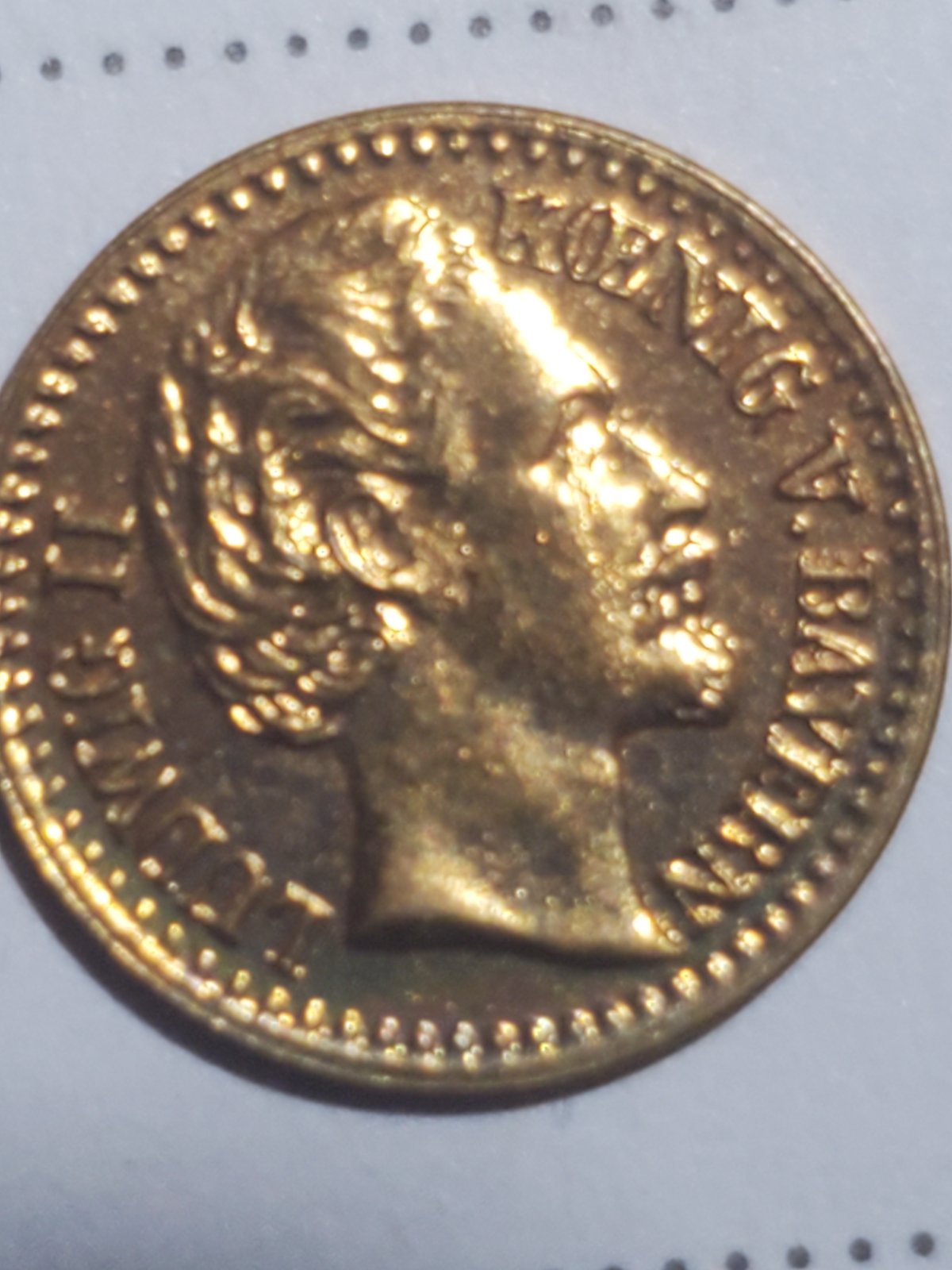
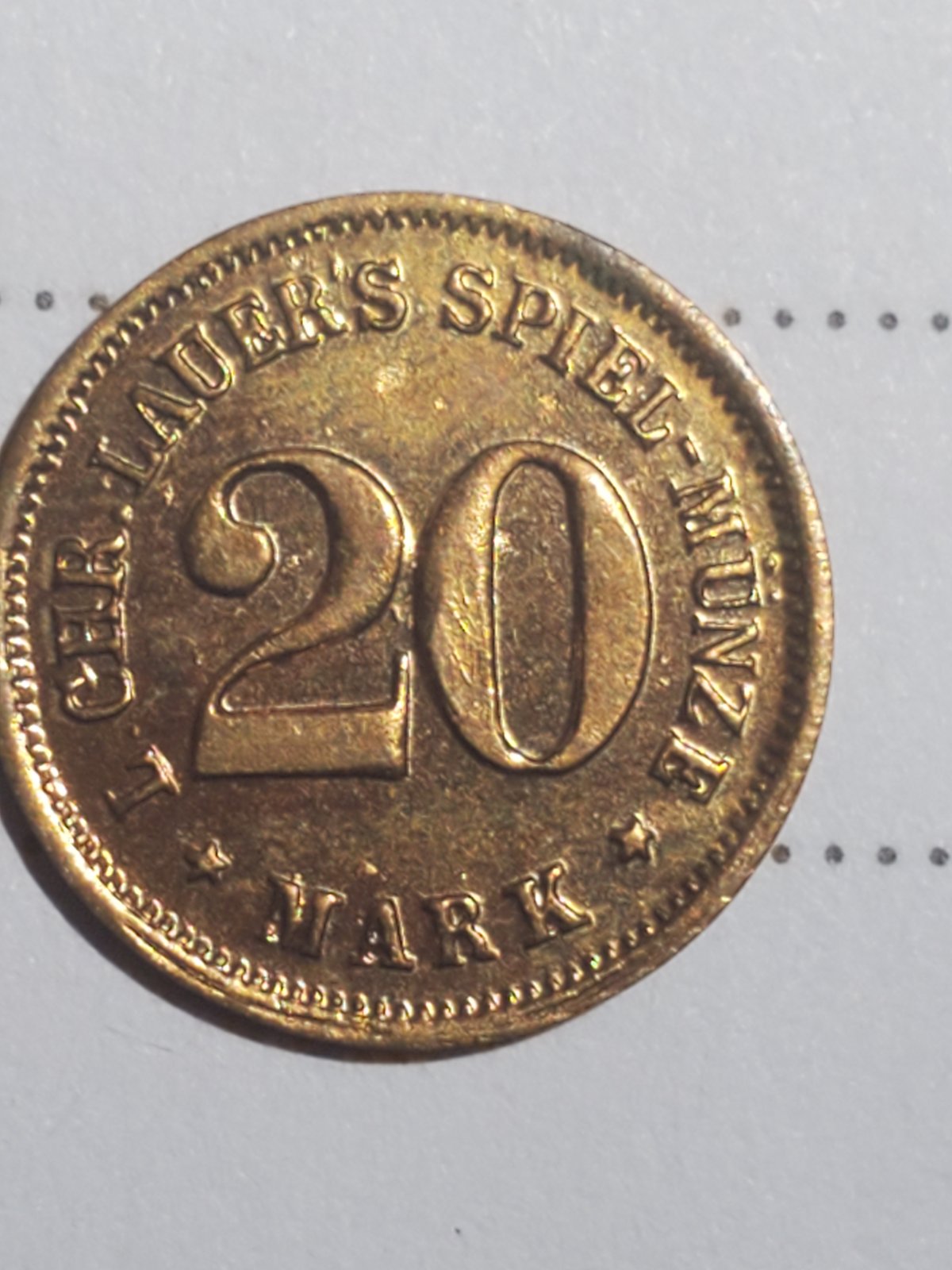
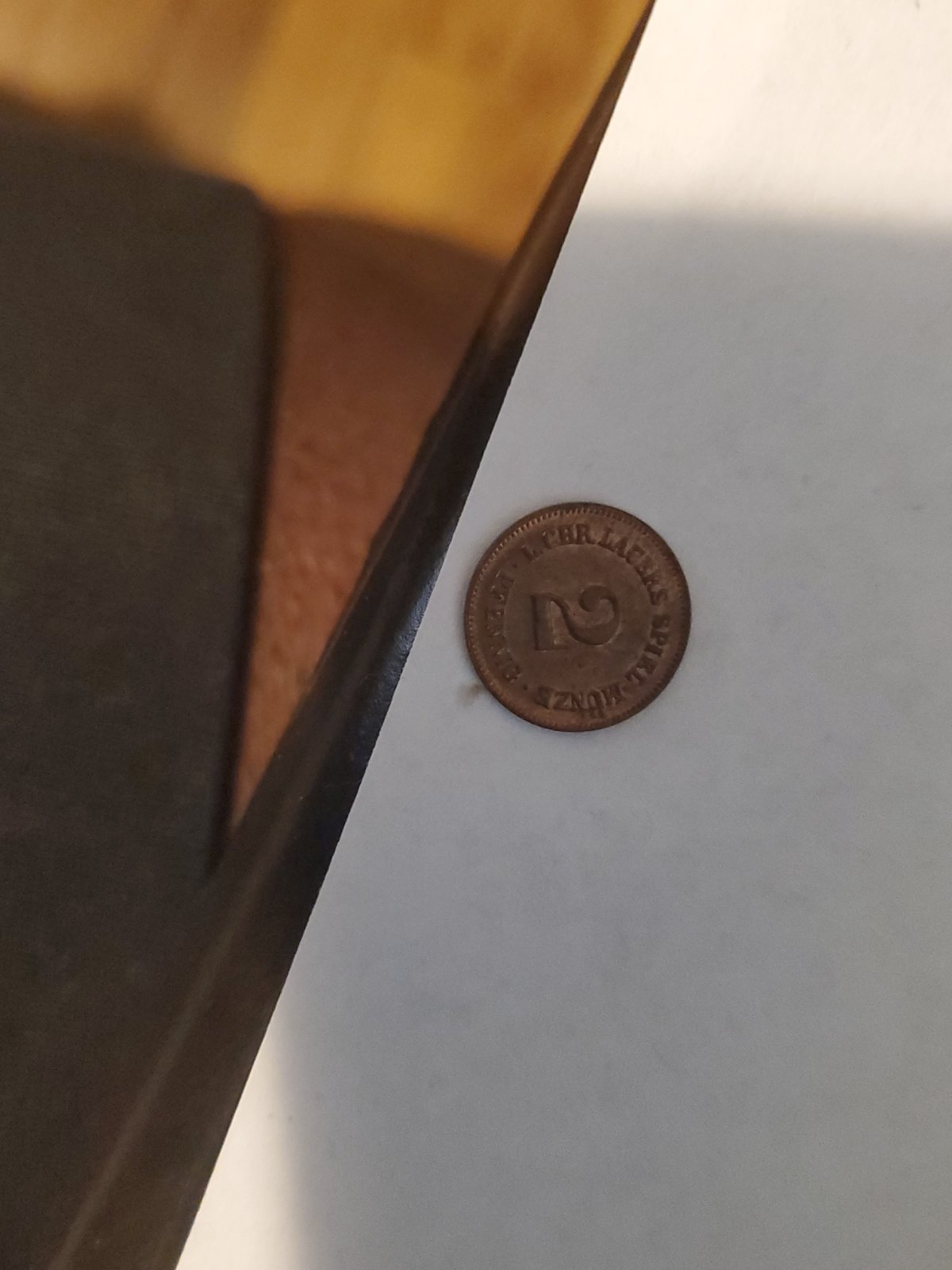
They are indeed "play money" (the literal translation of "spiel-münze"), but this doesn't mean they are worthless. They are 100 year old historical artifacts in their own right, and there are collectors of such pieces out there.
The Lauer family were the last and greatest dynasty of token-makers from the German city of Nuremberg. Ludwig Christian Lauer turned the family business into a major industrial-age corporation, striking tokens and play money for all sorts of markets, including for export to Britain and America. After the First World War, when all things German went out of fashion outside of Germany, the company turned to producing Notgeld tokens. The Lauer company still exists in Germany, but focusses on heavy industry metal fabrication and no longer produces tokens.
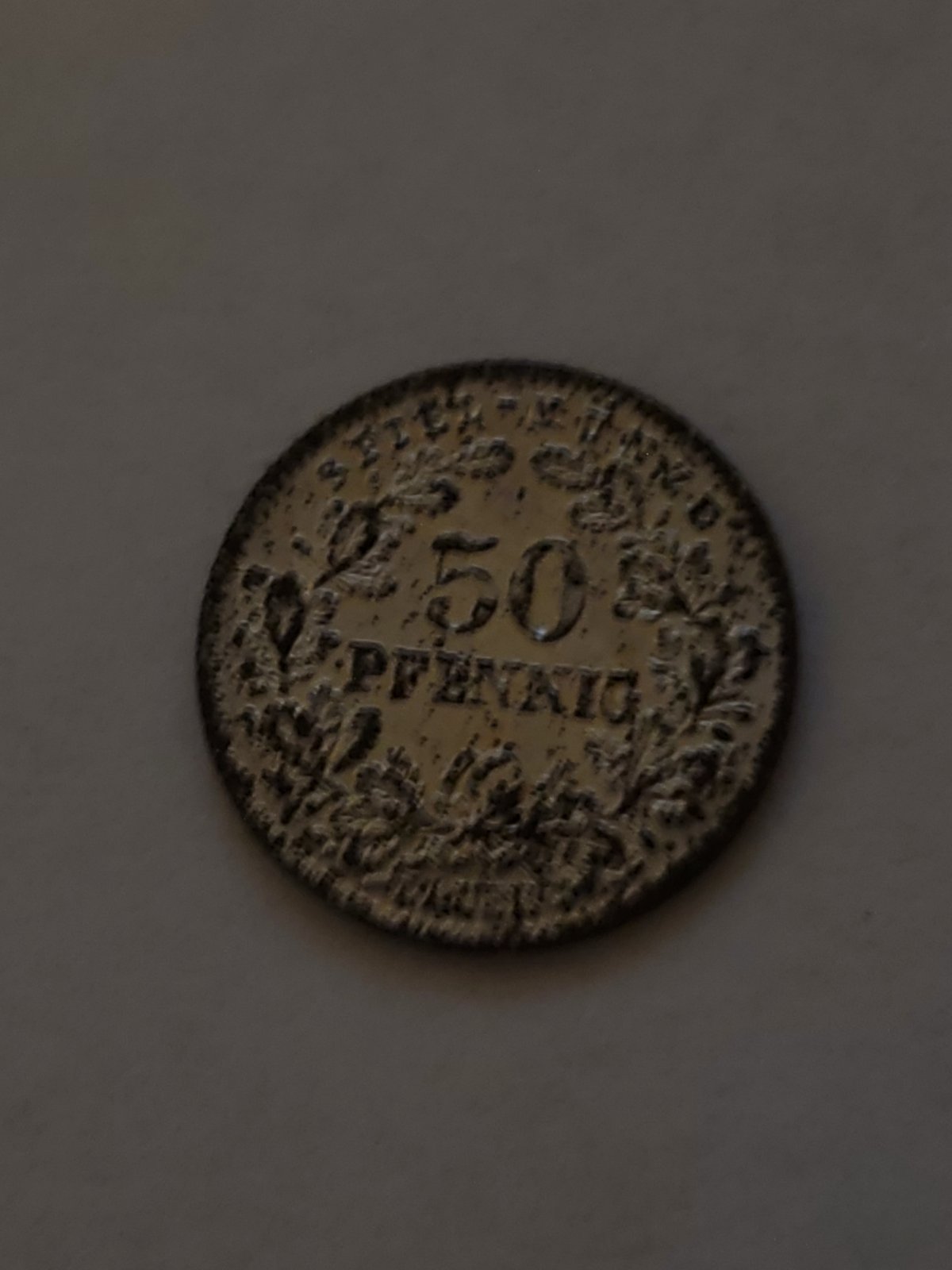
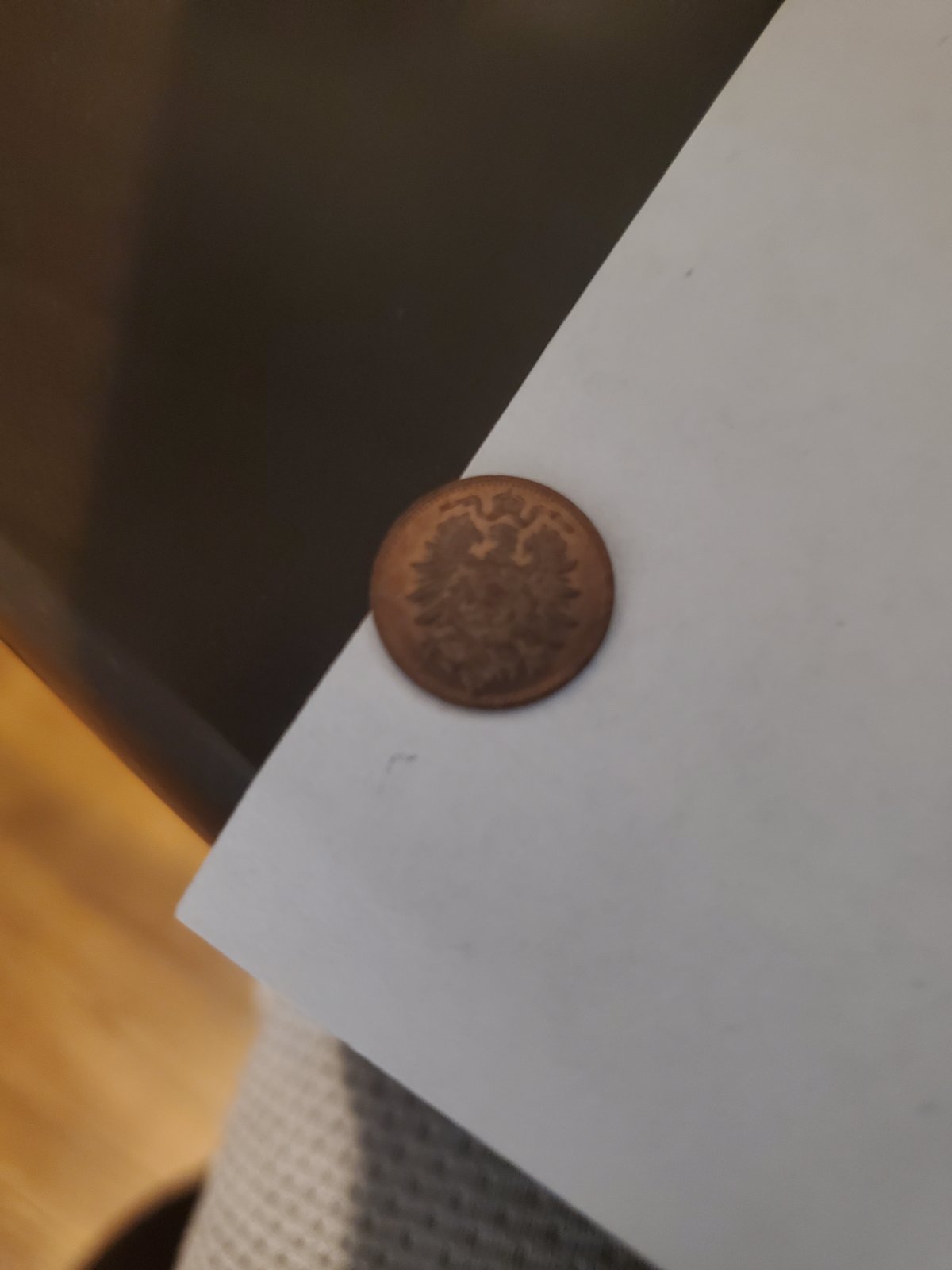
These pieces are pre-WWI German play money tokens. There are catalogues that list these old play money coins, but I don't have one so can't speak definitively as to rarity and value of these specific pieces. But such pieces typically sell for $5 to $10 each in reasonable condition. That 50 pfennig looks a but corroded, but the other two look near-Unc.
They are, of course, a product of their age. No-one today would manufacture tiny little imitation coins for sale to children; they're a clear choking hazard, and the alloys they used might have contained lead or other toxic materials not suitable for toys today.
Don't say "infinitely" when you mean "very"; otherwise, you'll have no word left when you want to talk about something really infinite. - C. S. Lewis










 Posted 03/24/2022 6:09 pm


 , to a great place to learn! As I have a few of these, you provided just enough info for me to completely identify these as spielmarks, or German play-money. The age can be quite old, well into the 1800s, and some can be worth a few dollars depending on the condition. Also posting some pictures would be nice to see some of the types you have.


