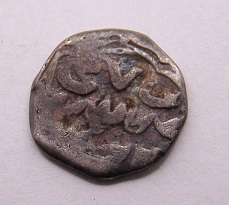
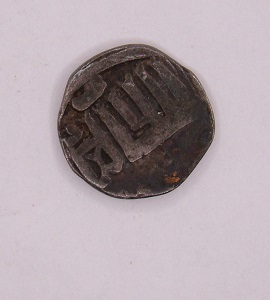
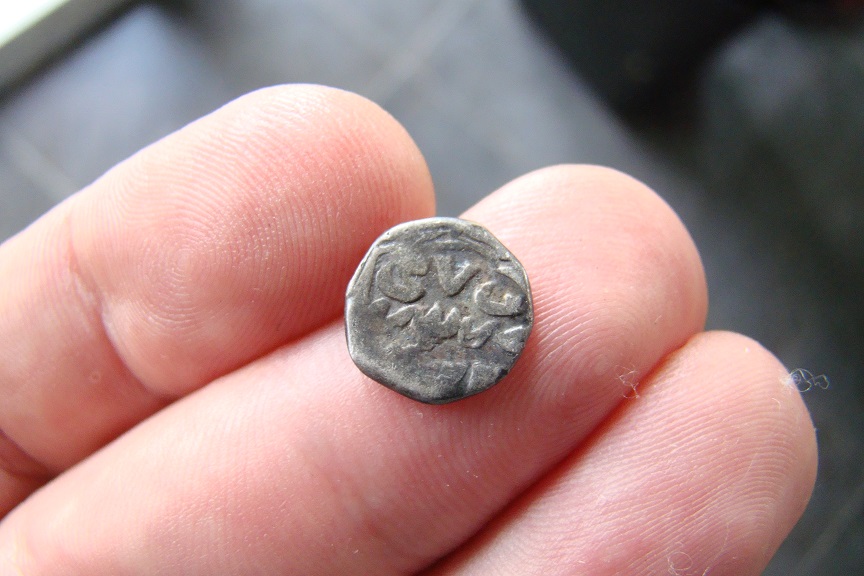
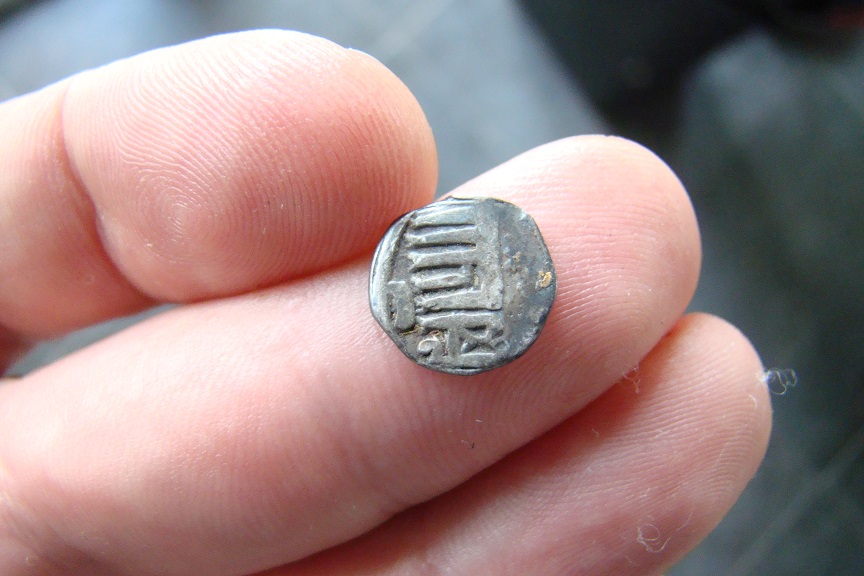
In my collection I have a small silver coin. Which has similarities as the Vladimiras Algirdas duchy from Lithuania denar type. But I can't find a match. It seems to be a imitation? with arabic like inscriptions.
Looks like an imitation of Arabic al-sultan al-a'adil from the Golden Horde coins. Possibly some of the Rus' principalities... Where is it from? What is the size/weight? Is it possible to provide better cropped photos without fingers?
Yes, most probably it was clipped under another weight standard, e.g., to be used in Rus' principalities, it during later Khans ruling. This is not uncommon
Thank you! It is not the same as the one you showed on the picture. As the left is completely empty on mine. The other side you can see the part that is similair but on the one from zeno website you can see there is more signs on the coin there. Then debased? Or is it also possible to have a 1/2 value ?
Quote: It is not the same as the one you showed on the picture. As the left is completely empty on mine.
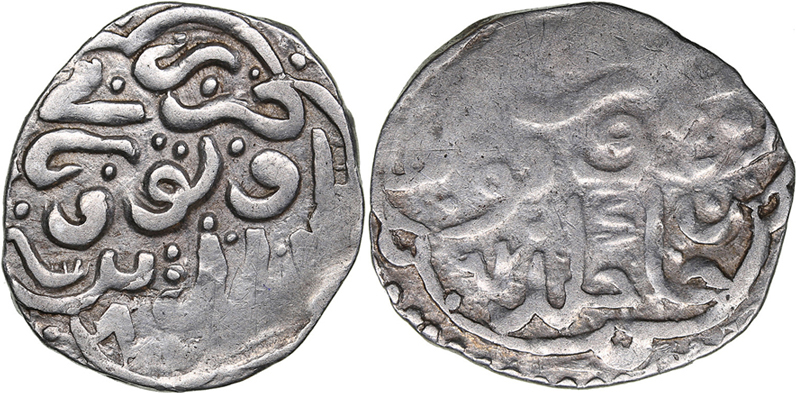
This might be because of a flat spot. Golden Horde coins are usually poorly struck. For example:
Timur Qutlugh Dang, 1398-1399 Ordu. Silver, 1.1g. Just Sultan Temur Qutlugh, may his reign be long. Minted Ordu, 801 (Sagdeeva 471/470).
Quote: The other side you can see the part that is similar but on the one from zeno website you can see there is more signs on the coin there. Then debased? Or is it also possible to have a 1/2 value ?
What it seems to be is the coin that Grinya linked to, but then someone has gone all around the edge clipping it. So they cut the rest of the design off the coin. (Also the design on your coin is struck a little lower down).
The fact that it is much smaller and with straight edges suggests this was systemmatic i.e. by the authority rather than a private individual. Lots of coins had this done to them. Grinya's idea is that this was a Russian Principality when they didn't yet make their own coins, or produced Golden Horde imitations at a smaller size. They took old Golden Horde coins, which were bigger than they needed, and cut them down. They made more coins from the offcuts.
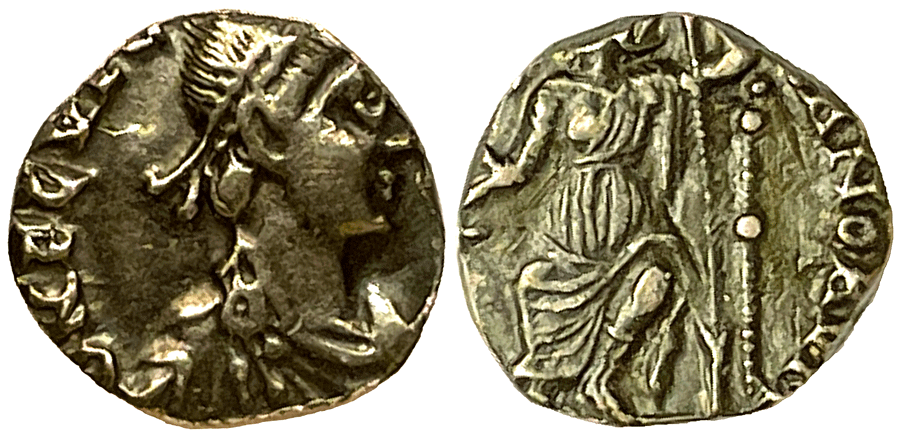
This also happened in Western Europe after the fall of the Roman Empire. The Saxons cut old Roman siliquae to the size of their own imitation siliquae. This coin was cut down from 16-17mm and 1.3-1.8g to half the weight. It's more obvious, because the portrait should clearly be complete.
Flavius Victor Siliqua (Clipped), 387-388 Milan. Silver, 10mm, 0.7g. Pearl-diademed, draped and cuirassed bust right, D N FL VIC-TOR P F AVG. Roma, holding globe in right hand, reversed spear in left, (VIRTVS RO-M)ANORVM. Mintmark MDPS (RIC IX Milan 19b). From the South Ferriby Hoard.
Once I had a cufic dirham cut at about 0.8 g. The same is quite usual for Golden Horde coins and quite often they are found together.
So, the theory that they were cut to be used at the areas with another weight system is quite popular. E.g. such dirhams were found in Bulghar area together with coins minted locally after 763.
The flat part of the coin is the place where was the Khan's name. Maybe it was deleted intentionally to use the coin under another ruler
Yes, Your item is clipped genuine Golden Horde's coin. About Vladimir, son of Algirdas, Golden Horde's coins immitations You can find much more in the new book https://www.ebay.com/itm/265754323029 I have the video in Lithuanian with Russian subtitles about this book also
Disclaimer: While a tremendous amount of effort goes into ensuring the accuracy of the information contained in this site, Coin Community assumes no liability for errors. Copyright 2005 - 2026 Coin Community Family- all rights reserved worldwide. Use of any images or content on this website without prior written permission of Coin Community or the original lender is strictly prohibited. Contact Us | Advertise Here | Privacy Policy / Terms of Use












 Posted 05/07/2022 4:11 pm