| Author |
 Replies: 7 / Views: 1,004 Replies: 7 / Views: 1,004 |
|
|
Valued Member
United States
114 Posts |
Again, eagle eyed uncle, I searched the forum for an example of this and found the railroad rim yet this doesn't look like that. And, I cannot figure out a way the planchet would be struck to cause an indent into the obverse, at all, let alone affecting only the obverse. Therefore, to correlate the obverse markings with the reed on the edge, I removed it from the flip ane took another photo which I still can't explain, yet I know you folks have seen it all. My question, what is it and does it add value to the coin? 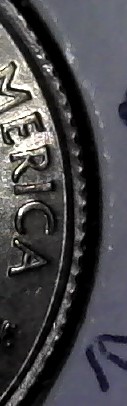   |
|
|
|
Moderator
 United States
56855 Posts |
Minor collar clash? John1  |
|
Valued Member
 United States
114 Posts |
Ah, yes, thanks John1, I found this reference to a collar clash yet in the explanation, it seems it usually is by striking on one side? Versus on left and right? Seems odd yet clearly see why it would be identified as a "minor collar clash". http://goccf.com/t/396556 |
|
Bedrock of the Community
United States
62064 Posts |
I think sometimes counting machine create wear on that area of the coins near the rim and runs around the coin. Just what coins go through. On a collar clash the whole coin is not affected, thus the area where the die touched the collar, that will be affected. 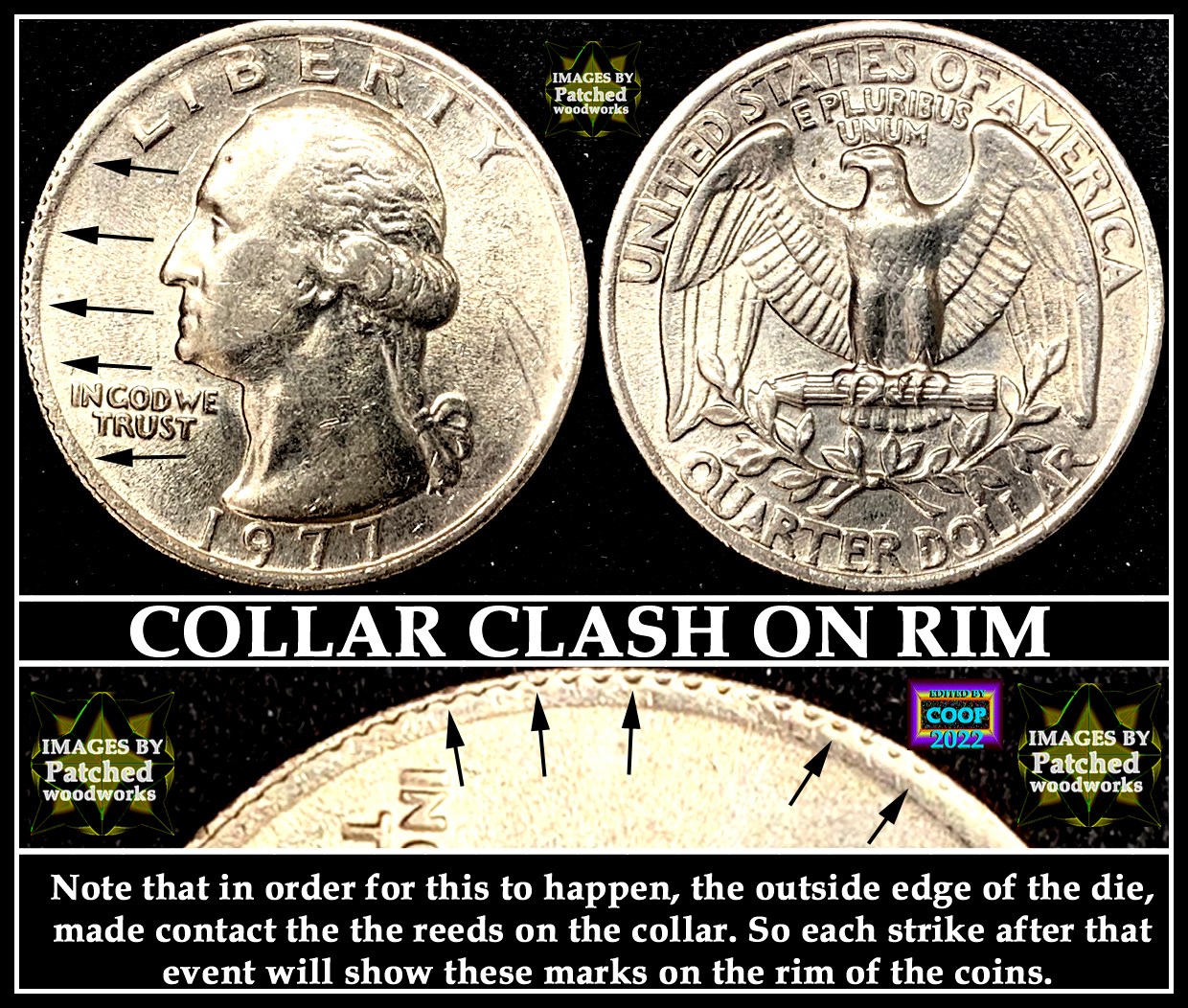 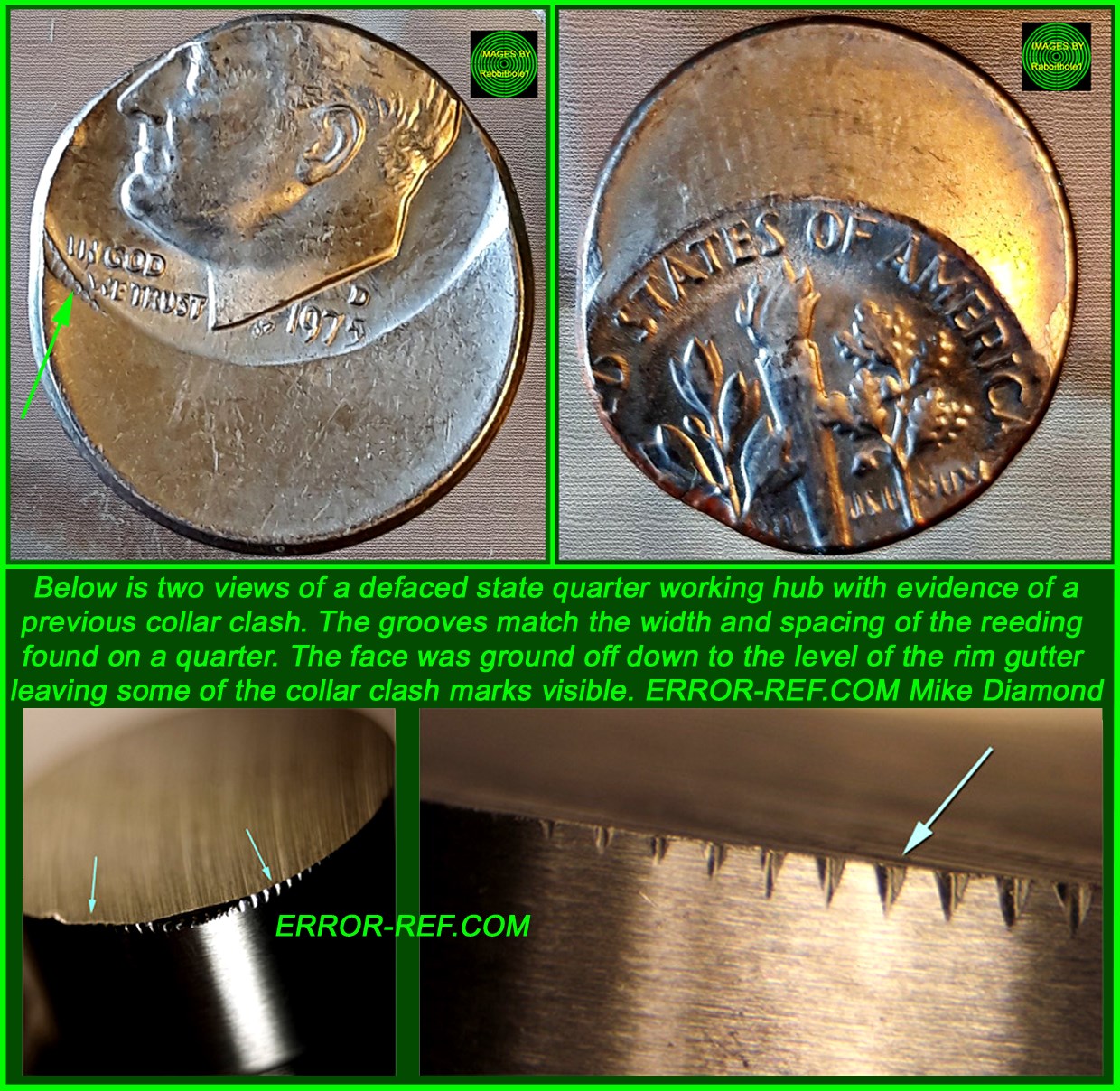 Most of the time this is on either on inside rim or on the outside edge of the die, affecting the inside edge of the rim. 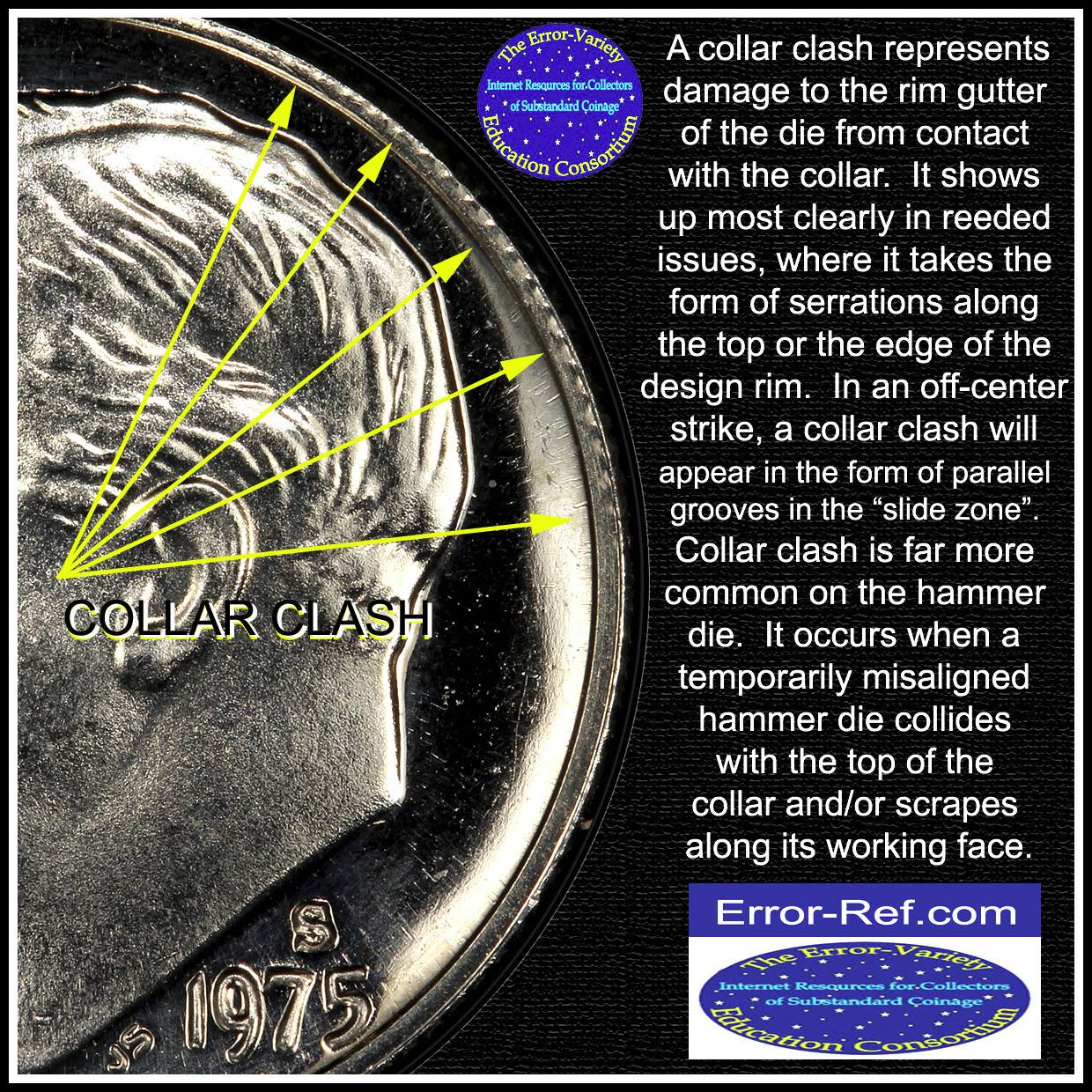 Note on this one from Mike mentions the hammer die is the one that is most often affected. (Some dies in the past had the obverse on the hammer die, but today some rotated this to the reverse as the hammer die) 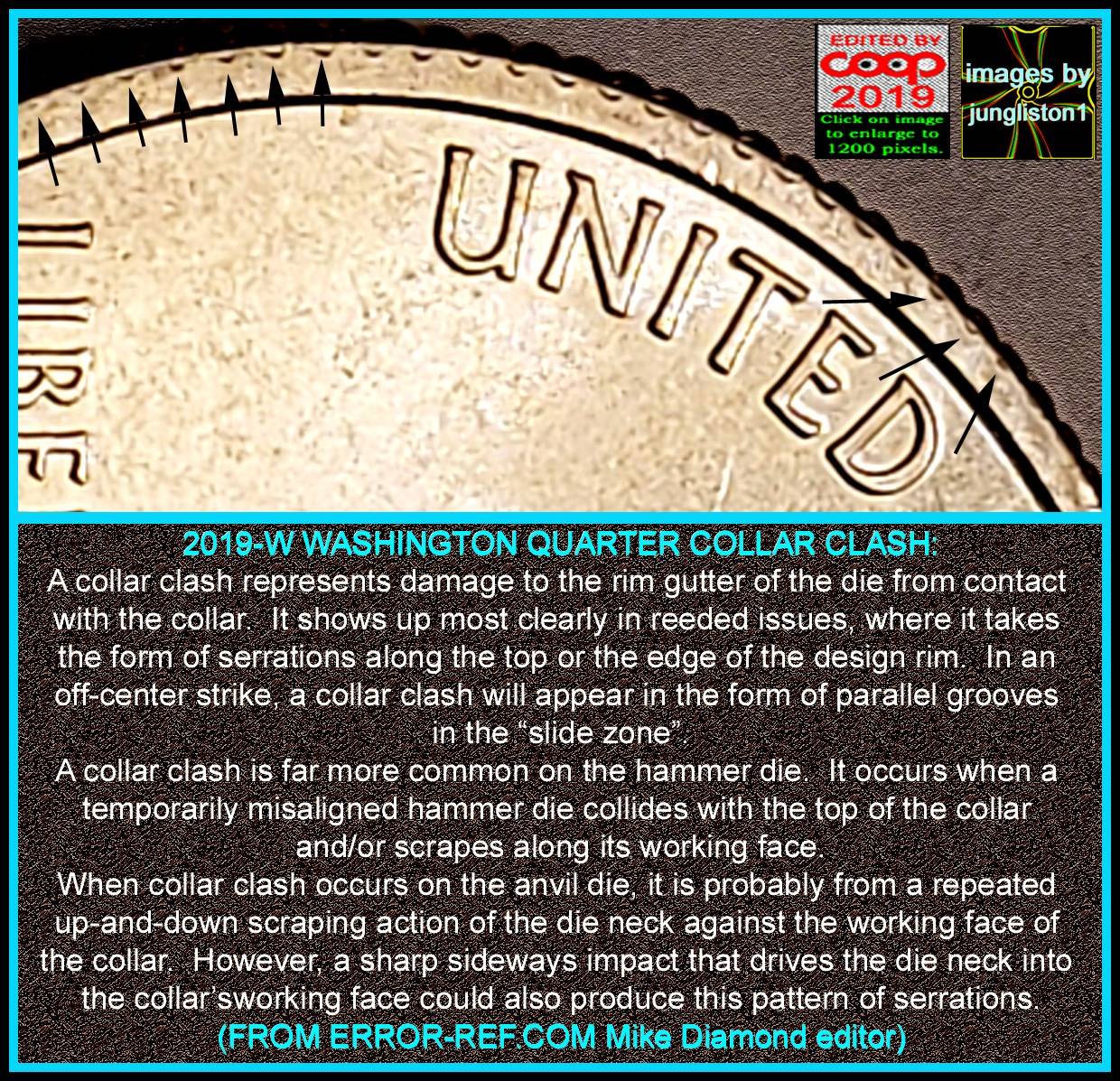 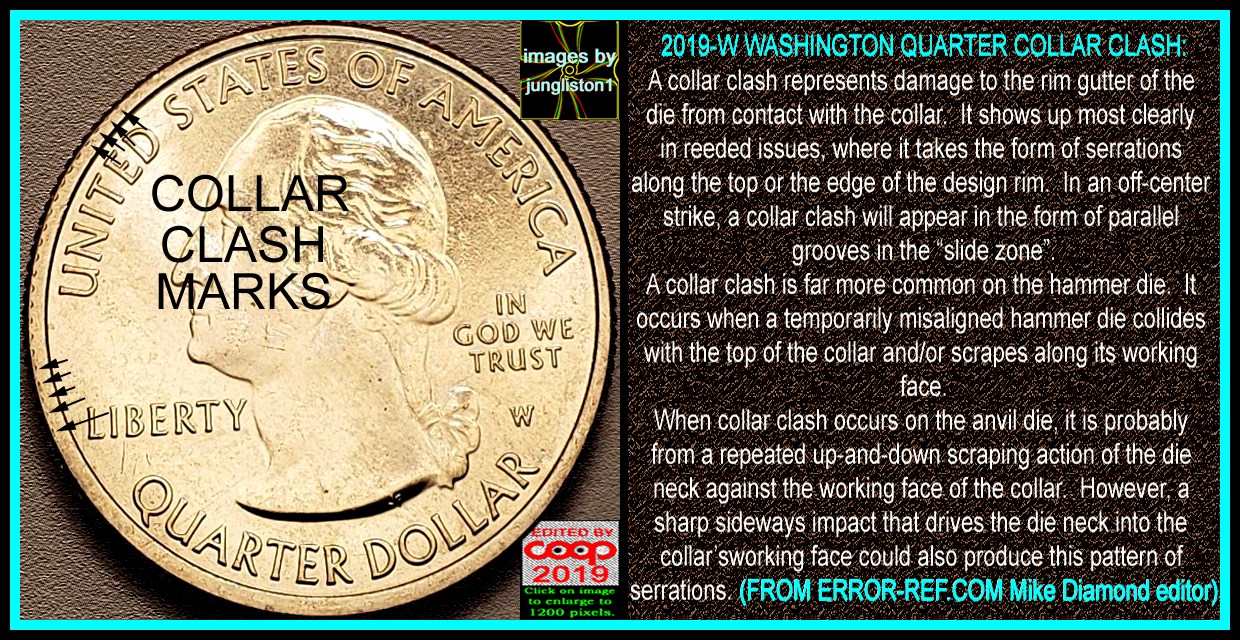 Seeing the dime die affected on the outside edge of the die, of the upper part of the was hit on the face, it would make these collar clash line appear on the inside of the collar. It the gutter area was affected, it would affect the outer side of the coin. 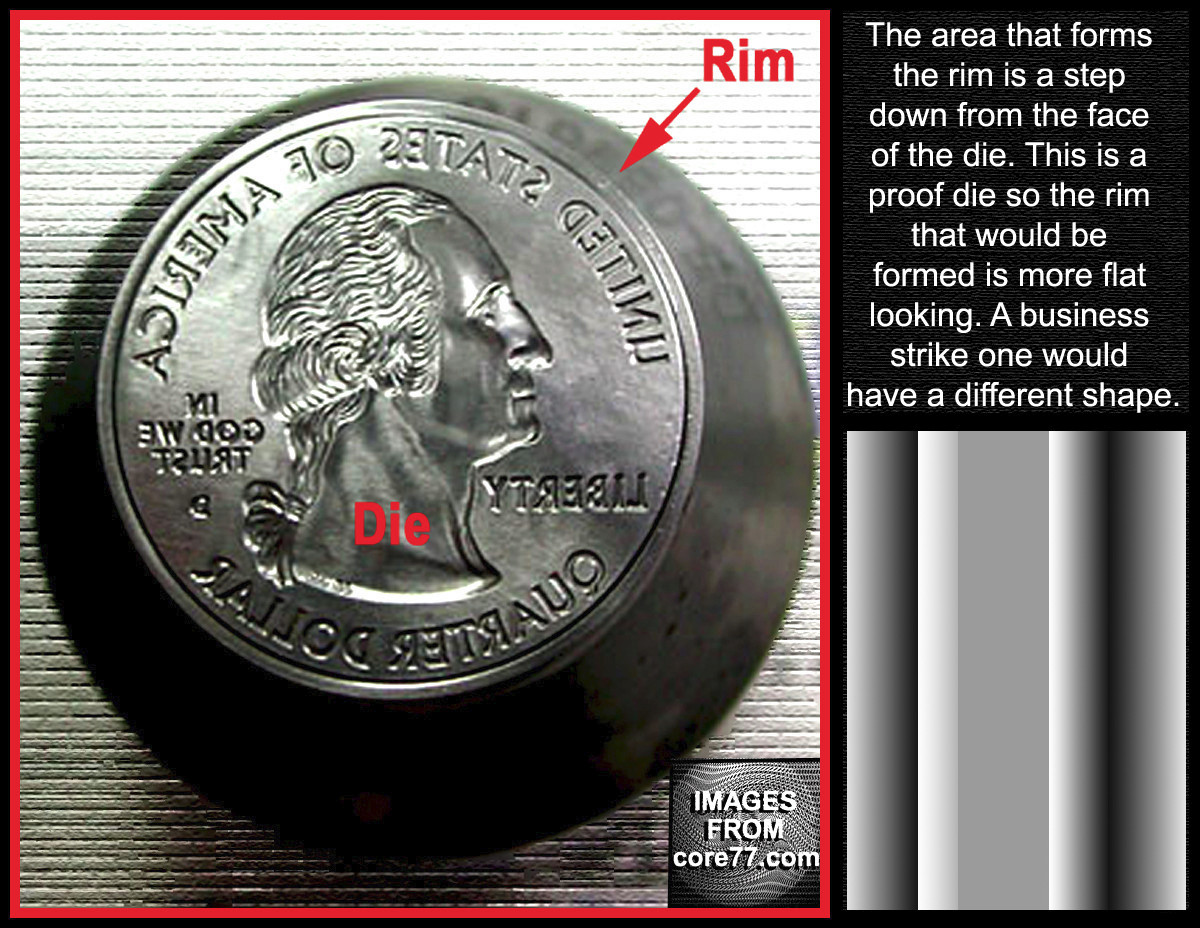 Note the rim marked with the red arrow. This is what shapes the rim. The collar and the die working together during the strike. Adding the outside edge of the coin wither flat or with reeds. The reeds can affect the top of the die, making the marks on the inside edge of the die only on a small area of the die. Or if there is a slight clash, then the outer edge of the gutter, or the bottom part of the die can be affected on the outside of the rim, again only on a small area of the die that is slightly out of alignment. (A new thought that hit me posting this comment) You figure out something new every day when you think on it a bit. CoopHome: Why do collar clashes on affect a small area on the coin? Why are the affected areas in the side part of the rim and sometimes on the out edge of the rim in just a small area? What is a rim gutter? (New thought to me today.) Edited by coop
06/03/2022 8:52 pm
|
|
Moderator
United States
107650 Posts |
nice collar clash, don't see that many on quarters - I think that this is a Roosevelt issue because of the small size and difficulty in aligning the dies accurately.
|
|
Valued Member
United States
114 Posts |
Thanks for the replies and Coop, especially for the detailed information on collar clashes! Yet, from the explanation, it's still unclear how the die would have caused the clash on opposite sides of the coin. hmmm.  |
|
Bedrock of the Community
United States
62064 Posts |
Well on the image of the cancelled die, it appears the the marks on the on the outside edge of the die. But what really happened, is that when the die was defaced, along with the design, the rim gutter was removed. Thus the definition of the inside edge/outside edge of the rim being affected. Inside edge affected damaged the outside edge of the die including the die face and rim. Slight collar contact just affecting the outside of the rim on the gutter only. (Like the coin above) When the die is run for a continued time, it affects the die deeper into the rim area and then the face of the die, called die Attrition: 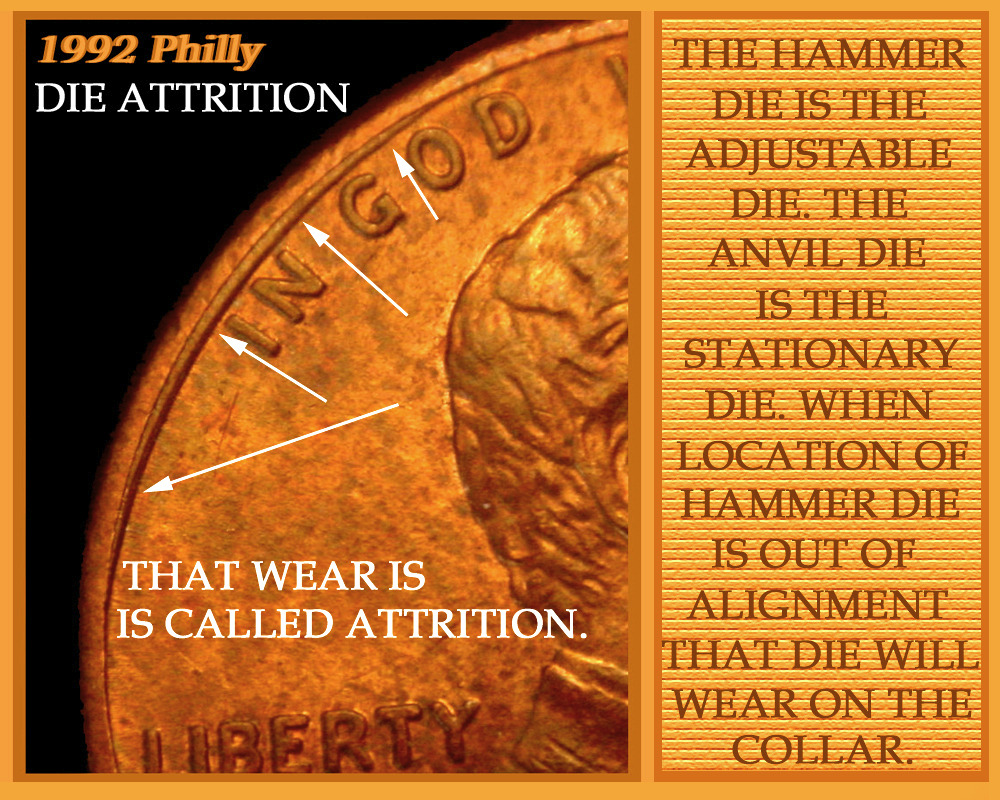 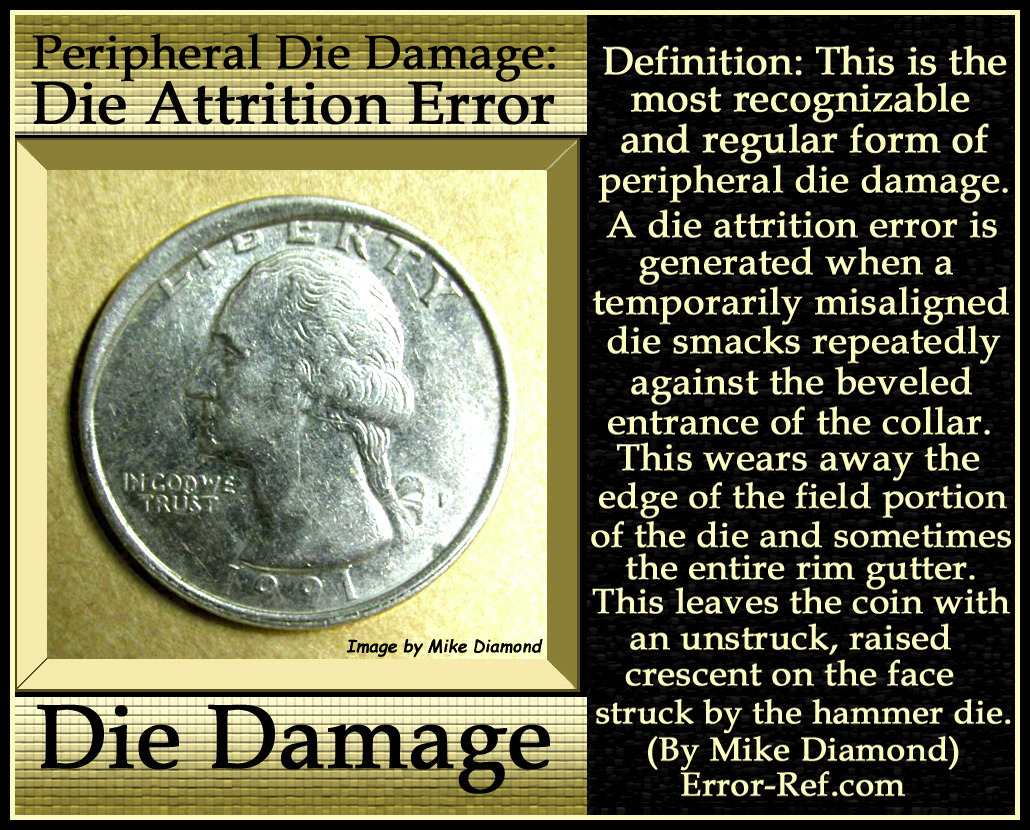 Another step more on what can happen to a MAD die. Edited by coop
06/09/2022 11:32 am
|
|
Bedrock of the Community
United States
10635 Posts |
To answer your other question, no, no added value, sorry. It's just contact damage.  |
| |
Replies: 7 / Views: 1,004 |
|










 Posted 06/03/2022 4:07 pm


