The 1925 Lexington-Concord Sesquicentennial half dollar was designed by Chester Beach based on concepts developed by the Sesquicentennial Committees of Lexington and Concord (each had a side of the coin). (Details available here:
1925 Battle Of Lexington-Concord Sesquicentennial - A Tale Of Two Towns.)
The coin's obverse (the Concord side) depicts the Minute Man statue that was sculpted by Daniel Chester French for the Lexington-Concord
Centennial in 1875. At the time of the Centennial, French was a young sculptor (just 22 years old) from Concord who was showing potential but had not yet started his professional sculpting career - he had yet to create a life-size sculpture/statue!
After developing sketches of his planned statue, and displaying a scale model in a competition at a Concord town meeting in November 1873, French was awarded the commission for the statue but was told that he must donate his time. A budget of $500 was set by the Monument Committee to cover all project expenses - except artist fees. As it was his first professional commission, French eagerly accepted the Committee's terms and began work; he viewed the opportunity to be of high value to his career.
French set up a studio in Boston to work on the statue. He decided "that if this statue were to represent a people, it would best portray their story by faithfully reproducing the image of one of them." (Robbins, Roland Wells. [i[The Story of the Minute Man. New London, NH: The Country Press, Inc. 1945. p 19.)
To achieve this, French selected Captain Isaac Davis of Acton as his intended subject. Captain Davis was the first minute man killed in the Concord confrontation with the British; he died while leading the minute men in the battle. Unfortunately, no portrait of Davis was known but his wife (who had survived Isaac by 66 years) was able to provide history with good descriptions of her husband. French used these descriptions, plus pictures of descendants, to develop the statue as he worked on it during the winter of 1873-74.
French finished his plaster cast of the statue in September 1874. It was then sent to Ames Foundry in Chicopee, MA to be cast in bronze. The bronze statue was seven feet tall and weighed 1,280 pounds. The statue contains the metal of 10 condemned cannons donated by the US Congress. After it was delivered to Concord, the statue was mounted on top of a seven and a half foot tall granite pedestal on the west bank of the Concord River (where it remains today). It is located near the site of the encounter with the British on April 19, 1775.
Beach's depiction of the Minute Man statue on the coin is faithful to French's original and, IMO, was an excellent choice for the 1925 commemorative coin. The statue tells an important story from US history and, through it, the coin tells the same story.
1925 Battle of Lexington-Concord Sesquicentennial Half Dollar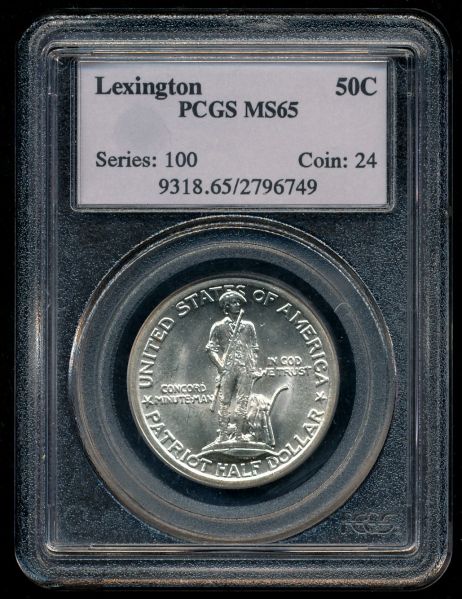

A couple of years ago, I came across this little booklet that tells the story of Concord's Minute Man statue and Daniel Chester French's role in its creation. I recommend it to any fan of the Lexington-Concord half dollar - it provides great back story on the coin's design subject and far more details about the statue's creation than I can present here.
(Note: The booklet does not discuss the commemorative coin.)The Story of the Minute Man[/i] Booklet - Front Cover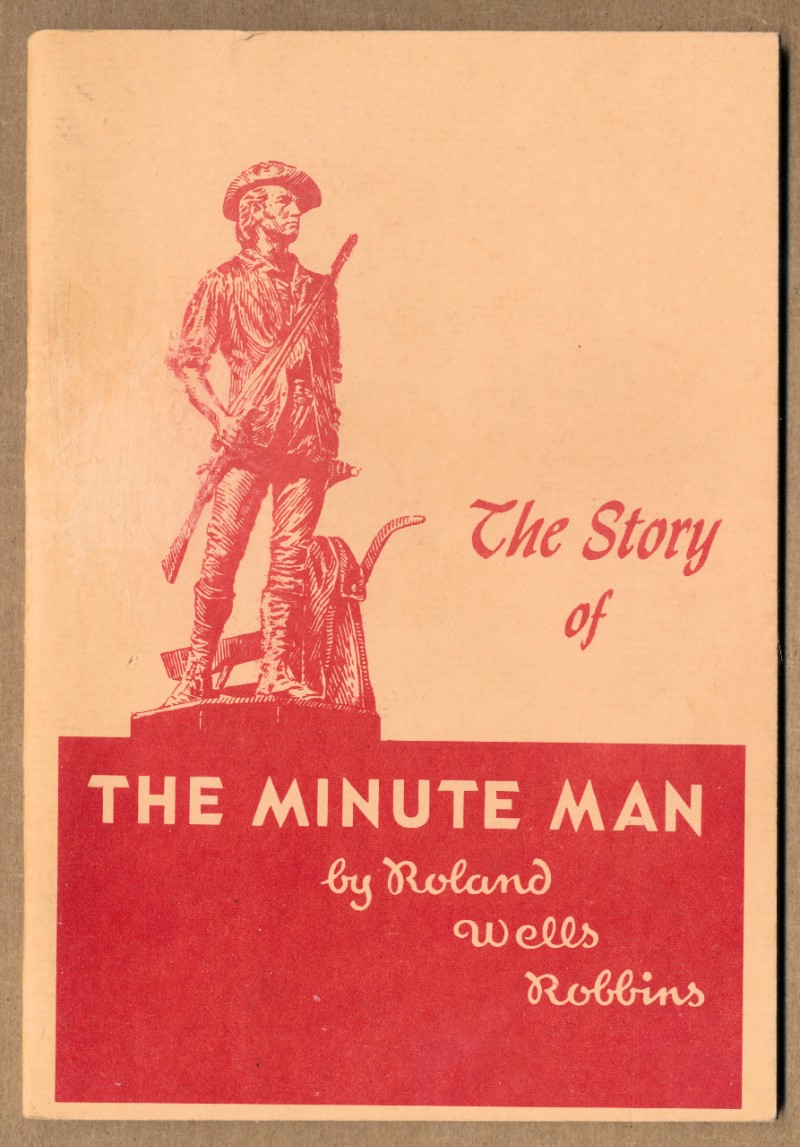







 Posted 07/20/2022 10:26 am