|
This page may contain links that result in small commissions to keep this free site up and running.

Welcome Guest! Registering and/or logging in will remove the anchor (bottom) ads. It's Free!
To participate in the forum you must log in or register. | Author |
 Replies: 11 / Views: 1,934 Replies: 11 / Views: 1,934 |
|
|
Valued Member
United States
164 Posts |
Hope everyone is having a good week! I have a few coins here, most of which I think I'm pretty close on but just want to see what the consensus is. Take a look: (1) 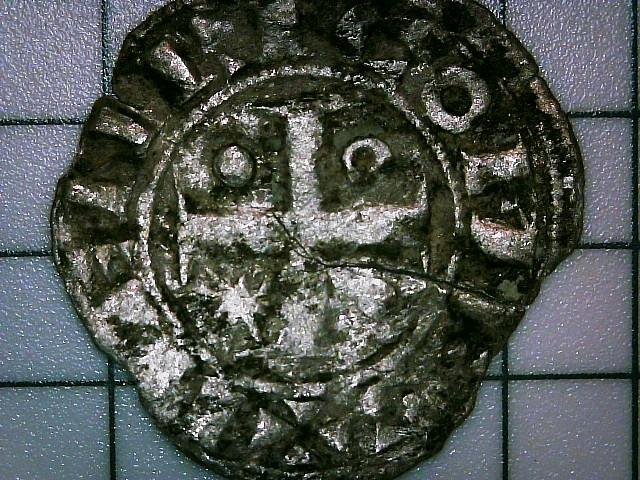 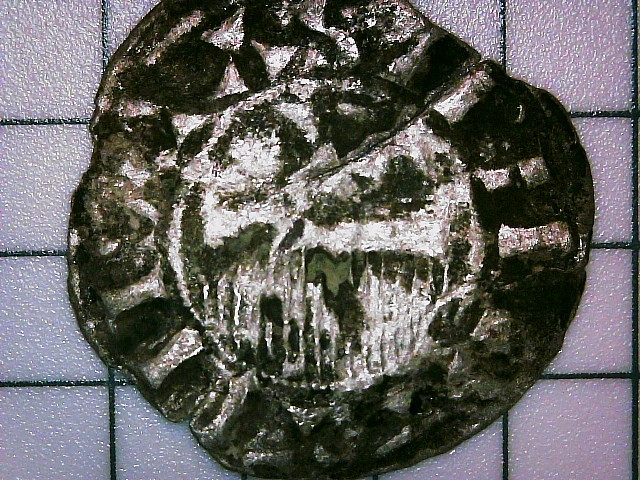 The closest that I could find so far is this French denier of Henry I: https://en.numista.com/catalogue/pieces89319.htmlMany of the characteristics are the same: the obverse legend appears to read "+ HENRI COMES". If the reverse legend is a match, it should say "PRVVINS CASTRI". I believe I can make out "----INS CASTRI". The reverse appears to show a Champenois comb with a T flanked by rings. The only difference I am seeing is in the quadrants around the cross on the obverse. I thought that in some of these Feudal French coins, the markings in those quadrants signify the region. The denier that I linked is from the county of Provins, and the reverse legend signifies that. I may be wrong in my interpretation of the legend on my example. At this point, I suspect that I have the right idea on the coin, but perhaps the wrong county. (2) 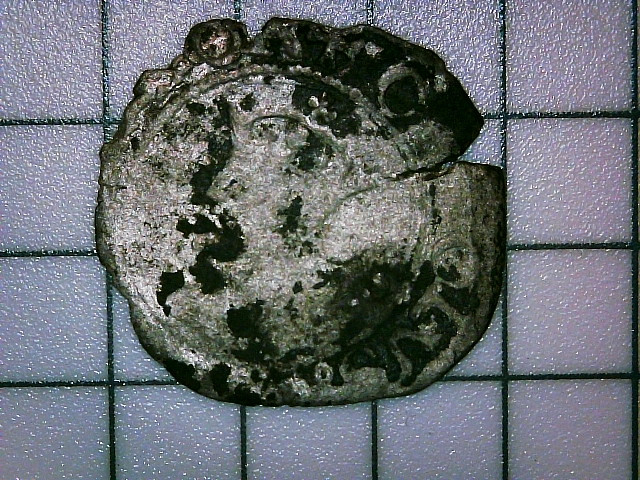 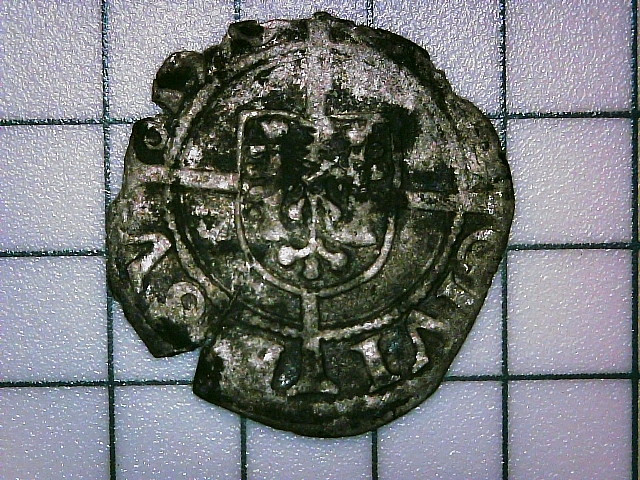 I think this is a 1550 Demi Carolus, but I am having trouble finding any detailed information on it. It seems to match nicely with this example: https://www.ma-shops.com/cdma/item.php?id=50613Unfortunately, I can't find anything that translates the legends, but visually it appears to match! (3) 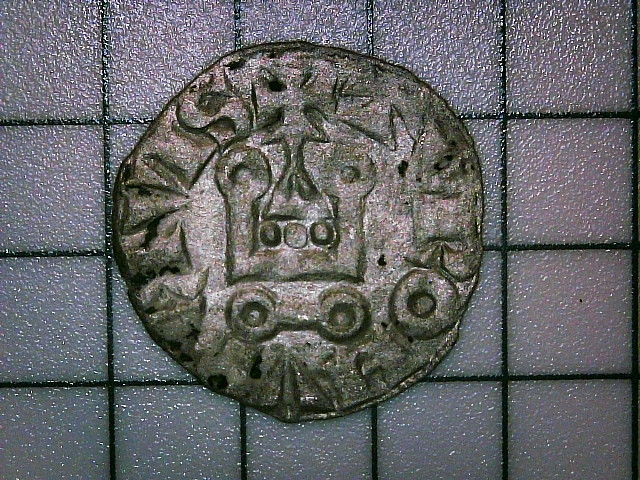 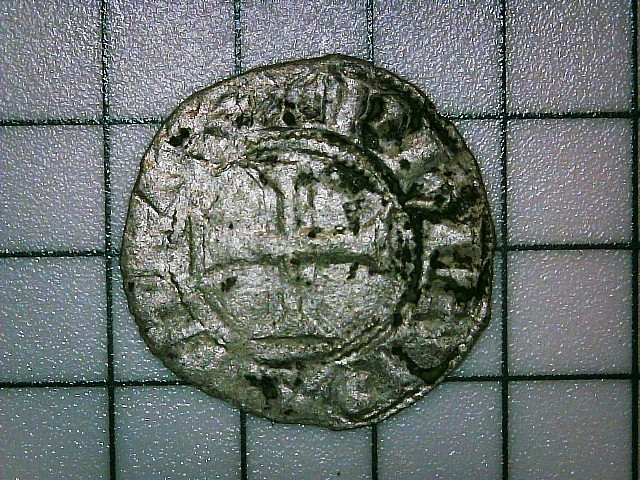 I believe this one is a denier tournois from either Philip III or IV as seen in these examples: https://en.numista.com/catalogue/pieces74377.htmlhttps://en.numista.com/catalogue/pieces56725.htmlHowever, I am not certain of how to differentiate between the two. In the two links provided, the only difference jumping out to me is that Philip IV is spelled with an extra P: "PhILIPPVS" instead of "PhILIPVS". If that is indeed how to differentiate between them, then it is a Philip IV. I've seen many times where there are multiple iterations of spellings and abbreviations in the legend, so I am not sure. (4) 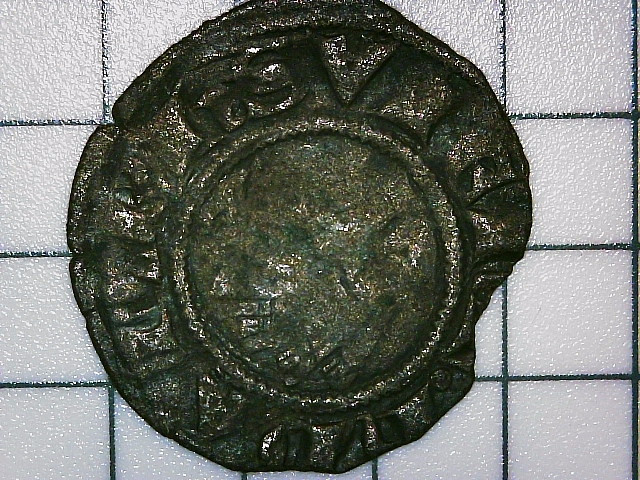 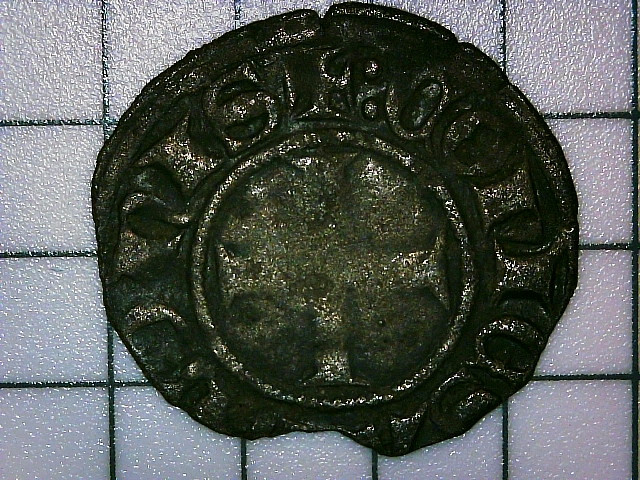 The obverse looks similar to this anonymous denier from the Archbishopric of Vienne: https://en.numista.com/catalogue/pieces106575.htmlI have seen several variations of these, so I think it is at least similar. The reverse is certainly different. I am having trouble reading the legend, but it looks like: + : CODICSA---NIS That doesn't seem to make any sense, and I'm really not sure about that third letter. --------------------------------------------------- These last three I am really struggling with! (5) 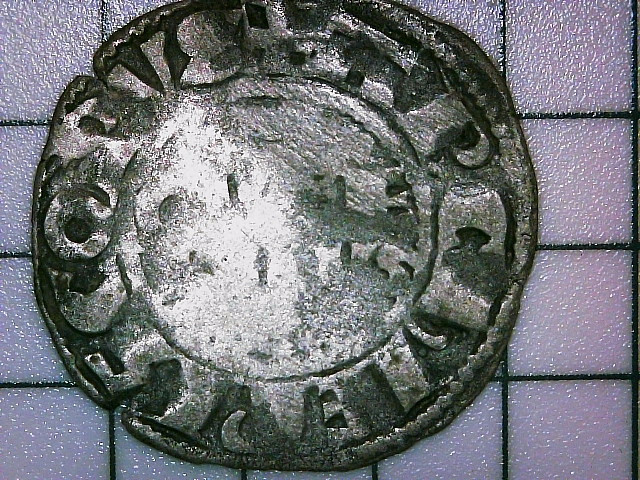 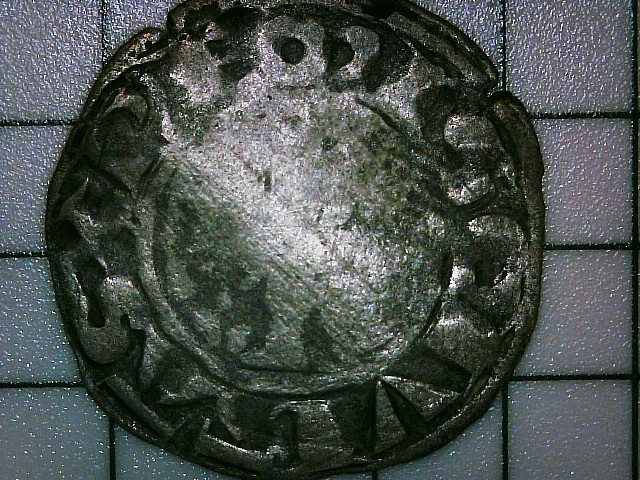 If the first photo is the obverse, there appears to be two lines of text in the center. The first and last letters of the first line appear to be C and E. The second line appears to end with US. I could be totally wrong about that, and it may just look like lettering when in fact it is just something else that is worn. I have no clue what the legend says. The closest I can tell is: + APChIEPISCOPVS The reverse looks like: X PE--IS CIVITAS There does appear to be a cross on the reverse. (6) 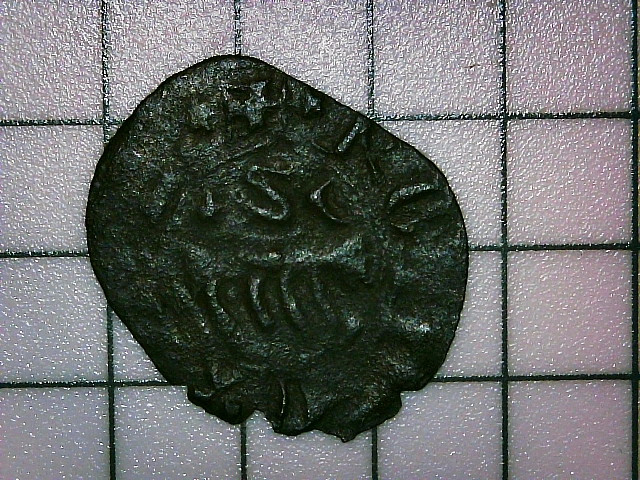 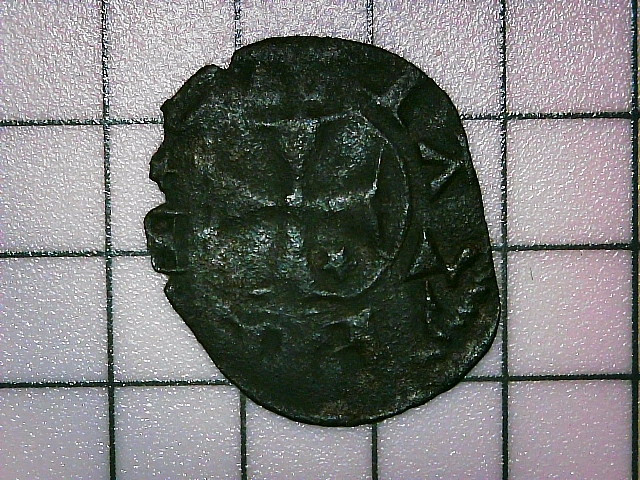 I'm not even sure of where this is from. It looks like it says "ISC" in the center. Above what, I am not certain. The reverse has a cross and the text seems like it might be a little distinctive on both sides in that perhaps the shapes of the letters could help narrow it down? (7) 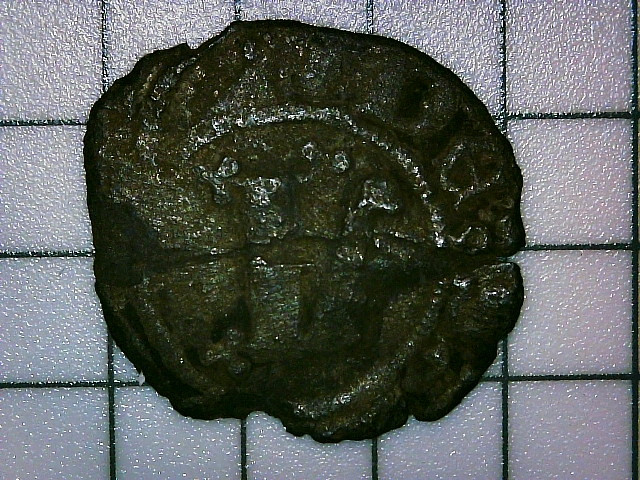 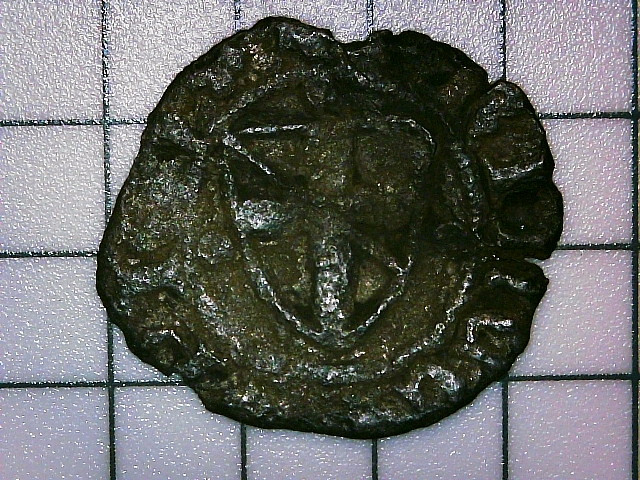 Here are the two closest that I could find: https://en.numista.com/catalogue/pieces187938.htmlhttps://en.numista.com/catalogue/pieces151128.htmlBoth of these are from Savoy. The shield is similar, though I don't know if mine has a diagonal line through the shield intentionally or if that was cut into it after the fact. It certainly looks like a large A surrounded by stars on what I assume is the obverse. That's it for now! I have another 5-10 that I am working on, perhaps next weekend or the following, I will be close enough on those that I might post some more. Thanks for any help! Edited by chirrrs
11/05/2022 4:55 pm
|
|
|
|
Moderator
 United States
34539 Posts |
"If you climb a good tree, you get a push."
-----Ghanaian proverb
"The danger we all now face is distinguishing between what is authentic and what is performed."
-----King Adz
|
|
Pillar of the Community
 Sweden
2124 Posts |
#1 is Henry I or Henry II, from Provins in Champagne. I think I can read PRVVINS. Rather than alpha-omega in quadrants 2 and 3 of the Numista example, your coin has a star and an annulet, like this coin: https://www.poinsignon-numismatique...e_85715.html#3 is Philippe IV. The spelling with one or two Ps is considered to be the dividing line between those two regents. (Although I cannot really make out the 2nd P, but there seems to be space enough to require a P there.) Being away from my numismatic library for a couple of days, but will see if I can eventually say something about the rest too  . |
|
Pillar of the Community
United States
8042 Posts |
#2. Yes, Besancon. (Boudeau is the catalog). If it is about 14 mm, then this: https://en.numista.com/catalogue/pieces65573.htmlOn #4 I do not think it is Vienne. At first I thought the reverse legend might start with + COMES... so we would be looking for a for a County, maybe starting with and A, as you say. But the closer I look, I do not think it is an M. Maybe an n? Need to work on the obverse legend. #5 - Archbishopric of Reims: https://en.numista.com/catalogue/pieces167133.html#6 Makes me think of Sicily. Edit: #4 IS Vienne, but not the Archbishpric. It is County of (Dauphine). Here is the coin: https://en.numista.com/catalogue/pieces335440.htmlIf you look between 5:00-7:00 the way your obverse photo are oriented, we can see the beginning of the legend h DA ... Edited by tdziemia
11/05/2022 5:09 pm
|
|
Pillar of the Community
Sweden
2124 Posts |
Quote:
#4 IS Vienne, but not the Archbishpric. It is County of (Dauphine). Here is the coin Great work cracking that one, @tdziemia!  |
|
Valued Member
 United States
164 Posts |
Quote:
tdziemia Nice job on that Dauphine! I wasn't completely confident that what I was looking at was a portrait, but I certainly couldn't figure out what else it could be. Looks like you nailed it. Thanks for the help on that William I Archbishop of Riems, that one was really giving me trouble! Quote:
erafjel Thanks for the confirmation on the differentiation between Philip III and IV, I had suspected the different spelling to be the case! On that Henri denier, what is the significance of whatever appears in the quadrants? Does it sometimes indicate location, title, etc. or is does it just depend on the specific coin? |
|
Pillar of the Community
Sweden
2124 Posts |
Quote:
what is the significance of whatever appears in the quadrants? Does it sometimes indicate location, title, etc. A bit of both. Basically, it was used as a mark of identification by the count, duke, bishop, or whoever issued the coin - sort of a simple seal, perhaps as a sign of authenticity of the coin. But it also depends on where the coin was minted. Henry II is a good example: He was count of Champagne, where the two cities Provins and Troyes issued their respective versions of deniers. The Provins deniers under Henry II have a cross with two dots and either* alpha-omega or star-annulet in the quadrants. His deniers from Troyes have annulets in two of the quadrants and nothing in two. Henry's successor, Thibaud III, continued with the same marks, but the count after him, Thibaud IV, changed to two crescents and alpha-omega for the Provins deniers and four annulets for the Troyes deniers. * It could be that alpha-omega was used by Henry II and star-annulet by Henry I - or vice versa, or both variants used by both, there doesn't seem to be a consensus about that. |
|
Valued Member
United States
164 Posts |
Quote:
erafjel You've popped up every time I've posted some French coins for identification and verification, and I just want to say that I appreciate your help so incredibly much. I've only got into medieval coinage since really January of this year after spending years on US coinage, and have focused on mostly English and French coins in that time with a little bit of German as those are closest to my ancestry and heritage. It's nice to have peers that are more knowledgeable on the subject to help guide my learning. I appreciate all of the help and guidance you have given without complaint. People like yourself are what truly make this hobby so enjoyable and fulfilling. I hope that I can soak up as much as possible to be able to share and pass that knowledge on myself to others new to the hobby. Every time I post a handful of coins for ID, I try to figure them out as best as I can on my own. After that, I hope to post maybe 5-10 coins, with maybe 70% I feel somewhat confident about. If I can get confirmation on the ones I thought figured out, great! If I turn out to be wrong and learn something new, even better! For the 30% or so that I'm not sure about, if I can get any help at all, it is greatly appreciated. If they still elude us, they just go back into the pile of coins to figure out at a future date when hopefully I have accumulated greater skill. Sometimes people don't realize how much the simple act of helping someone else can mean to another. While playing around with coins may seem trivial at times, you sometimes never know how meaningful and therapeutic the whole endeavor can be for some. Likewise, while we offer our opinions on some coins that I have posted, there may be others who see these posts and find them helpful and we never even know it. I've rambled on long enough, but just to summarize it all again, thank you, and thank you to everyone that is a part of this community that we all enjoy so much! This is what coin collecting is really all about. Enjoying history and enjoying the interaction with others who share our passions! |
|
Pillar of the Community
Sweden
2124 Posts |
Thank you very much, @chirrrs! I must say, you are doing a good job at identifying your coins, having collected them for such a short time. But it is good to know that my attempts to help are appreciated! There are many persons here at CCF who enjoy helping, I'm just one of them. You will see more from @tdziemia and @Spence as well, they are both extremely knowledgeable and very helpful, and so are many others here, each within their area. My speciality happens to be France, not only medieval, but everything from pre-Roman to modern, so I trigger on anything French . I see posts like yours as a great opportunity to learn, because I certainly don't know everything about French medieval feudal minting by heart, but I do know where to search for information, and in doing so, I learn more myself. And I am always interested in why a coin looks the way it does, so while it may seem a bit inconsequential to some why certain deniers have two pellets around the cross and others four, that's precisely the thing that gets me going . So I should thank you! Medieval coins is a great choice for a collection theme. The number of countries, duchies, counties and other fiefs, cities, bishoprics, etc that have issued coins is vast, providing a huge selection and many opportunities for sub-themes. One can find many different styles and coins in all price ranges, so there are many possibilities to build an interesting collection. You will have a lot of fun! |
|
Valued Member
United States
164 Posts |
Regarding #6, I think I have found it! I came across this paper that appears to be discussing varieties of denaro provisino from the Roman Senate around the late 12th to the end of the 14th centuries: https://www.numismaticadellostato.i..._49_2017.pdfI cannot read Italian, but from what I can gather, this is a study on a particular collection where the varieties are shown in groups in Table A on pages 10-15. My coin seems to have a *S( over a comb on the obverse and a cross with a single star in one quadrant on the reverse. That appears to be a match for group 24. At the end of all of the illustrations in Table A is another table on page 16 (Table B) which shows all of the coins in the paper and which groups they belong to. Group 24 has seven coins, numbered 106-112. There are some varieties within the group. These start with #106 which is on page 124 of the paper. All of 106-109 have no stars in the quadrants of the cross. When you get to #110 on page 128, it seems we have a match! Particularly encouraging is that on the obverse legend, #110 shows "+ * SENAT' . P . Q . R . *" which appears to match with mine. In fact, #110 is the only one with the apostrophe in SENAT' in the legend, which is clearly legible on my example. That would identify this as a denaro provisino of the Roman senate, dated 1347-89. Edited by chirrrs
11/15/2022 08:53 am
|
|
Pillar of the Community
Sweden
2124 Posts |
Yes, I agree, #110 it is. That seems like an endurance test to go through all of those, to find it to be the 5th coin from the end. And not just any collection, from the last king of Italy, Vittorio Emanuele III. My Italian is rusty, but in the introduction there is a discussion about how the denaro provisino was actually a local copy of the denier provinois (your coin #1). The denier provinois apparently had a good reputation because of its high silver content. It was widespread throughout Europe, and widely used in Italy, due to the annual and well-attended fairs held in Champagne. Now that I know that, I can see the likeness between the two coins. |
|
Valued Member
Australia
491 Posts |
Quote:
Sometimes people don't realize how much the simple act of helping someone else can mean to another. That is why this is a very successful coin community forum. A total well done to all of us. Edited by kg5
12/24/2022 01:32 am
|
| |
Replies: 11 / Views: 1,934 |
|
To participate in the forum you must log in or register.
Disclaimer: While a tremendous amount of effort goes into ensuring the accuracy of the information contained in this site, Coin Community assumes no liability for errors. Copyright 2005 - 2026 Coin Community Family- all rights reserved worldwide. Use of any images or content on this website without prior written permission of Coin Community or the original lender is strictly prohibited.
Contact Us | Advertise Here | Privacy Policy / Terms of Use
|
| Coin Community Forum |
© 2005 - 2026 Coin Community Forums |
| It took 0.42 seconds to rattle this change. |
 |
|
| |
| |





 Posted 11/05/2022 12:44 pm


