| Author |
 Replies: 12 / Views: 3,261 Replies: 12 / Views: 3,261 |
|
|
Valued Member
United States
73 Posts |
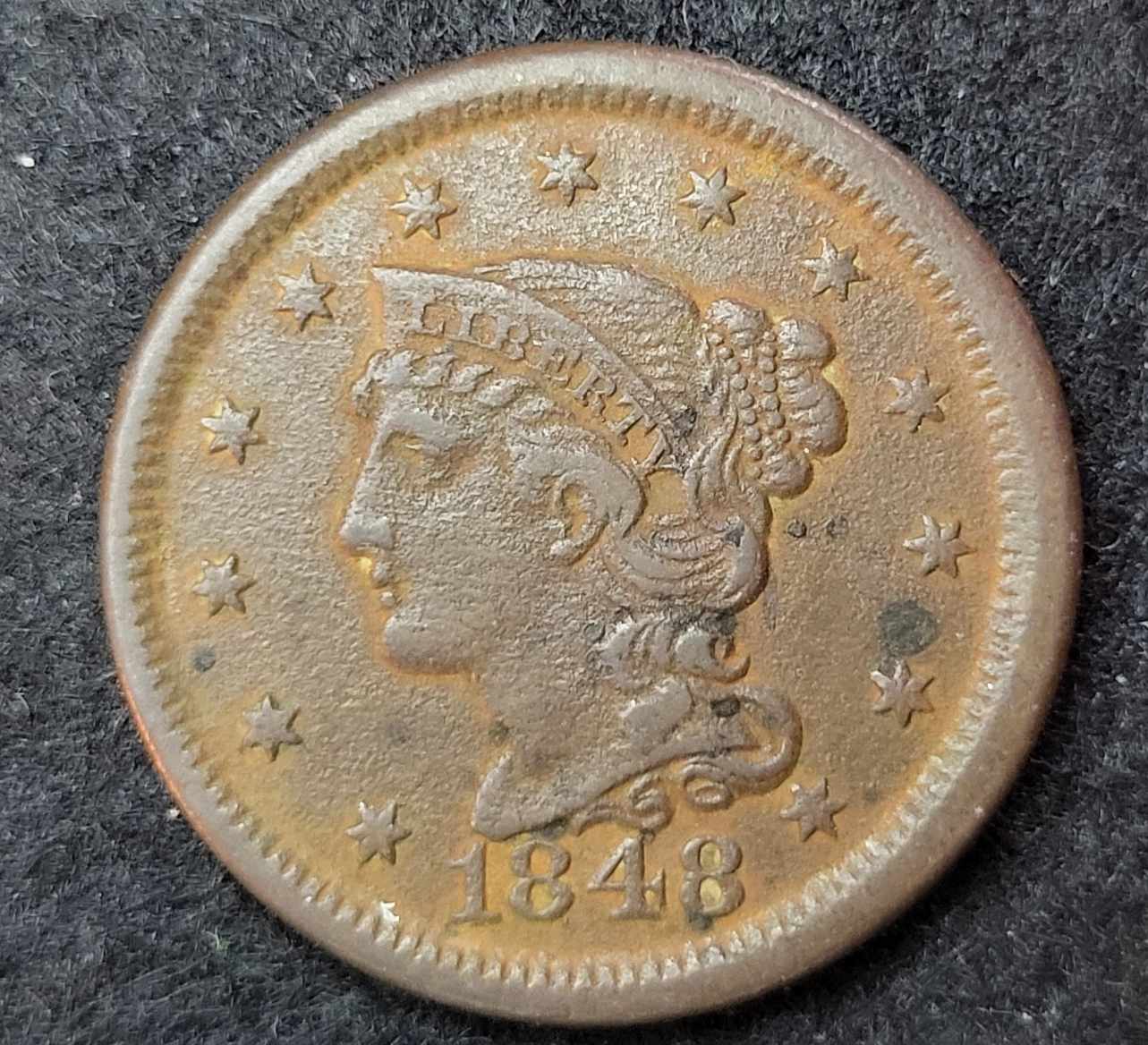
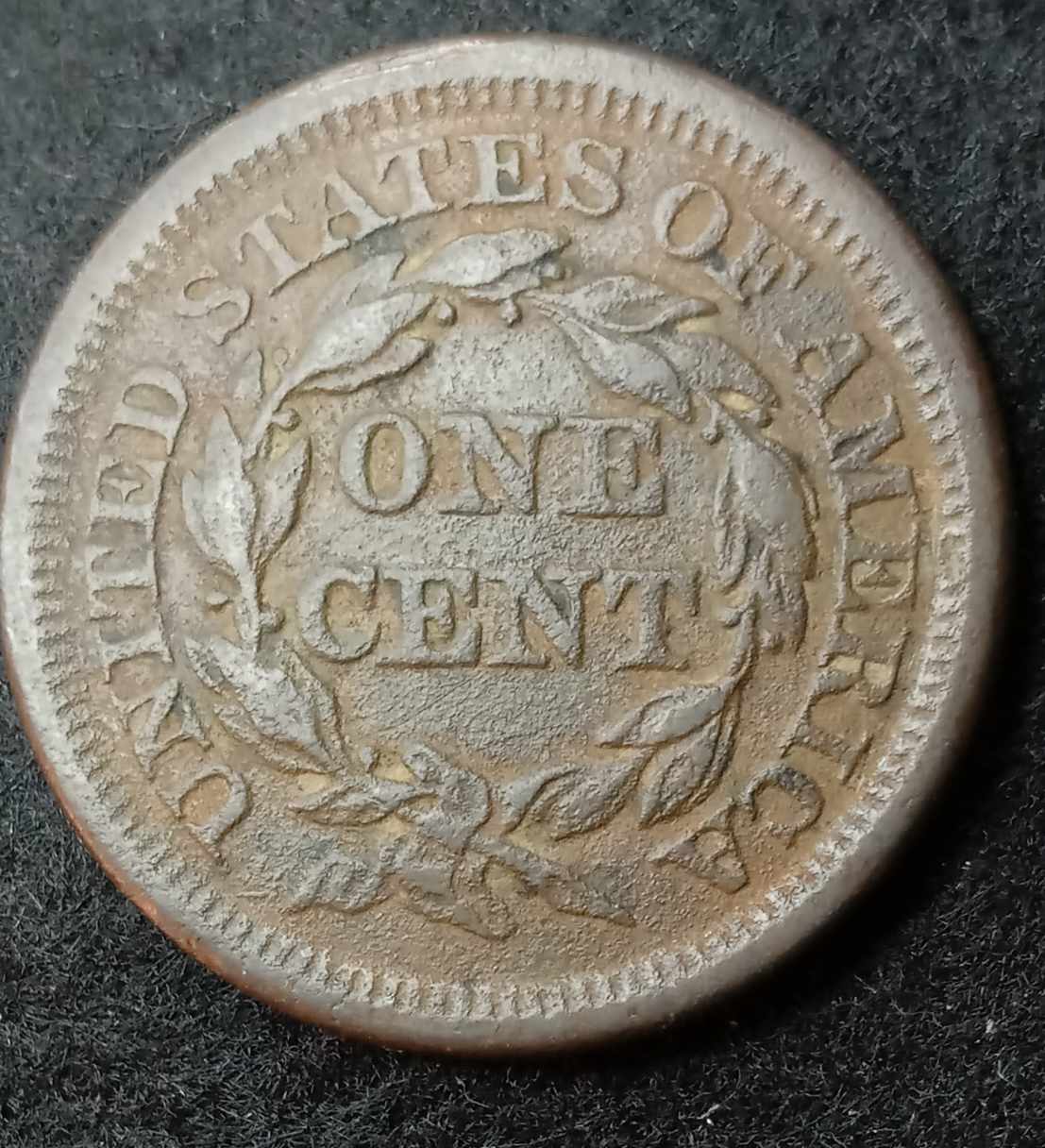
1848 braided hair cent help with variety. *** Edited by Staff to remove YELLING. All capital letters is the internet version of yelling. Please do not do it in titles or posts. ***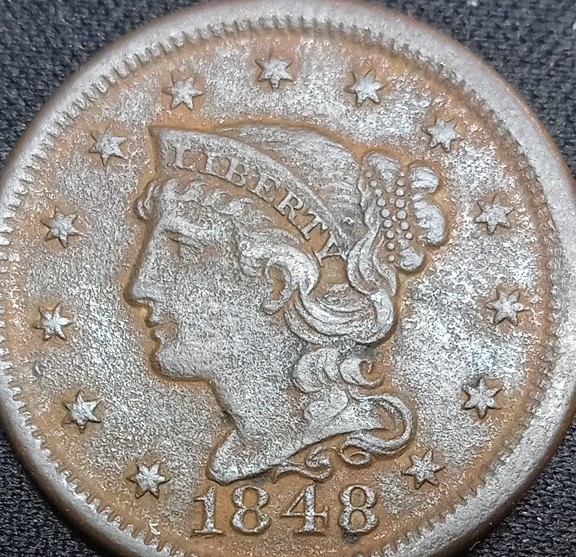 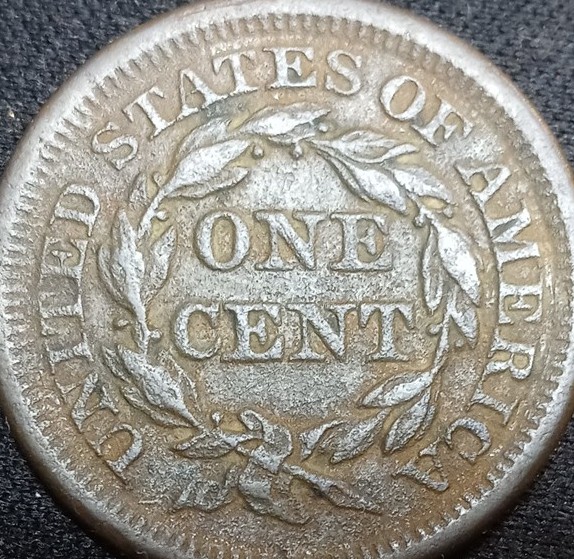 Any insight to the Newcomb number would be appreciated, and thoughts of a grade too. Thank you
|
|
|
|
Moderator
 United States
56855 Posts |
Looks like a once buried coin? John1  |
|
Pillar of the Community
United States
756 Posts |
it impossible to tell the date position because your images crop off parts of the coin. based on what I can see I think its probably one of n - 11,23,30 or 36. 3 of those are r-5 and one is an r-3.
this one is environmentally damaged to the point where grade becomes sort of irrelevant. probably vf details but the emphasis is on the details there. id expect it to sell closer to good or vg money.
i dont think think this coin would draw a large premium if it were found to be one of the scarce varieties. R-5 is in a spot where they are rare enough to be a pain for the collector to find but they arent so rare that they cant be cherrypicked. r-5 usually means there are more coins than dedicated collectors. the big money guys will buy a nicer coin. the budget guys will try and cherrypick those varieties.
|
|
Valued Member
United States
258 Posts |
Carr. Where do the numbers you cite come from, the n-11, 23, etc? The r #s.?
|
|
Pillar of the Community
United States
756 Posts |
N#'s are newcomb numbers. each die for these coins is unique and identifiable and people collect the combinations of dies. these are referred to as die varieties. some of the combinations of dies are quite common and some are very rare. for 1848 there are 46 Newcomb numbered varieties however 3 of them have been delisted as it was determined they were later dies states of other varieties.
R#'s are rarity numbers. they refer William Sheldons rarity scale. R-8 = 1-3 known, 7 = 4-12, 6 = 13-30, 5 = 31-75, 4 = 76-200, 3 = 201-600, 2 = 601-2,000 and 1 = 2,001 or more. you will see people using + and - to be pore precise about the extant population. for R 6,7 and 8 the numbers are an exact count of known survivors. for 1,2,3,4, and 5 they are estimates.
an r-5 coin is rare. there are probably less than 75 survivors on the planet. for comparison PCGS has graded 258 1909-S VDB cents as MS66RD. demand seldom adds up to 75 dedicated variety collectors who want to pay a premium though.
|
|
Valued Member
United States
258 Posts |
|
|
Pillar of the Community
United States
756 Posts |
happy to help. that same concept can be applied to a lot of other series of coins. for large cents 1793-1814 they have S#s referring to that same Sheldon guy I mentioned. bust halves are O#s for Overton. Vams on morgans and FS#s on a whole variety of die errors are an offshoot of this concept as well. shorthand is pretty useful for cataloging and helps everyone be on the same page when talking about coins. i just found out bob grellmans book for attributing these is on the newman numismatic portal https://nnp.wustl.edu/library/book/586931 |
|
Valued Member
United States
258 Posts |
Just took a look at that reference document. Intimidating.
|
|
Pillar of the Community
United States
756 Posts |
thats no joke. attributing the varieties of late date large cents is pretty challenging. they are very uniform. everything except the date was hubbed into the dies.
the obverse dies can be determined by the position of the date. there are references for date position on pages 13 and 14 of the e book (ix and x in the actual book). at the beginning of each year the varieties are listed by the date position numbers.
reverse dies are all the same so the markers are things like die breaks and file marks and that kind of stuff. they can be pretty hard to see on anything below XF or so.
i find late dates to be an exercise in minutia. I dont collect them. some people love that stuff. they enjoy spending their saturday evenings with calipers measuring date digits. hobbies are strange.
|
|
Pillar of the Community
United States
3185 Posts |
I think its a N-40 which is R-3
|
|
Valued Member
 United States
73 Posts |
I will post better pics in a bit, I've gotten better at photographing coins. And this coin has a ton of sentimental value so anything I could find out on it would be greatly appreciated, this is a coin that will be handed down to my kids, like it was to me. Value is of no importance but it's nice to know for insurance purposes. I'll post in a bit
|
|
Valued Member
United States
73 Posts |
|
|
Pillar of the Community
 United States
5720 Posts |
I believe @jerryc39 is correct, it looks like an N-40. Thanks for the updated photos. It's corroded, so value is going to be modest—probably under $30, but obviously sentimental value is much more important.
Edited by Zurie
09/17/2024 11:35 am
|
| |
Replies: 12 / Views: 3,261 |
|










 Posted 11/25/2022 4:40 pm