

 Posted 11/27/2022 9:02 pm


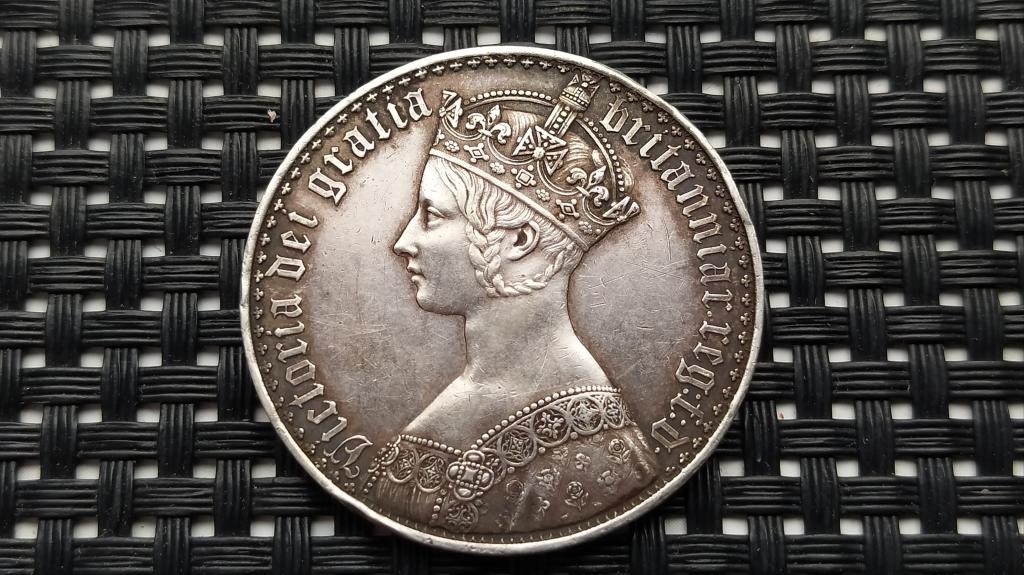
It looks 'pasty', without a sign of luster, suggestive of having been pressure die cast. There some very excellent fakes of these out there, with sharp detail. Cast fakes are usually a tiny bit less in diameter than genuine.
Even genuine examples, that have been cleaned, still show some sign of residual luster between the lettering.
If genuine, diameter is 39mm.
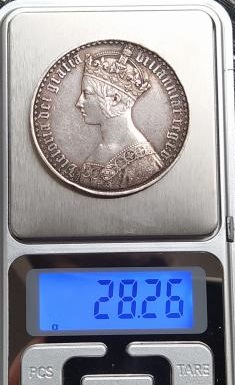
Need to know accurate weight, if genuine, it should weigh 28.2 grams.
For a simple metal alloy test
do a comparative ping tone test against another known genuine Victorian crown. Sterling silver pings with a lower tone.
---------------------------------------------------------------------------------------------------------------------------------------------------------
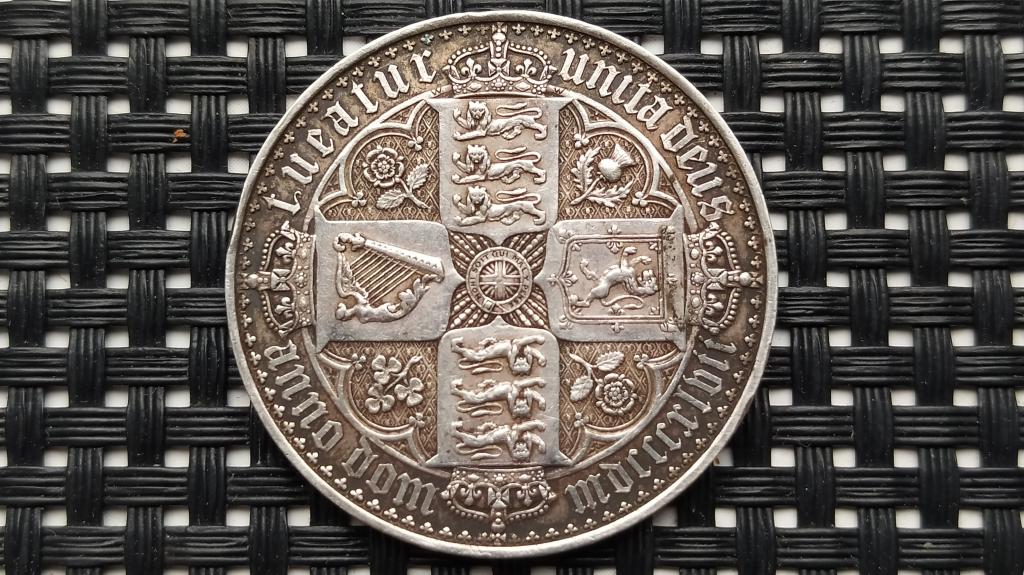
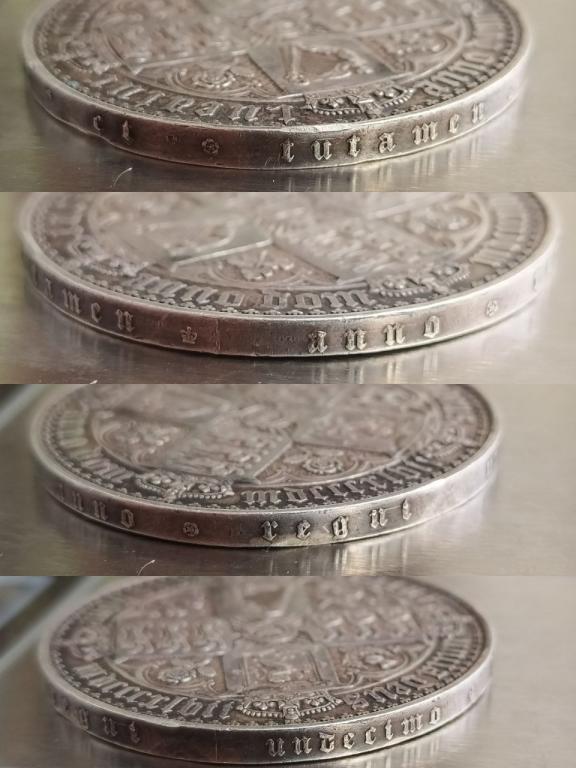
"Many forgeries exist; a genuine 1847 lettered edge coin will usually 'look' old, and have sharp edge lettering in higher grades. The 'V' of Victoria will align with 'et' on the edge, and with 'tur' of teautur' on the reverse."
( ref. p. 485 Coincraft's 1998 Standard catalogue of English and UK Coins 1066 to Date)
Even genuine examples, that have been cleaned, still show some sign of residual luster between the lettering.
If genuine, diameter is 39mm.
Need to know accurate weight, if genuine, it should weigh 28.2 grams.
For a simple metal alloy test
do a comparative ping tone test against another known genuine Victorian crown. Sterling silver pings with a lower tone.
---------------------------------------------------------------------------------------------------------------------------------------------------------
"Many forgeries exist; a genuine 1847 lettered edge coin will usually 'look' old, and have sharp edge lettering in higher grades. The 'V' of Victoria will align with 'et' on the edge, and with 'tur' of teautur' on the reverse."
( ref. p. 485 Coincraft's 1998 Standard catalogue of English and UK Coins 1066 to Date)
Edited by sel_69l
11/27/2022 9:04 pm
11/27/2022 9:04 pm

 to the Community!