In 1947, Henry Hornblower II, a Boston stockbroker by vocation with an avocation of American history and archaeology, opened a small museum in Plymouth, MA that presented the interrelated stories of the local indigenous Native Americans (the Wampanoag) and the English settlers who came to the New World to colonize it. The museum has grown since 1947, and today includes the replica ship,
Mayflower II, an English Village and a Wampanoag Homesite, among other attractions.
Plymouth was the second landing spot of the Pilgrims who arrived in 1620 - they first anchored the
Mayflower in the harbor off of present-day Provincetown, MA. After going ashore and conducting a survey of the area, the colonists decided to seek a better location for their settlement. Such a spot was found across the bay (the future Cape Cod Bay) and became the Plimoth (Plymouth) Colony (of "Plymouth Rock" fame!).
In 1957 - during its 10th anniversary year - the museum sponsored commemorative half dollar legislation that was introduced in the Senate by Leverett Saltonstall (R-MA); the bill was referred to the Senate Committee on Banking and Currency.
The coin bill called for the mintage of 200,000 half dollars of standard specifications for the benefit of Plimoth Plantation, Incorporated. The coins had to be ordered in batches of at least 5,000 coins, and issuing authority was set to expire on December 31, 1958. Net proceeds from sales of the coins were to be used by Plimoth Plantation for its "authorized functions." As it was a private corporation, its "authorized functions" would have been open to interpretation/discretion.
The bill was not reported out of Committee or considered by the Whole Senate; it died for lack of action when the 85th Congress adjourned. Such a result is no surprise, as it was most definitely a "down" time for US commemorative coins in terms of Congressional support. The last coin of the classic US series - the George Washington Carver / Booker T. Washington Memorial half dollar - had completed its run in 1954 and Congress, for the most part, was supporting the Treasury Department's continuing objections to souvenir coinage by substantially limiting new commemorative coin proposals.
Though Plimoth Plantation, Inc. was unsuccessful in its coin bid, the setback did not prevent the museum from continuing its development and expansion. Today, it remains an ongoing concern operating as a living history museum under the banner of Plimoth Pawtuxet Museums.
1970 Pilgrim Landing US Postage Stamp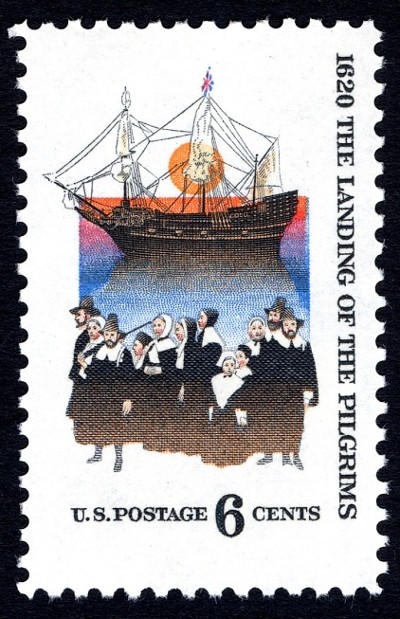 (Image Credit: Smithsonian National Postage Museum. Fair Use; education,)
For more of my topics on commemorative coins and medals, including many more What If? stories, see:
Commems Collection.




 Posted 01/10/2023 11:17 am





