| Author |
 Replies: 10 / Views: 1,467 Replies: 10 / Views: 1,467 |
|
|
New Member
New Zealand
5 Posts |
Hi, just picked up this Henry iii silver penny. I can see there are all different versions. Just wondering which one this could be? 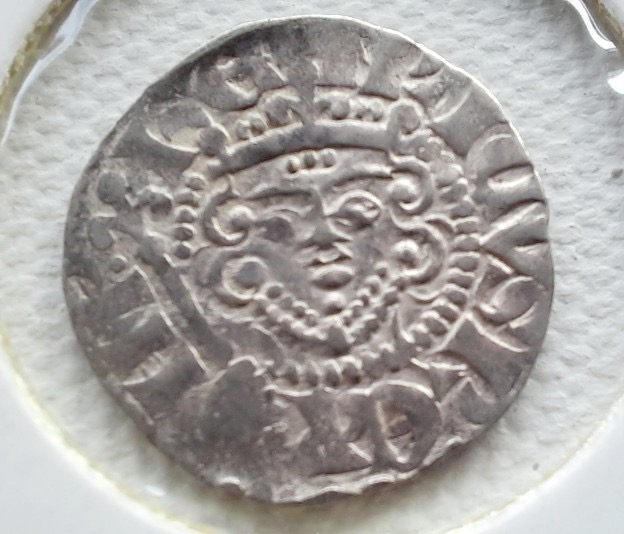 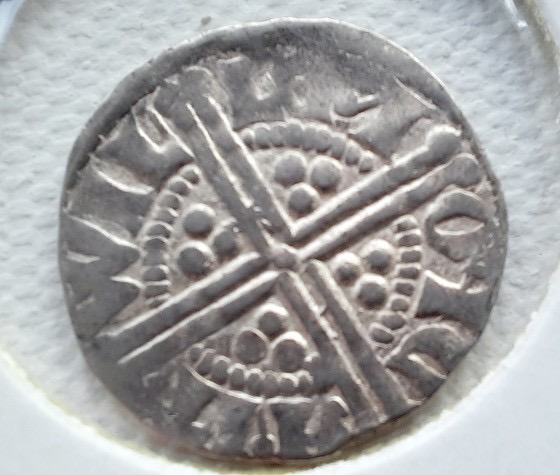 |
|
|
|
Moderator
 Australia
17017 Posts |
The moneyer's legend is "WILLEM ON CANT", so it's from Canterbury mint.
Don't say "infinitely" when you mean "very"; otherwise, you'll have no word left when you want to talk about something really infinite. - C. S. Lewis
|
|
Valued Member
United States
164 Posts |
Just to add to Sap's comment: When I first started trying to read some of these English inscriptions, some like this one would throw me off because until I saw what it was supposed to read, I might not have guessed it completely correctly. The WIL L is legible enough, but notice how the E is attached to the M. The part that would have definitely given me trouble early on is the quadrant with ONC; the curved part of the Lombardic N. Notice how that part isn't there; it blends straight into the C which itself has a vertical bar connecting the top and bottom. Sometimes the letters are connected like this which takes some getting used to. Here's a good reference of some of the lettering used on early Edwardian pennies: https://www.ukdfd.co.uk/pages/edwar...es%20P17.htmWhile this is specific to Edwardian pennies, it is a good study on the identifiers to look out for with all medieval English coinage. If you are getting into medieval English coins, I'd recommend the following references: Coincraft's Standard Catalogue of English & UK Coins 1066 to Date by Lobel et al Coins of England and the United Kingdom by Spink Using those along with Numista should help you out immensely! I've also learned a lot just reading the ID posts by others on coins from the same periods and regions that I'm interested in. Eventually you may run across some of the same coins and already have some familiarity and know what to look for. Nice finds, by the way! Edited by chirrrs
02/02/2023 7:20 pm
|
|
Pillar of the Community
United Kingdom
725 Posts |
Specifically, this is a Class 5c2 penny, 1253-1256, Spink 1369. There were 3 Willems of Canterbury and they struck pretty much every type, but: - it uses the regnal number (III), which is to the left of his sceptre, so is Class 5 onwards. - the hair is pellets in curls, so is Class 5. - Willem (the third one) only struck 5a-g. - the eyes are oval, so it is 5c, f or g. - the R is wedge-tailed and the central fleur of the crown is large, so it is 5c2. Note, Numista only takes the classification down to 5c https://en.numista.com/catalogue/pieces323414.html because Spink only goes that far, but there are types 5c1, 5c2 and 5c3 in the modified Lawrence system. Edited by JohnConduitt
02/02/2023 9:12 pm
|
|
Pillar of the Community
United States
2365 Posts |
I believe this is one of the coins that were made to be halved or quartered. The cross design mark is where they are meant to be broken or cut to pay for a fractional purchase. I can't remember what that process is called. As far as I know, that design is not Templar, etc., it's a cutting mark. Yes? Anyone?
|
|
Pillar of the Community
United States
1554 Posts |
It's a Christian cross which also conveniently served as a guide for halving and quartering. The real "curse of Oak Island", unfortunately, is that every medieval coin with a cross on ebay these days has "Templar" in the auction title. Complete nonsense. |
|
Pillar of the Community
United Kingdom
725 Posts |
The 'long cross' was designed to prevent clipping, as it was noticeable if you cut the ends off. The 'short cross' that proceeded it (which was also a handy guide for cutting halfpennies) had its origins in Saxon coinage, which in turn was based on Charlemagne's.
The so-called 'Templar' coins (i.e. anything made in the East by Christians) were also essentially based on Charlemagne's coinage.
Ironically, the first coins used by the Templars in Jerusalem were copies of Islamic coins, with no crosses at all.
|
|
Bedrock of the Community
United States
12057 Posts |
Always nice to see hammered coins here. Lovely Henry III example!
I used to think attributing some of the US coin series with lots of obscure varieties (Morgan dollars, large cents) was a fair challenge. Then I started (attempting) to learn about hammered coins...talk about "down the rabbit-hole", indeed.
Member ANA - EAC - TNA - SSDC - CCT #890 "Most of the things worth doing in the world had been declared impossible before they were done." -- Louis D. Brandeis |
|
Pillar of the Community
United States
2365 Posts |
Quote:The real "curse of Oak Island", unfortunately, is that every medieval coin with a cross on ebay these days has "Templar" in the auction title. Complete nonsense. I wasn't even thinking about that! I had just seen this design and similar one's as "clipping" into fractionals. Thanks everyone for your info. |
|
Bedrock of the Community
United States
94367 Posts |
Most informative thread for me!
|
|
Bedrock of the Community
United States
12057 Posts |
The real "curse of Oak Island" is that treasure hunters have spent the better part of 225 years repeatedly destroying an island based on a story told by three (or four) men who were recounting events that supposedly occurred 50 years prior when they were still teenagers; an incident which was in and of itself based on an oral account from a man who, if he is to be believed, would have had to have been at least 110 years old to have allegedly witnessed Captain Kidd burying anything anywhere - an improbably long lifespan for an alleged former pirate ship crewman in the 18th century.
To be fair, the more fantastical aspects of the Templar Treasure myth have been steadily growing in the mind of the public since the 1980s, before Jack Whyte, Dan Brown, Raymond Khoury, James Rollins, Bernard Cornwell and several other authors really stoked the fire. It was only a matter of time before it found its way into the lore of Oak Island which seems to serve as a point of aggregation for nearly every historical fantasy, fiction, and conspiracy theory ever dreamt up.
At least Henry III has tangible and well-documented links to the Knights Templar, even if his coins were not in any way, shape, or form related to anything to do with the Temple or its iconography.
Member ANA - EAC - TNA - SSDC - CCT #890 "Most of the things worth doing in the world had been declared impossible before they were done." -- Louis D. Brandeis Edited by paralyse
02/04/2023 5:03 pm
|
| |
Replies: 10 / Views: 1,467 |
|







 Posted 02/02/2023 7:18 pm


