| Author |
 Replies: 68 / Views: 6,690 Replies: 68 / Views: 6,690 |
|
|
|
Pillar of the Community
United States
1680 Posts |
If it is the dime you have listed as a split planchet error, that has just been damaged by acid. The copper core of the dime reacts to the acid more than the copper nickel outer layers causing the effect.
|
|
Pillar of the Community
Canada
6244 Posts |
@ Icutter: Quote:
has just been damaged by acid. The copper core of the dime reacts to the acid more than the copper nickel outer layers causing the effect. From the following table you will understand why I complete disagree with you. If the core will react faster to elements then the Cu from NiCu will react also. Free for all to download this table which give you also the different colors the metal will take. 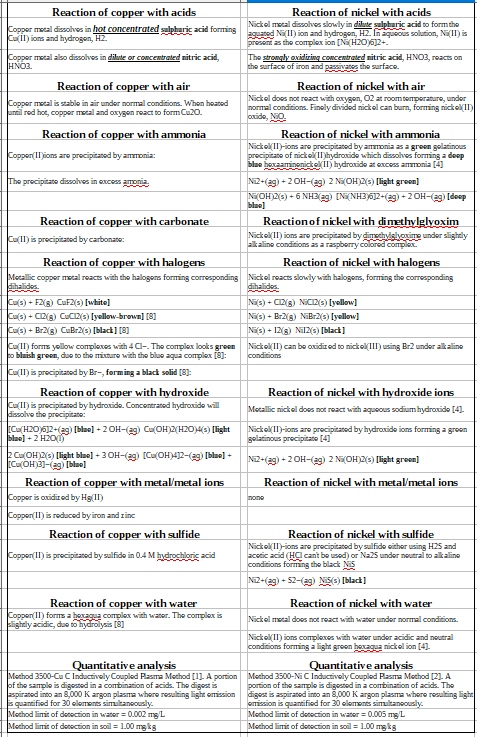 |
|
Pillar of the Community
United States
1680 Posts |
And I disagree with you Silviosi, the chart tells nothing about the rate the different metals react. If the copper reacts quicker, then the result will be as shown. Even if the copper in the copper nickel alloy reacts, the effect will be less because of the nickel in the alloy. If you disagree what is your explanation?
Edited by lcutler
09/09/2023 4:40 pm
|
|
Pillar of the Community
United States
1680 Posts |
|
|
Pillar of the Community
Canada
6244 Posts |
@ Icutter: Look at the differences: The cooper need HOT Concentrated acid and the NICKEL need normal DILUTE acid at the normal temperature. What earl put there is for Nickel.
Cooper to dissolves need dilute or concentrated nitric acid and the nickel need strongly oxidizing concentrated nitric acid, HNO3, which reacts on the surface of iron and passivates the surface.
Sorry Icutter but you has a lack of understanding in the elements chemistry reactions. Also it is not timing on those reactions because the both metals have the same molecular structure : Face centered cubic [3,7] which make them very resistant to acids.
Edited by silviosi
09/09/2023 5:25 pm
|
|
Pillar of the Community
United States
1680 Posts |
So what is your explanation? I have dug dozens of clad coins from heavily fertilized areas that look like this. What is one of the main ingredients in fertilizer? Nitric acid. So again, you are good at disagreeing, but not so good at an explanation.
|
|
Pillar of the Community
Canada
6244 Posts |
In fertilizer you has the element N Nitrogen. In combination with normal water which it is Ionized in some conditions could form ionized nitric acid. This acid in combination with the acidic rain will form strong ionized nitric acid. This will react with the surface of the Nickel -cooper alloy. Those acidic rains happened only on very specific meteorological conditions and at a very high altitude (over 40 000 feet high) to form.
For the Cooper it is need pure nitrogen in liquid form and distillated de-ionized water and an Lab well equipped in order to have the Nitric acid which Cu react and this acid must be at 80 and plus degrees Celsius to be able to broke the cooper solid state.
Edited by silviosi
09/09/2023 5:57 pm
|
|
Pillar of the Community
United States
1680 Posts |
So, I'll try one more time. What is your explanation of what happened to these coins?
|
|
Pillar of the Community
Canada
6244 Posts |
Look, I will not answer anymore on this topic for you. I give already the explanation for this coin and also explanation of the chemical reactions also for the foreign material.
|
|
Pillar of the Community
United States
1680 Posts |
OK, you win, I'm taking Mark Twain's advice and I'm out of here.
Edited by lcutler
09/09/2023 6:42 pm
|
|
Bedrock of the Community
United States
94367 Posts |
Me too.  |
|
Pillar of the Community
Canada
6244 Posts |
HeHeHe Big frog. Do not spin to much, not good for blood pressure. I know to much chemistry here, but is someone want explanation will have.
|
|
Forum Dad
 United States
24243 Posts |
Silviosi, you are 100% wrong. We've seen these coins literally hundreds of times on all kinds of clad coinage. The copper gets eaten waaaayyyy before the cladding. Soda in cupholders can literally do this to coins left in there. It's old news, you are wrong. Experts all know this to be true. 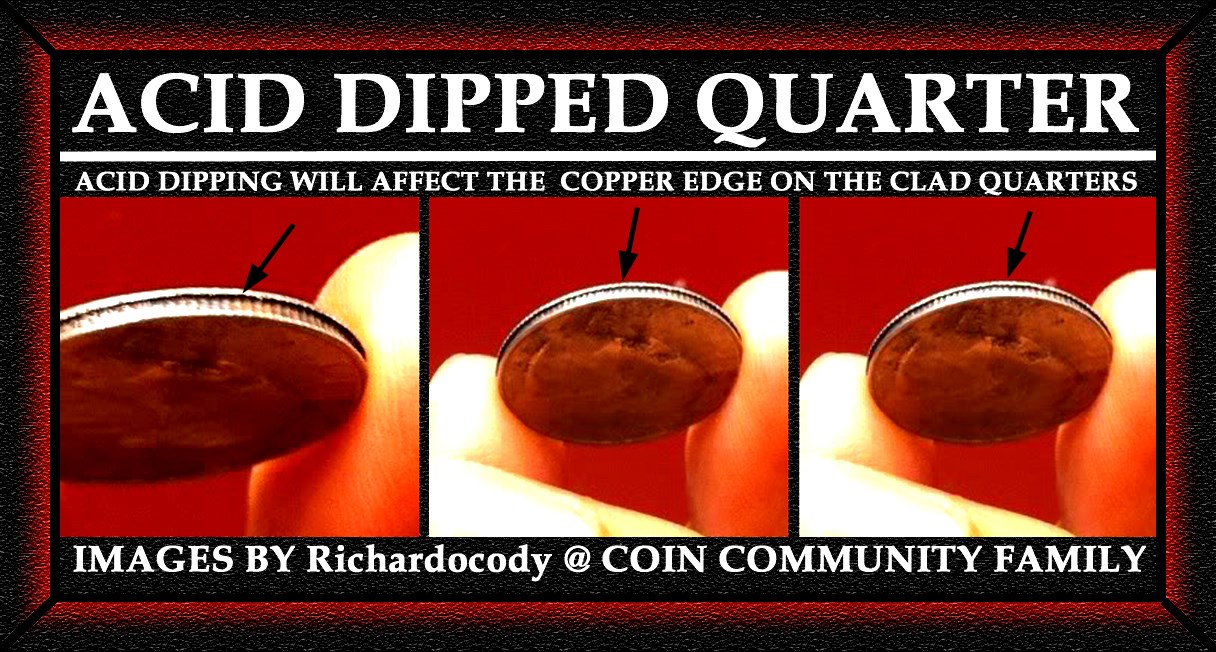 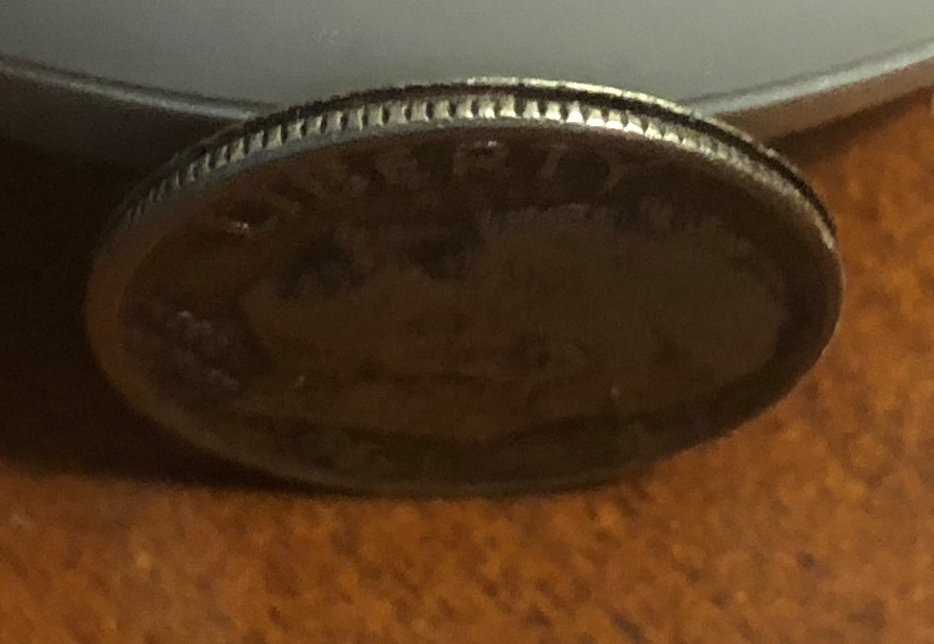 |
|
Bedrock of the Community
United States
27514 Posts |
Have you ever stomped on a bug to squash it? How much pressure did you use to flatten it? "Circulating coin presses use from 35 to 100 metric tons of pressure to strike the coins, depending on the denomination." https://www.usmint.gov/learn/produc...n-productionInordinately fascinated by bits of metal with strange markings and figures
|
|
Pillar of the Community
Canada
6244 Posts |
Bobby, I am not wrong. Caustic soda I didn't put because it is another kind of element and the Ni and Zn do not react. The zinc will have a white powder like the dust on the t-short. What you show it is the side of a clad coin and in my posts when an clad coin come like this my answer was caustic.
I didn't touch caustic and the acetone because are between two points of my table.
|
| |
Replies: 68 / Views: 6,690 |





 First Page


 Posted 09/09/2023 2:28 pm


