| Author |
 Replies: 10 / Views: 1,086 Replies: 10 / Views: 1,086 |
|
|
Valued Member
United States
319 Posts |
Late-period Roman portraiture. Not really something that falls within the boundaries of my hyper-focus on Roman realism. As my discriminate eye scans the multitude of options, searching for the telltale signs of exceptional realistic images...the coins of the late third/early fourth century (and beyond) are a blur. These specimens routinely fall outside the scope of my purview. 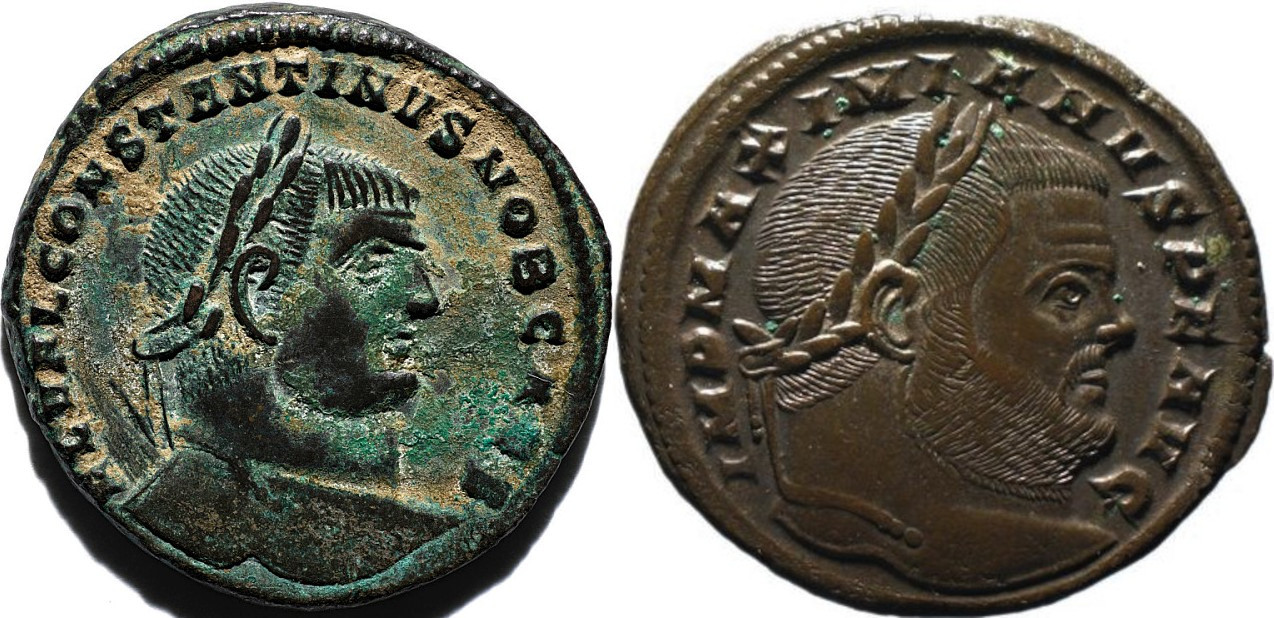 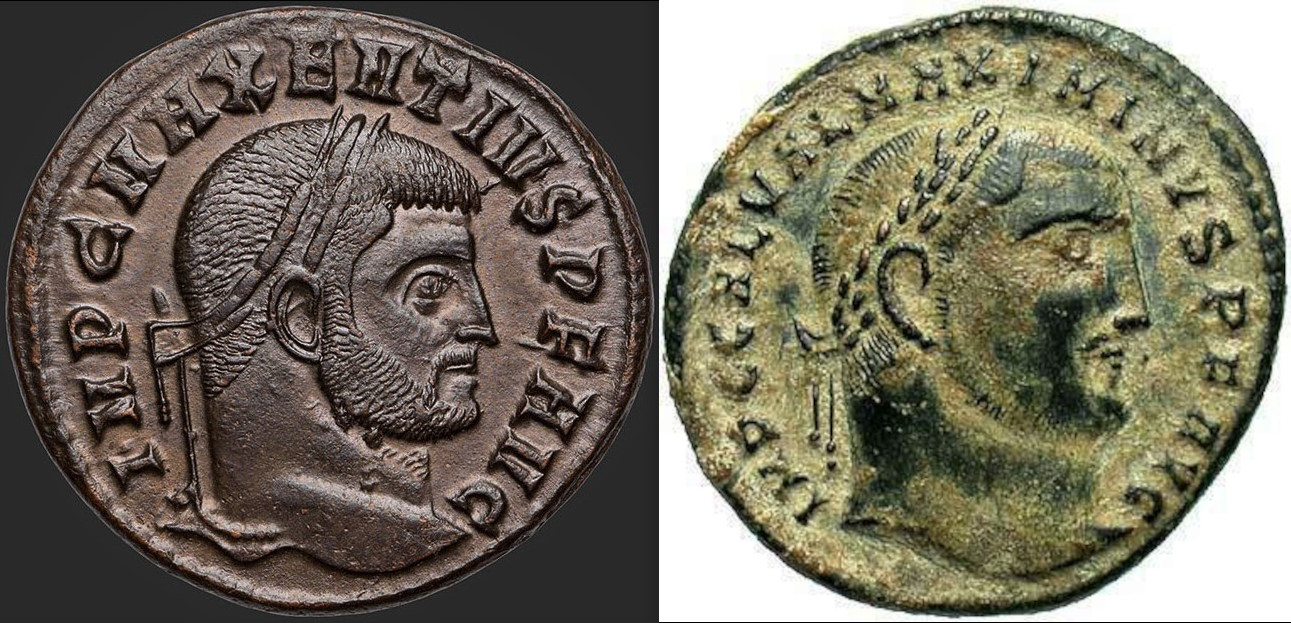 Exaggerated...highly stylized...caricature..."cartoony". All applicable descriptions for the portraits on coinage of the late emperors. I say this in no way to disparage the efforts of these talented ancient artists. It is simply a relief to know that I need not pay them attention, as my focus precludes them from consideration. *whew* Difficult enough to find inspirational specimens of quality realism. Imagine my surprise when this specimen caught (and held) my attention. A follis of Maximian...Diocletian's pit bull. 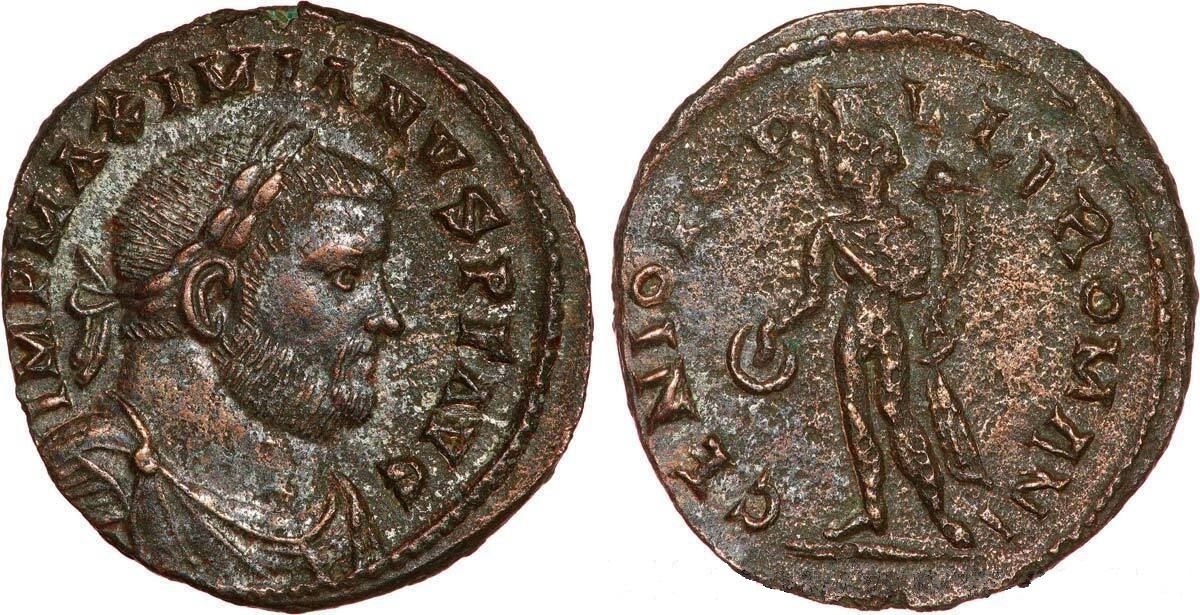 Obverse: IMP MAXIMIANVS P F AVG. Laureate, draped and cuirassed bust of Maximian Herculius, facing right. Reverse : GENIO POPV-LI ROMANI. Genius, standing left, cloak over left shoulder, holding patera in right hand and cornucopia in left hand. Follis or nummus. MAXIMIANUS HERCULIUS. 303-305 AD. 27mm, 7.95 grams. A late-period nummus...with all the characteristics of imperial portraits of that time. Certainly not in keeping with my expressed focus: Roman realism in portraiture. So what then is it about this particular coin that I found so fascinating and compelling? *scratching head* What is it about this portrait that spurred my desire to become its steward? Among examples of this emperor...indeed, among coins of this type...THIS portrait is a stand-out! It is clear to me that there are subtle nuances of realism in this portrait of Maximian. As if the engraver struggled just a little against the constraints of the preferred style of the day. There is the usual late-period stylistic elements: the 'beefy' neck, hatched hair, and simplified ear. In spite of these artistic conventions, the proportions of the bust are solid. The eye is of near-normal size and shape, and the flesh of the face is rendered beautifully. Steps are clearly taken to raise this depiction from the level of a cartoon character to something that more accurately reminds us this is a real person. Here I thought my focus on realism was going to limit my collection. *shaking head* I've come to realize, however, that there are coins out there from dies with exceptional craftsmanship...in every time period. In every style. I'm in reeeeeal trouble!
|
|
|
|
Pillar of the Community
 Sweden
2124 Posts |
Quote:
A follis of Maximian Yes ... quite an exceptional style. Haven't seen anything like it from that period. Good catch! |
|
Pillar of the Community
United Kingdom
1168 Posts |
A much more realistic portrait indeed, Mike. Nice pick-up.  Quote:
I've come to realize, however, that there are coins out there from dies with exceptional craftsmanship...in every time period. In every style. I'm in reeeeeal trouble! Welcome to the club! There is no hope for you now.  |
|
Valued Member
 United States
319 Posts |
erafjel...I knnnnnow. Such a stand-out depiction. I could not resist. A truly unexpected surprise! When I started collecting with a focus on realistic portraiture, I figured the road would be narrow. I knew many ancient coins would therefore fall outside the chosen parameters. I have found, however, that my focus is not only on realistic portraits. In truth, I am looking for coins struck from dies produced by artists who demonstrate the ability to express a certain level of realism in their work. This follis is an indication that I need to expand my idea of where I will find these artists. Quote:
Welcome to the club! There is no hope for you now. Are you suggesting, Jim, that there was hope for me before  |
|
Valued Member
United States
319 Posts |
I thought I would post a nice detail image of the portrait on this follis of Maximianus. Ssso different than the portraits one normally sees on the coins of this period. Subtle differences to be sure, but important elements that clearly raise this portrait and bend it towards realism. 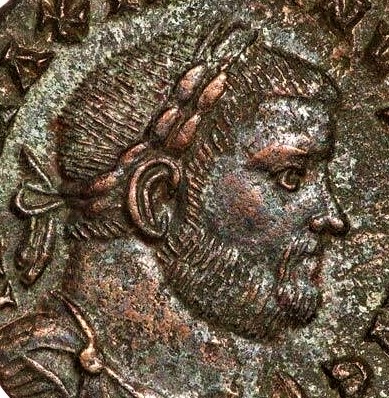 The structures of the brow. The size and shape of the eye. The delineation of cheek from the nasolabial tissue. The double chin! This was a very affordable acquisition, and I'm at a loss as to the reason why. This coin type is not rare or uncommon...but this portrait certainly is! |
|
Pillar of the Community
 United States
961 Posts |
Your first post you are taking a Maximianus from London and comparing to different styles from different mints. Your coin from London has a superior style due to the fact that Maximianus was in the area. Surprise that a mint from the East might not have as good a portrait or, remember, a completely different style altogether from the West. Coins from Carthage have good style also as they copied the bust from the mint of Rome. Below are some Maximianus from Carthage with a Roman style. 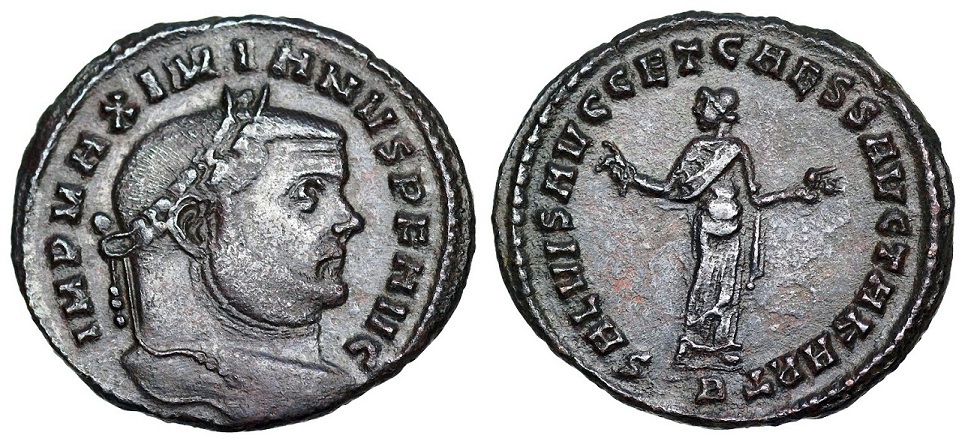 Maximianus A.D. 298- 303 26x29mm 9.3g IMP MAXIMIANVS P F AVG; Laureate head right. SALVIS AVGG ET CAESS AVCTA KART; Carthage standing facing, head left, holding fruits in both hands. In ex. B RIC VI Carthage 27b 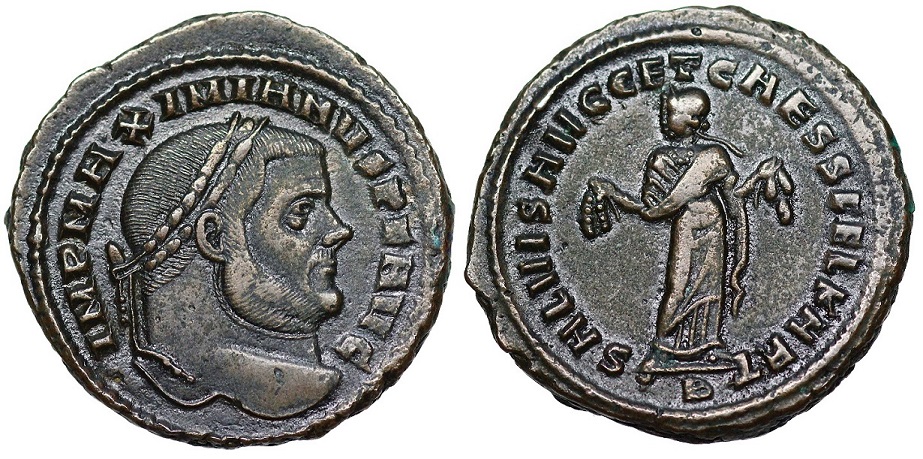 Maximianus A.D. 298-303 28mm 10.4g IMP MAXIMIANVS P F AVG; Laureate head right. SALVIS AVGG ET CAESS FEL KART; Carthage standing facing, head left, holding fruits in both hands. In ex. B RIC VI Carthage 29b/31b |
|
Valued Member
United States
319 Posts |
Awesome points! Different mints. Different stylistic cultural preferences. Different artistic skills and styles...with differing access to physical references on which to base the portraits. All contributing factors to the portraits we see.
As to why this portrait is so unique in it's depiction of Maximian isn't the real question. The question is...how did this fine specimen avoid being scooped out from under me while I focused on other "targets"? This follis sat at the edge of my radar for at least a month, before I finally decided to go for it. The portrait is such a stand-out...I guess I'm bit puzzled.
Really appreciate your insights, Victor. Fascinating!
Edited by circusmax120
05/10/2023 1:28 pm
|
|
Pillar of the Community
United States
961 Posts |
Busts like this are common at this time on London coinage. Here is a Maximianus from the Rauceby hoard. 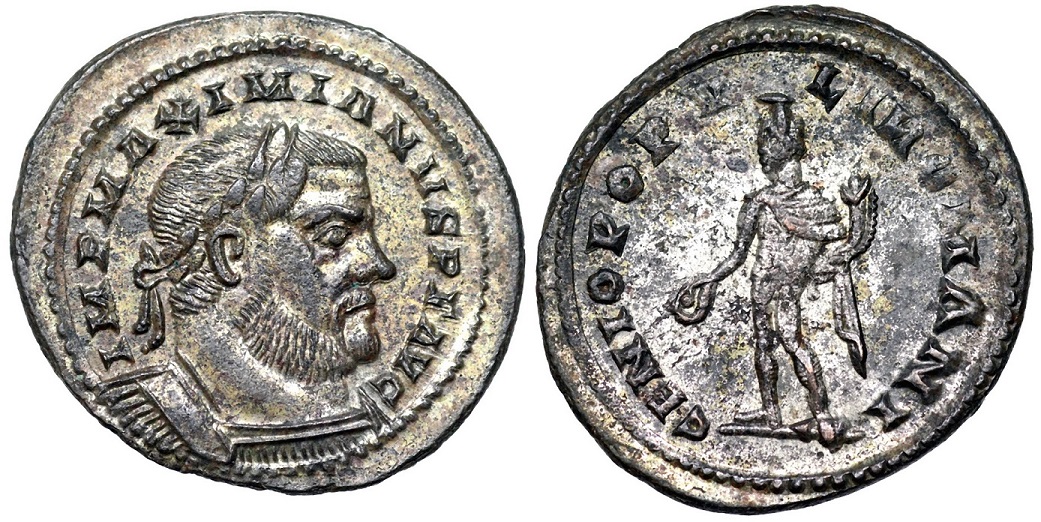 |
|
Valued Member
United States
319 Posts |
Another great example, Victor. Your point regarding the quality of the portraiture on the coins of Maximian struck at the London mint is well-made. Truly amazing stuff! I have been looking at specimens of Diocletian...but not yet seeing the same realistic qualities seen in these examples of Maximian. Given that Diocletian was physically in Rome, one would think the coins from the mint in Rome would be producing portraits with a similar amount of accuracy (regardless of the style of the day).
But as I stated earlier, the artist's skill varies. So there certainly could be coins out there (from this period) produced from dies cut by artists with an eye for realism. I'll just keep looking!
Edited by circusmax120
05/11/2023 2:56 pm
|
|
Pillar of the Community
United States
961 Posts |
Diocletian was never in Rome, except maybe when he was on a visit to Italy in A.D. 285-- see ADVENTVS AVG from Ticinum (RIC Vii 241). The historian Zonaras alleges that Diocletian visited Rome. Otherwise, Diocletian stayed in the East.
|
|
Valued Member
United States
319 Posts |
Ahhhhh! I must learn to double-check my facts, instead of assuming. Thank you for the correction, Victor. Let's hope I am better at hunting down a stand-out portrait of Diocletian...no matter where he is!
|
| |
Replies: 10 / Views: 1,086 |
|










 Posted 05/03/2023 12:50 pm


