| Author |
 Replies: 31 / Views: 3,349 Replies: 31 / Views: 3,349 |
|
New Member
United States
23 Posts |
I know, everyone's favorite! I found quite the oddball coin. The reverse is a copperish color, which I didn't think much about but when I dropped it in the paper roll, it sounded different- so I pulled it back out. I weighed a 'normal' SBA at 8.06g, RedBook says 8.1 so close enough. This thing weighs 5.92g, quarter for that time period says 5.75g. Diameter matches what an SBA is supposed to be though. Any thoughts? 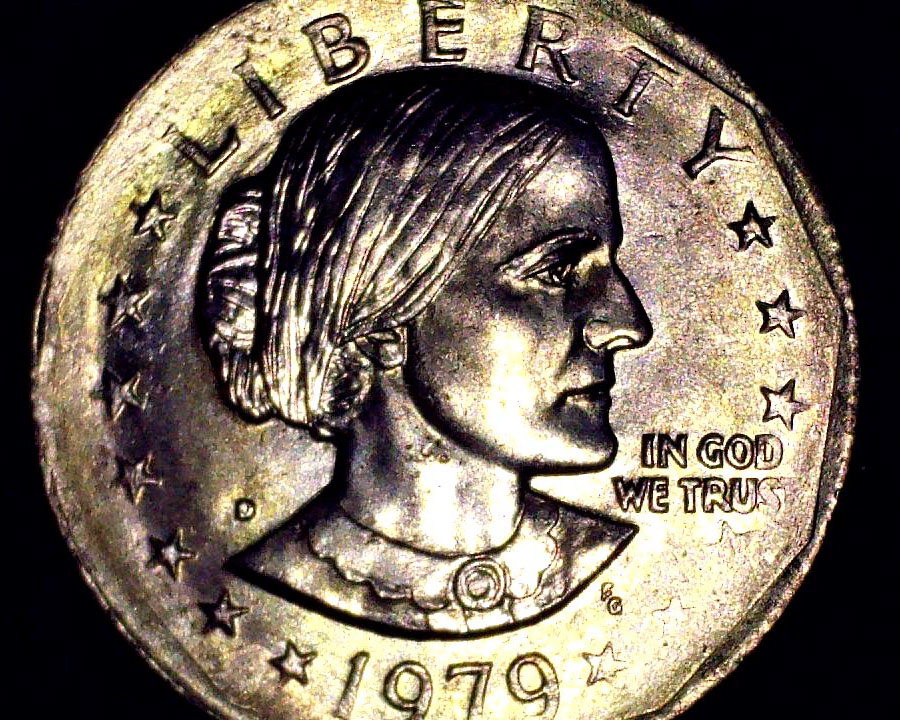 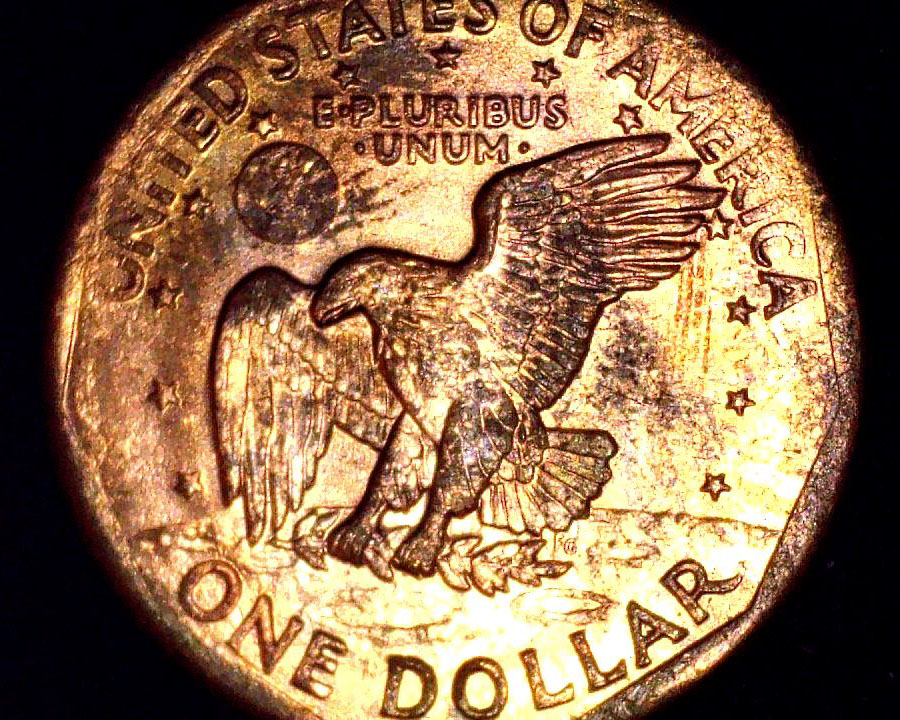 |
|
|
|
Moderator
 United States
34572 Posts |
Underweight with a light strike and copper coloring on one side makes me think you have a coin struck with a missing clad layer. Let's see if others agree.
"If you climb a good tree, you get a push."
-----Ghanaian proverb
"The danger we all now face is distinguishing between what is authentic and what is performed."
-----King Adz
|
|
Pillar of the Community
Canada
6244 Posts |
Those coins was 75% Copper, 25% Nickel over a pure Copper center.
Do this explain you the color?. Then this coin was in a bad environment relative for long time.
So you have a spender if someone accept.
PS: Spence: the Cu-Ni clad weight more on those coins.
Edited by silviosi
08/02/2023 8:20 pm
|
|
Moderator
United States
110190 Posts |
It is missing some of the rim on both sides. I'm thinking that it was 'worked' or ground down - and that can account to the loss of so much weight.
|
|
New Member
 United States
23 Posts |
Diameter checks only 0.1mm smaller than an SBA and it has the reeding |
|
Pillar of the Community
United States
3207 Posts |
Dearborn, you're thinking 25% of this coin's metal has been removed?
|
|
Moderator
United States
110190 Posts |
Well I'm not good at math, never have been, but since you put it that way, I may have to retract my last statement. But not sure yet, lets see what others have to say.  Edited by Dearborn
08/02/2023 9:45 pm
|
|
Moderator
United States
110190 Posts |
what does the edge of this coin look like? Is it a copper core, cuppro-nickel cladding?
|
|
Pillar of the Community
Canada
6244 Posts |
This coin it is PMD and it is no doubt of this. I do not believe the O Poster about the Diameter because I see is missing a full rim. The small was .5 mm and the large 1 mm. Missing this plus we see clear the acidic interferences, the coin weight it is in the parameters of what it is. If was miss the clad the color will be different and also the strike design, Nick10 I expect from you to know this, but fast past is comprehensible. Edited by silviosi
08/02/2023 9:38 pm
|
|
Bedrock of the Community
United States
94367 Posts |
Agree, just damage.  to the CCF! |
|
Pillar of the Community
United States
681 Posts |
Bring to your local coin shop or coin show and ask around, I am inclined to agree with @Spence.
|
|
Pillar of the Community
Canada
6244 Posts |
@ Khromtau, To go to coins dealer it is lost of time. How many dealers are Jon, Will, Dr. Sepp or Will? Not to mention you Daniel Malone (Hall of Fames). Not many so to say this it is wrong direction.
95% of the dealers do not know nothing more then to do business, and is point. If they buy 2$ will sell 10$ so is good for them. Ask me how many time I was back and give a few K's for what they sell me? Many times because I am like this.
|
|
Pillar of the Community
United States
3237 Posts |
Appears to be missing the reverse cladding, which is what what caused the weakness in the strike Dearborn mistook for damage along the rim. Excellent find!
|
|
Pillar of the Community
United States
6967 Posts |
SBA Missing Clad Well, let's do a little math. The overall composition is 8.33% nickel, 91.67% copper at 8.1g. The clad layer is 25% nickel, 75% copper. So if the two clad layers were about 1/3 the total coin mass, that makes the total cladding mass 2.7g. Which is really 2x 1.35g cupronickel layers sandwiched around a 5.4g solid copper core. Thus, if this SBA dollar were missing a clad layer on the reverse, the reduced mass would be 8.1g - 1.35g = 6.75g. But these numbers are approximate, so I would consider 5.92g to be in the right ballpark. Given the coppery appearance of the reverse, we definitely need to consider a missing clad layer as a possibility. Further, the NGC graded examples of a SBA dollar with a missing clad layer are 6.0 grams, which is spot on for this particular example. I would cut to the chase and contact the expert directly. Jon Sullivan was recently kind enough to visit a similar CCF thread about a Sacagawea dollar missing a clad layer. He's the PCGS recognized expert, and runs a business that specializes in these types of rare error coins. A missing clad dollar can be worth a few hundred bucks, so I would treat this coin as valuable until he tells you otherwise. https://sullivannumismatics.com/contact-us/NGC graded example on ebay, 6.0g: https://www.ebay.com/itm/1979-NGC-M...irect=mobileMy personal opinion, this coin sure looks like a missing clad reverse SBA dollar.
|
|
Pillar of the Community
United States
6967 Posts |
Sam brought up another good point. On the Sacagawea dollar example, the missing clad layer resulted in a weak strike, particularly around the rims. That's because there isn't enough material to correctly form the rims during strike, and the planchet is too thin to have deeply struck devices. https://www.PCGS.com/news/missing-c...-error-coins |
|
Pillar of the Community
Canada
6244 Posts |
@ Brand: Impressive calculus, but what you forgot it is the thickness of clad. Your calculus say that one side it is 1.35 gr. Never in the history of the Mint was a so thick and heavy clad.
I contradicted but hat down for your perspectives. Maybe I will go to see the thickness of this clad and come back.
PS: On my recollection, never a clad was more the 2 mm. Not sure without see the data.
Edited by silviosi
08/03/2023 04:12 am
|
| |
Replies: 31 / Views: 3,349 |







 Posted 08/02/2023 8:18 pm


