A lovely summer Friday night... nothing better to do than some good ol' cob attribution geekery!!
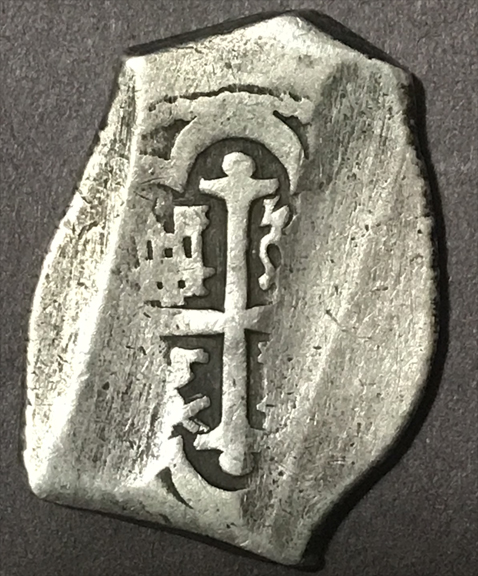
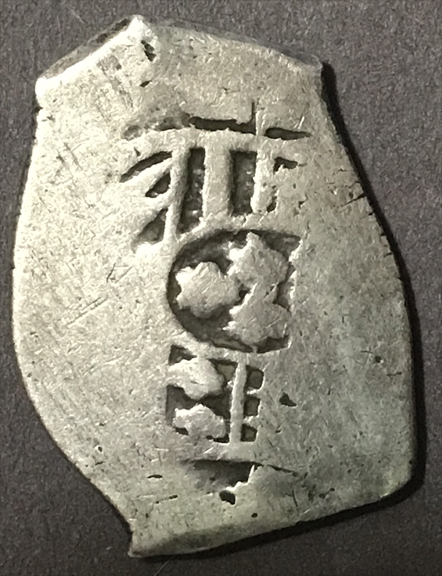
OK, let's get the piece rotated so the design is showing correctly oriented:
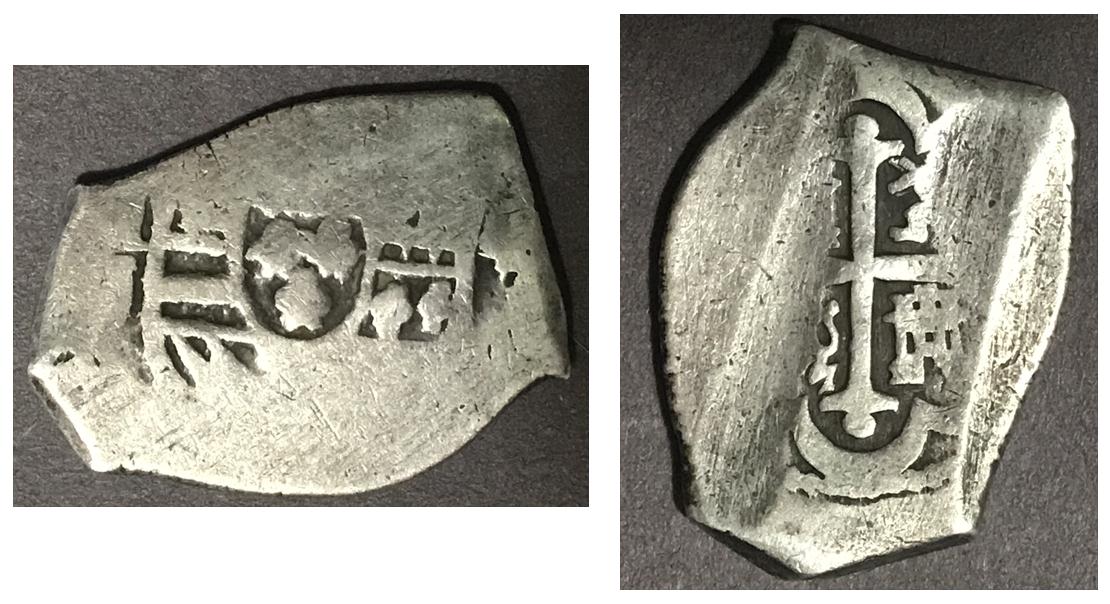
Firstly, piece is genuine and a fairly wholesome example. No corrosion, etc, doesn't look clipped... should weigh right around the 13._g range. Not an amazing strike, which is rather common... but decent central detail exists.
Attribution:
Obviously there's no part of the king's name visible (legend is totally unstruck). It is indeed very hard/circumstantial to attribute a piece simply by style elements to the short time of Luis I (his name exists only on some of the 1724 and 1725 output for Mexico)... There ARE a few design changes right around that time that might make it almost possible, with extremely detailed study, to pin a certain piece to Luis based on die matching... but that's beyond any reasonable scope here.
For this piece, however, it's easy enough to confirm it's NOT from that exact period.
The basics, by descending simplicity: Mexico mint style... Bourbon shield - so no earlier than 1701... and redesigned cross side with significantly "neater" lions/castles - so no earlier than 1714.
Back to the shield side, there's enough visible to see that the assayer is J, who appears on coins dated 1705-24, so we've narrowed the range to 1714-24.
After that, you have to get into more specifics with the design elements. Long story short, the Austria bar connects to the section border and there's still a separator between Naples/Sicily and the fleurs of "New Burgundy". So, the shield is of the old style seen on pieces dated up through 1715.
This, the piece would be dated 1714-1715, the first period of Philip V.
If 1715 Fleet (see below), it was a well-preserved example with no environmental issues. Plenty do exist like that, depending on how/where they were situated.












 Posted 08/12/2023 12:04 am


