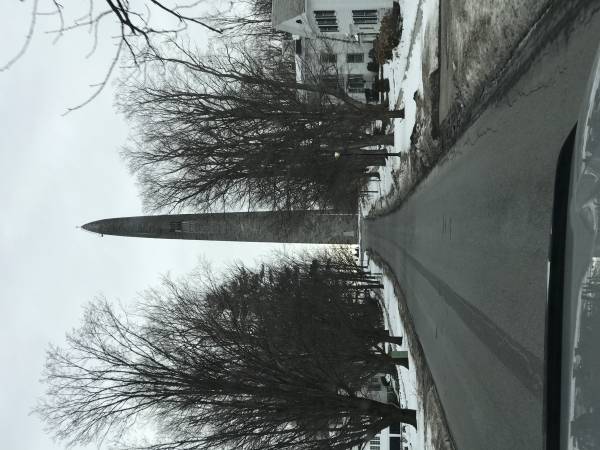
I previously posted about the rejected designs/models of Sherry Fry for the 1927 Battle of Bennington - Vermont Independence Sesquicentennial Half Dollar, this time out I'll have a look at the unsuccessful preliminary designs of Charles Keck - the artist responsible for the coin as struck. (You can read the Sherry Fry post here:
1927 Battle Of Bennington / Vermont Independence Sesquicentennial - Fry's Design.)
After Sherry Fry stepped away from the coin project, the Vermont Sesquicentennial Commission ("Commission") engaged prominent artist-sculptor Charles Keck. Keck (1875-1951) was born in New York City, NY, studied at the Art Students League in NYC and in Rome, Italy. For a time - 1893-1898 - he was an assistant in the studio of Augustus St. Gaudens and is remembered for his many statues, monuments, memorials and architectural sculptures.
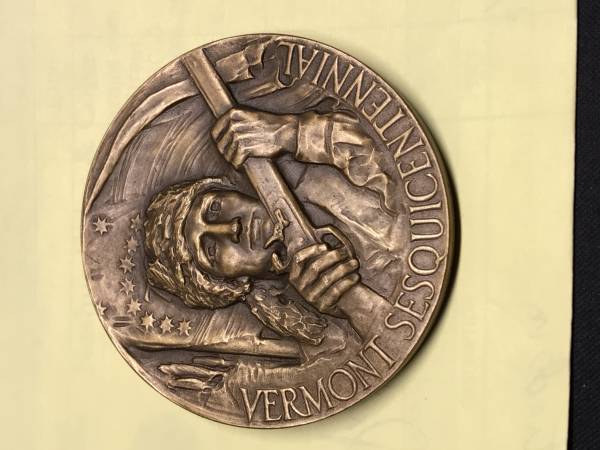
He was also the design talent behind the 1915 Panama-Pacific International Exposition Gold Dollar and 1936 Lynchburg, VA Sesquicentennial Half Dollar (in addition to the 1927 Bennington/Vermont half dollar). He also designed/sculpted a number of medals, including the 1927 Battle of Bennington-Vermont Sesquicentennial medal, the 1927 Founding of the New York State Government Sesquicentennial medal, the 1923 Spanish-American War 25th Anniversary medal and USS Maine Memorial Plaque, among others.
His first designs for the half dollar were partially suiccessful. The stern, right-facing portrait of Ira Allen would be retained (with simplified surrounding inscriptions) but his reverse featuring Fay's Tavern (aka Catamount Tavern) was rejected by the Commission of Fine Arts ("CFA"). In writing to Keck, the CFA stated: "The Commission had objected to an architectural motive for the reverse of the coin, and now the design comes back with the repetition of a building even less capable of medallic treatment than was the monument before proposed."
Preliminary Designs for Half Dollar by Charles Keck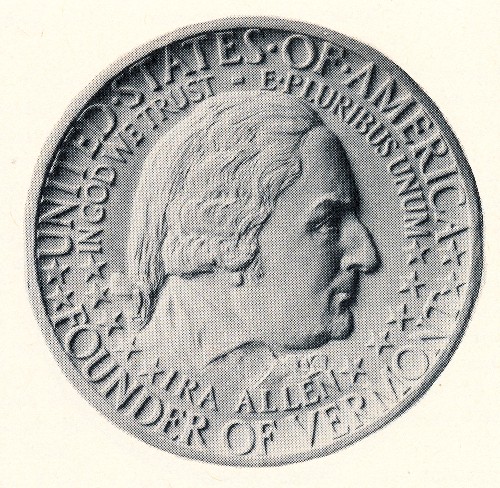
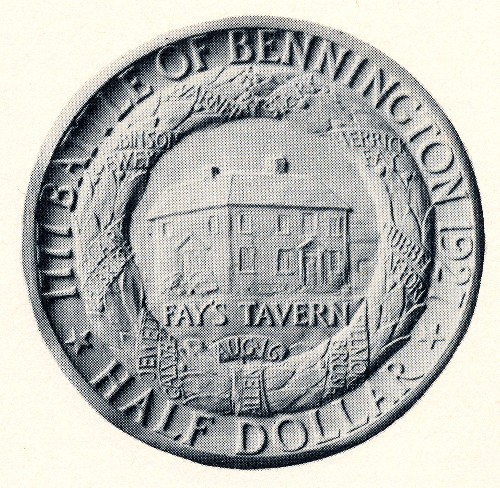 (image Credit: US National Archives via An Illustrated History of U.S. Commemorative Coinage. Fair use, education.)
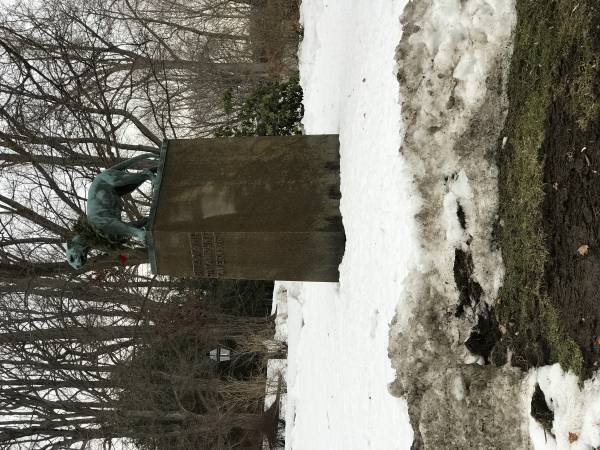
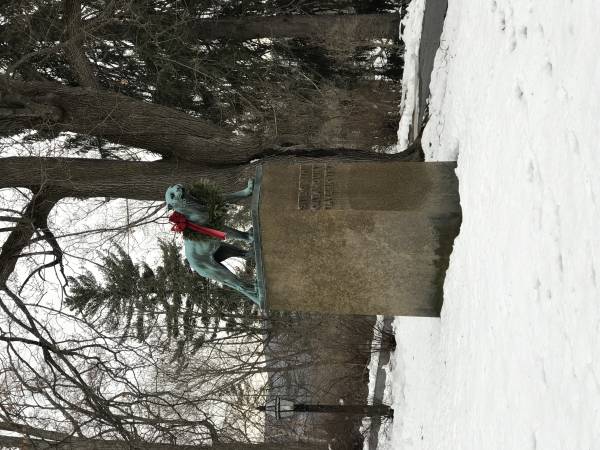
The CFA suggested to Keck that rather than depict the tavern building, he might consider using "a catamount or something of that sort that will enable you to take some satisfaction in the coin as a work of art?"
The Vermont Commission was not pleased at the CFA's latest criticisms and suggested that it was overstepping its area of responsibility and was more focused on the "pictorial" aspects of the design vs. its historical symbolism and accuracy. The Commission did not agree with the suggestion of using a catamount - it believed it to be historically inappropriate - but ultimately threw its collective hands up and said "Let the Fine Arts Commission have its way."
Keck "ran" with the catamount suggestion for the coin and re-used his Fay's Tavern design for the 1927 Battle of Bennington-Vermont Sesquicentennial medal. (A link for more on the medal is found below.)
Keck prepared multiple reverse design candidates, two incorporating a catamount and one with Revolutionary War era flags. The following two designs were not approved.
Potential Reverse Designs for the Half Dollar by Charles Keck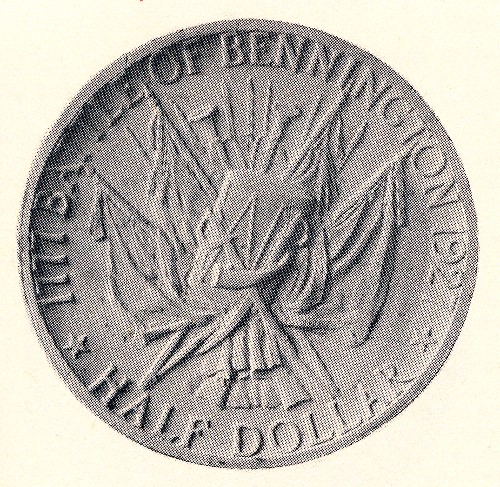
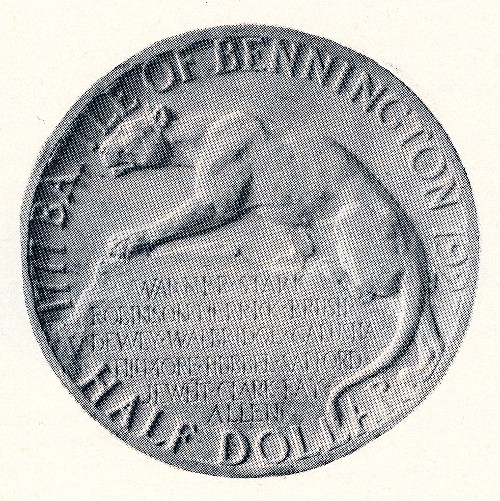 (The names on the rock are those of prominent figures in the Battle of Bennington. They are: Warner, Stark, Robinson, Herrick, Brush, Dewey, Walbridge, Galusha, Fillmore, Hubbel. Safford, Jewett, Clark, Fay and Allen)
 Out of the three designs. the CFA preferred the design with a striding catamount and sent word of its approval. The CFA also approved the Ira Allen obverse design, but made several suggestions aimed at simplifying it - e.g., remove the stars. Keck made the requested changes and delivered final models for the coin. The models reflected the designs with which today's collectors are familiar.
1927 Battle of Bennington / Vermont Independence Sesquicentennial Half Dollar

For more on the Official Battle of Bennington / Vermont Sesquicentennial Medal:
-
1927 Battle Of Bennington-Vermont Independence Sesquicentennial MedalFor other of my posts about commemorative coins and medals, including more pn the Bennington/Vermont half dollar, see:
Commems Collection.




 Posted 08/15/2023 08:56 am