| Author |
 Replies: 5 / Views: 1,138 Replies: 5 / Views: 1,138 |
|
|
Pillar of the Community
United States
1080 Posts |
Here's one of my more upscale tokens, a high-bore gilt proof 1811 halfpenny token issued by Samuel Guppy's Patent Sheathing Nail Manufactory of Bristol, Somersetshire. Sheathing nails were used in shipbuilding to fasten a protective copper skin over a ship's hull below the waterline.
Within the range of Withers 460-513, and without duplication, I have 22 distinct types and varieties of these "Guppy tokens" across the three denominations that were struck: farthing, halfpenny, and penny. Just to show that I wouldn't have any visibility problems, 14 of those tokens grade at a solid EF and above; the rest are all VF-nEF. They're all similar in their basic design, featuring a sailing ship on the obverse and legend/denomination on the reverse.
Of all those, this specimen stands out as the only one showing these nearly flamboyant grooves in the fields, so pronounced that they remind me of all my old vinyl LP's and 45-rpm records. I'm imagining -- with zero confidence -- that it's an artifact of die preparation, because if it were a planchet characteristic the grooves would probably show up to some degree in the devices and legends as well, right? But the sails on that ship are smooth as the day they were first hemmed, hung, and tensioned! And if it's a diecutting or polishing thing, why? What's the point?
Has anyone else encountered this? Does anyone know what it indicates? Maybe it's a pattern or presentation piece? Sloppiness, perhaps? I've been unable to find anything similar in the literature available to me here in the US, and nor have the examples I've located that have been offered or sold by auction houses and dealers online turned up anything quite like it. No comparables on museum websites, either.
Many thanks in advance for any knowledge and suggestions you might have....they're all 100% welcome.
Remember the old adage: It would be irresponsible NOT to speculate! Somersetshire, Bristol. Davis 111, Withers 473a, RRR.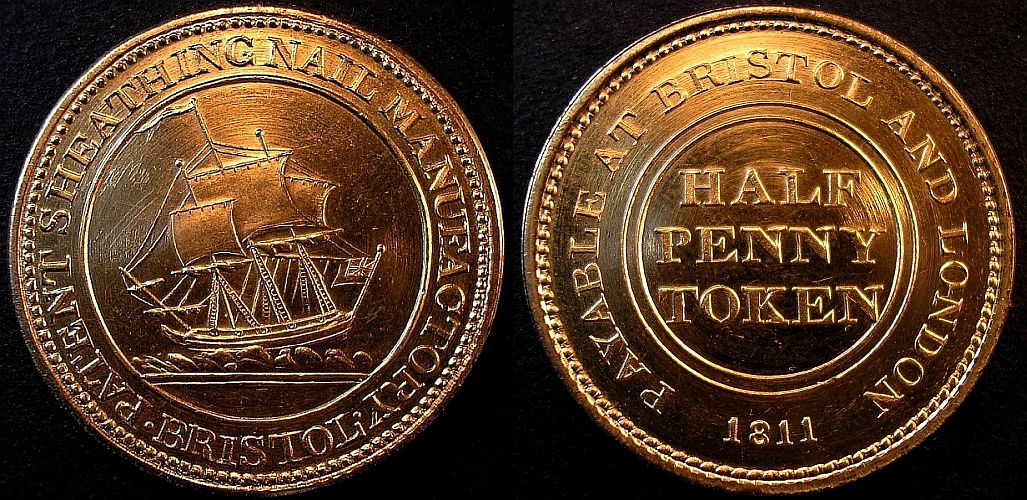 "If everything seems to be under control, you're just not going fast enough."
--- Mario Andretti
|
|
|
|
Bedrock of the Community
 United States
27514 Posts |
Very interesting, daltonista! I also think the lines are due to die preparation. Perhaps it was a trial strike with a new set of dies, and they realized that the fields needed to be polished. And it's not like they would have tossed out a token because of the lines.
Inordinately fascinated by bits of metal with strange markings and figures
|
|
Pillar of the Community
United Kingdom
725 Posts |
Yes you get lines like this in the fields of hammered coinage all the time - Charles I shillings etc. Over-zealous die polishing, I think, presumably on a rotating machine. Edited by JohnConduitt
12/01/2023 6:51 pm
|
|
Pillar of the Community
Russian Federation
5186 Posts |
It took me some moments to remember where I've seen very similar grooves before... 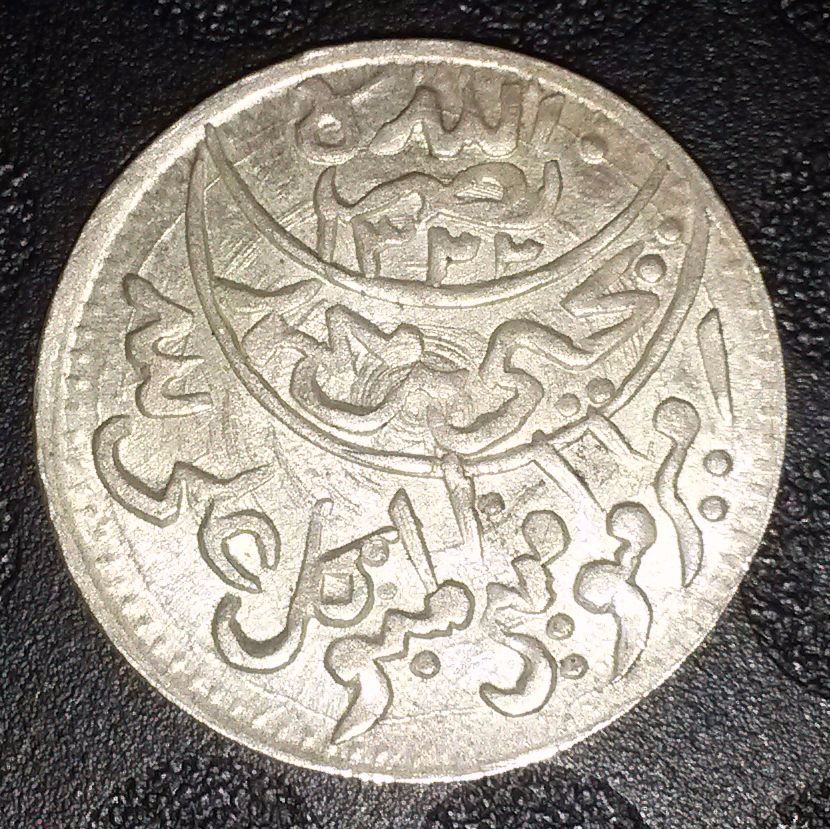  ...on an unusually high grade Yemen 1/10 riyal from my collection. (Very posssibly hammered; Yemen was one of the last places in the world to make hammered coinage.) Some of those lines might be die cracks, but most probably aren't, especially near the center! In principle that one could be planchet preparation, I guess. Hard to tell for sure. |
|
Moderator
United States
56855 Posts |
Kind of reminds of lathe lines. John1  |
|
Pillar of the Community
 United States
1080 Posts |
 This was exactly my thought as soon as die polishing came up in this thread. Attaching a die to a lathe for polishing seems like a natural, although it looks as though rasps and sandpaper were used in Charles I's time! So this token could have been struck as a die trial? My thanks to all for your tips on this topic -- keep 'em coming! "If everything seems to be under control, you're just not going fast enough."
--- Mario Andretti
|
| |
Replies: 5 / Views: 1,138 |
|







 Posted 12/01/2023 6:50 pm


