| Author |
 Replies: 14 / Views: 1,440 Replies: 14 / Views: 1,440 |
|
|
New Member
South Africa
10 Posts |
Hello everybody. Complements of the season. I have a half Penny no out a date and it looks as if it was some sort of testing template. I'm not sure actually. One explanation I could guess is that the coin was just underneath a heavy weight for manny yers accounting for its errors. Any help would be appreciated I've attached a picture, please see. 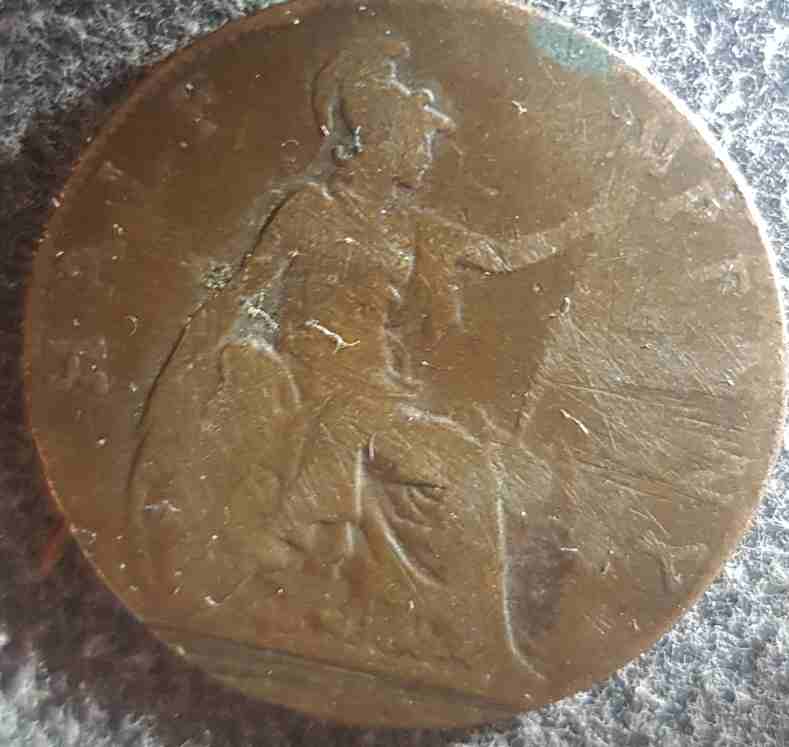 *** Moved by Staff moved to a more appropriate forum. *** *** Moved by Staff moved to a more appropriate forum. *** |
|
|
|
Moderator
 United States
56855 Posts |
 Going to need a photo of the other side. John1  |
|
Bedrock of the Community
United Kingdom
19180 Posts |
to the Forum! I am English but currently on holiday in South Africa! Your halfpenny just looks heavily worn and damaged to me, but a photo of the obverse would be useful! Edited by NumisRob
01/05/2024 11:50 am
|
|
Bedrock of the Community
United States
94367 Posts |
 to the CCF! |
|
New Member
 South Africa
10 Posts |
Hi guys It is quite old and warm out. Is there any way to tell age vs mint/strike errors I've attached the other side, please see. 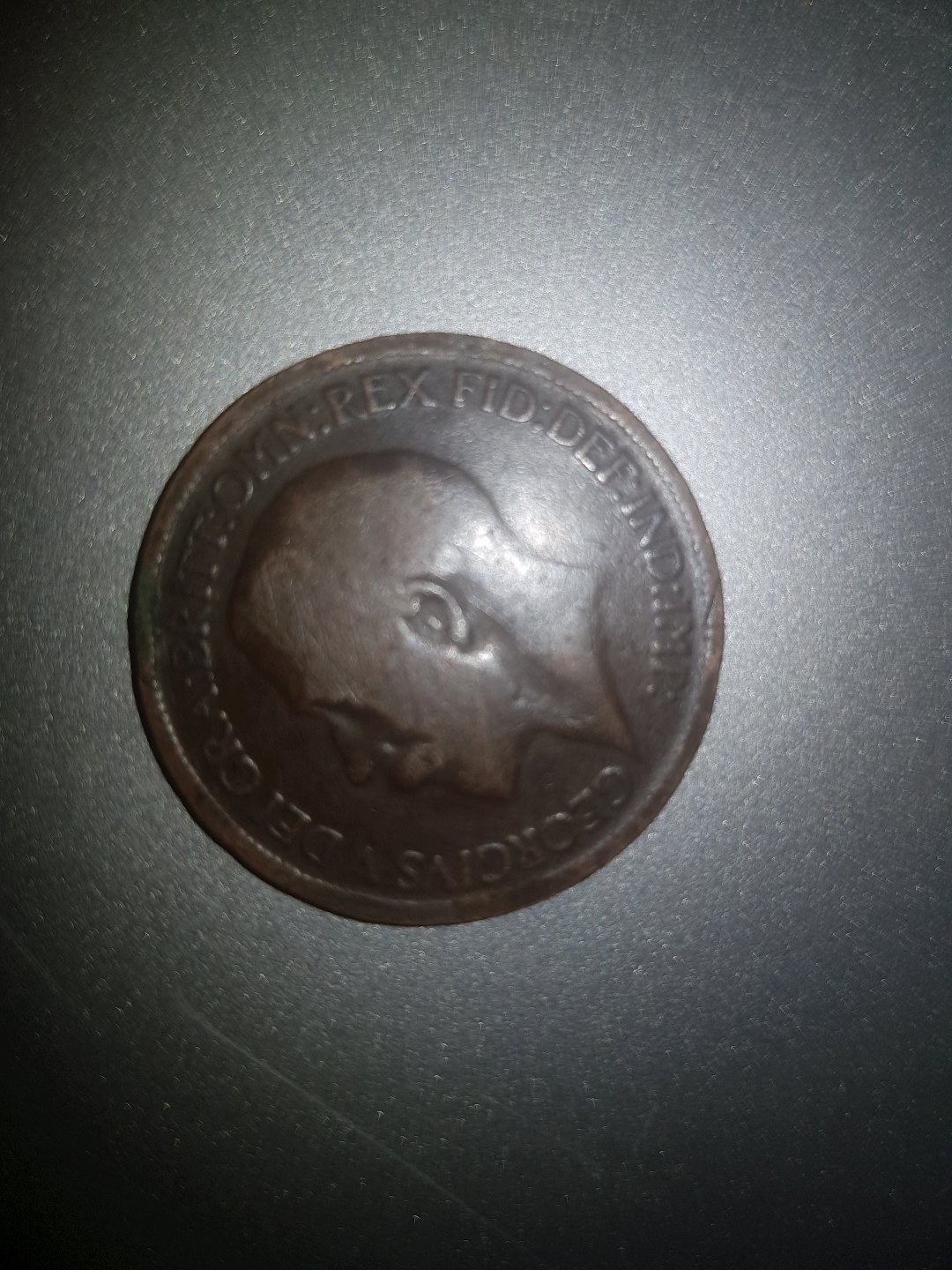 |
|
Bedrock of the Community
United States
37237 Posts |
Looks like intentional damage.
|
|
Bedrock of the Community
United States
94367 Posts |
Guessing this is just damage.
|
|
Moderator
United States
198004 Posts |
to the Community! |
|
Pillar of the Community
United Kingdom
945 Posts |
Definitely Post Mint Damage ( PMD), so no added value as an error of any sort. Date will be between 1911 and 1927 from the bust. (Smaller bust thereafter.) I think I can see a trace of a 4 at the end of the date, most likely making it 1914 by the level of wear. In that condition sadly scrap metal value only. |
|
Moderator
Australia
17031 Posts |
Quote:
Is there any way to tell age vs mint/strike errors "Experience", mostly. But hwat really helps is familiarity with the method of modern coinage manufacture. There are only a small number of ways that a coin can be "damaged" during manufacture by the mint, so that it starts out defective in some way - which we call a "mint error". There are a much larger number of ways that a coin can get damaged after it leaves a mint, from suffering some kind of traumatic accident (falling into a wood-chipper, for example) through to being deliberately damaged and defaced by a bored human. It is usually impossible to describe in detail exactly how such damage occurs for any specific damaged coin, because of that diversity. So when we see a non-typical coin with some kind of damage to it, we try ti imagine some stage of the minting process where that kind of damage could possibly happen. If we can;t then it almost certainly is not a "mint error". In this case, we know from studying the minting process that dates on coins are not added in some separate stage of coin production; they are added as part of the entire design, all at once. So it's impossible for a mint to "forget" to put the date on a coin. They do not make "testing templates" with blank dates (though they very rarely make pattern coins with "impossible" dates). It's very difficult (but not impossible) for some "grease" to get stuck in the date-numeral part of the coin die, which would result in an obscured or perhaps even missing date, but there would be other signs that this had occurred. Finally, your coin is covered in nicks and scratches that are concentrated in certain areas: around the two Ns in the word PENNY, across Britannia's high points (chest, arms, legs, etc), and around the area where the date should be. Again, there is no possible way such scratches could be placed on a coin during manufacture - and it's very easy to place such scratches on a coin after manufacture (the "bored human" hypothesis comes to mind, but is not the only explanation). Don't say "infinitely" when you mean "very"; otherwise, you'll have no word left when you want to talk about something really infinite. - C. S. Lewis
|
|
Moderator
Australia
17031 Posts |
And finally, there's the "common sense" argument, which is especially useful for the more spectacularly damaged coins.
If a coin comes out of the mint with a spectacular error on it, someone is likely to notice - probably very quickly. Not everyone examines their coins closely, but enough people do. And more people did so a hundred years ago, when getting caught with a counterfeit coin meant time in prison. An "odd-looking coin" will almost certainly not get passed from hand to hand like a normal coin. So it will not be "worn" like a normal coin wears. The obverse (heads side) of your coin appears to show normal wear patterns - meaning many many people spent this coin as if it were a normal halfpenny. Meaning for most of that time, it probably did look like a normal halfpenny and did not have any odd damage on the other side.
Don't say "infinitely" when you mean "very"; otherwise, you'll have no word left when you want to talk about something really infinite. - C. S. Lewis
|
|
New Member
South Africa
10 Posts |
Hi all
Thanks for the help. My father passes away about a year ago. I found a shoebox with old coins.
So I'll be bugging you guys with many many more questions. Lol
|
|
Moderator
Australia
17031 Posts |
Questions are cool. Keep them coming.  Don't say "infinitely" when you mean "very"; otherwise, you'll have no word left when you want to talk about something really infinite. - C. S. Lewis
|
|
New Member
South Africa
10 Posts |
Hello everybody Hope you are having a good weekend. #127867;#127866;#127866; I have two questions this time. 1.) (1978 and 1979) 1 new penny, Elizabeth 2. Are these lines caused by alloy mixing errors vs damaged. If you zoom in, you can see some lines are under images but not all. 2.) 1860 one penny, Victoria. Here the date looks to be stamped over something that I'm not sure of And the E in PENNY, looks like a B, Please see the pictures.       |
|
Pillar of the Community
United Kingdom
945 Posts |
The two modern pennies are pretty standard. The streaks may be due to irregularities in the alloy mix, but are not that clear, and in any case raise little interest amongst GB coin collectors. The 1860 Penny is a lot more interesting and is in reasonably collectible condition for its age. There are dozens of major and minor varieties for 1860, some fairly common, some mega-rare. As far as I can tell, yours is Obverse 2 and Reverse D, making it an F10 on the Freeman classification. These are not scarce, getting an "N3" on the scarcity index. I don't see evidence of an over-date in your example. There are two possible other variations in yours that might be of interest: The unusual shape of the E in Penny. It is not an over-strike of the letter B, but may be evidence of a bodged repair to the die. (There are numerous reports of the E becoming broken or faint in this reverse.) The sea to the left of the lighthouse appears to stop short of the circle, which has been badly repaired. This is a recognised variety. I am not sure if there are any experts on Penny varieties on here to confirm my thoughts. You can also research for yourself on this excellent website: https://headsntails14.wordpress.com...a-varieties/ |
| |
Replies: 14 / Views: 1,440 |
|







 Posted 01/05/2024 11:50 am


