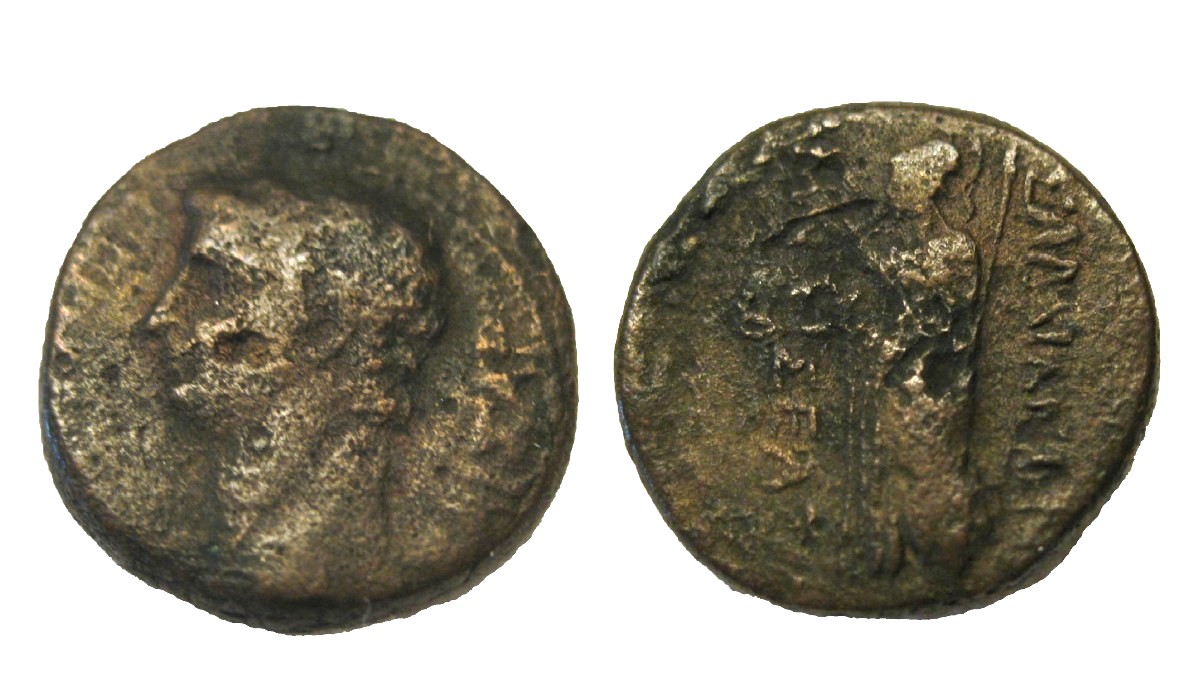
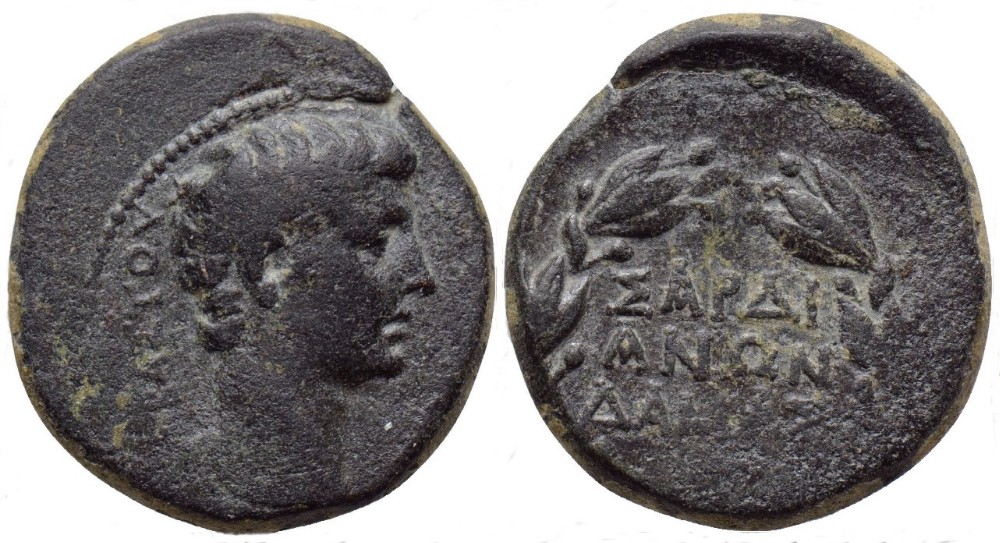
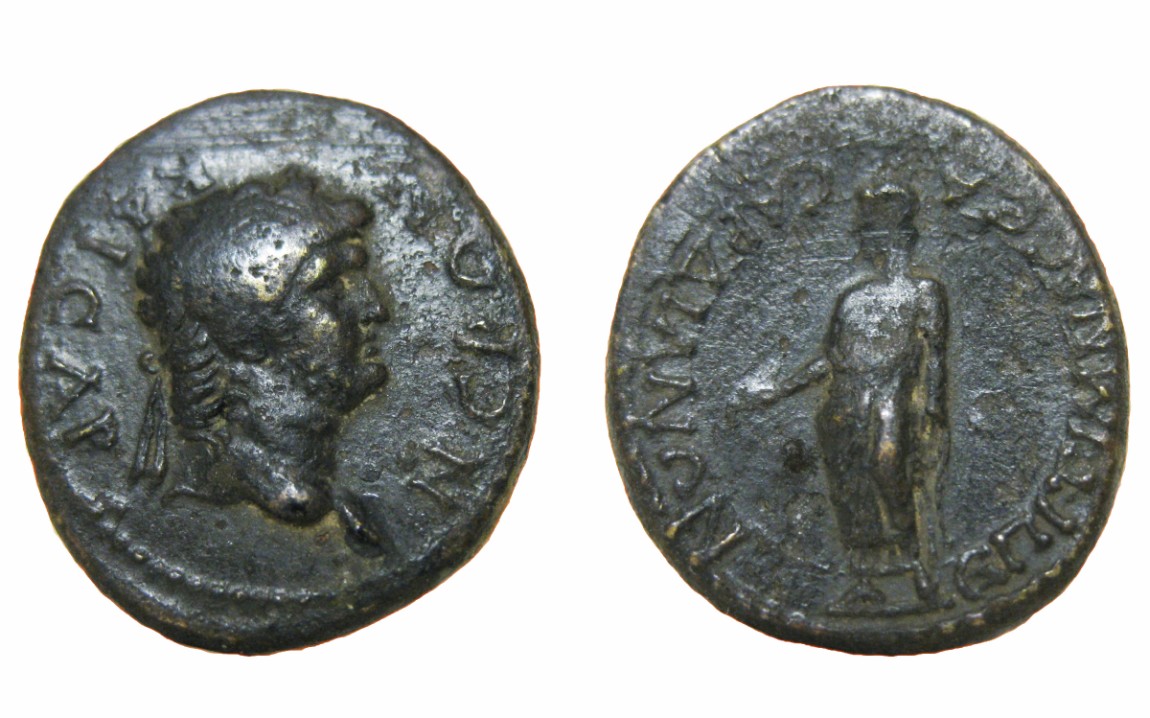
I didn't find much information about Germanicus coins in Sardes in a search of the forum, so thought I'd share this one. Though not in the best of condition, I do like the representation of a young looking Germanicus.
From Wikipedia:
The son of Nero Claudius Drusus and Antonia the Younger, Germanicus was born into an influential branch of the patrician gens Claudia. The agnomen Germanicus was added to his full name in 9 BC when it was posthumously awarded to his father in honor of his victories in Germania. In AD 4 he was adopted by his paternal uncle Tiberius, himself the stepson and heir of Germanicus' great-uncle Augustus. To the Roman people, Germanicus was the Roman equivalent of Alexander the Great due to the nature of his death at a young age, his virtuous character, his dashing physique, and his military renown.
According to the British Museum site the coin was struck during the reign of Tiberius under the magistrate Mnaseas.
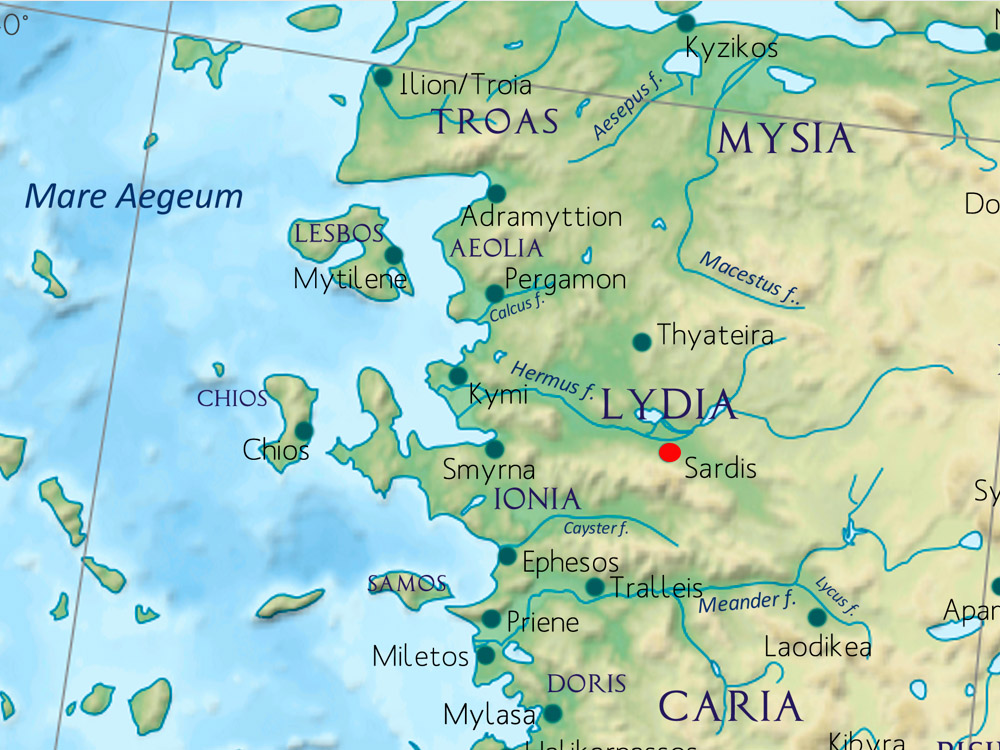
Sardes, Sardis or Sardeis, capital of Lydia; located near present day Sart in Turkey has a very long history as per this brief extract from Livius Org:
"According to the Greek researcher Herodotus of Halicarnassus, who often mentions Sardes and is our main source for its early history, the city was the capital of ancient Lydia, the kingdom founded by king Gyges (r. c.680-c.644). The city is older - there are finds that date back to the Bronze Age - but archaeologists have confirmed that Sardes rose to prominence in the mid-seventh century, the age of Gyges. After the Cimmerians had raided Anatolia and had destroyed the Phrygian Empire, Sardes became a more impressive town."
"Rome had taken over the city in 133 BCE, when the last king of Pergamon, Attalus III Philometor, had died and had bequeathed his kingdom to the Romans. Sardes was, by now, a Greek city, with a gymnasium, Greek-style sanctuaries (although sometimes unfinished), Greek city institutions, a theater, a stadium, and inscriptions in the Greek language."
"As part of the Roman Empire, Sardes was loyal to the Senate, fighting against king Mithridates VI Eupator during the First Mithridatic War (89-85). To its heroic behavior, the city owned certain privileges, such as a special position in the provincial council, and an important law court. When the city was destroyed by an earthquake in 17 CE, the emperor Tiberius awarded no less than ten million sesterces for its reconstruction, and told the Sardians that they did not have to pay taxes for five years."
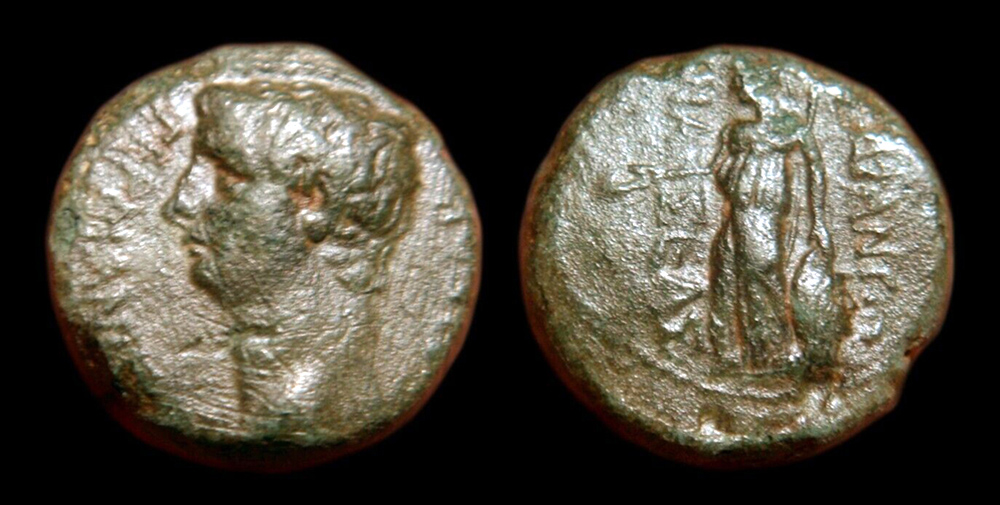
Germanicus (Struck under magistrate Mnaseas). Sardeis - Lydia. 17-19 AD.
Obverse: Bare head left. Obverse Inscription: ΓEΡMANIKOΣ KAIΣAΡ. Reverse: Helmeted figure of Athena standing left holding out patera and spear and shield. Reverse Inscription: ΣAΡΔIANΩN MNAΣEAΣ. Bronze. Diameter: 14 mm. Weight: 3.3 gr.
Reference: RPC Online Vol I #8470;: 2993; Paris 1201-1202; Waddington 5234-5235; SNG Munich 510; Weber 6906; BMC 113 corr.







 Posted 01/11/2024 4:49 pm