| Author |
 Replies: 17 / Views: 1,662 Replies: 17 / Views: 1,662 |
|
Pillar of the Community
United States
6880 Posts |
This 1963 nickel is a good example of something I don't quite know how to clean correctly. It took a three day soak in acetone. Overall it looks great. But this aqua colored stuff is somewhat sticky. It can be moved with a toothpick tip. What is the correct way to remove this kind of debris from a modern U.S. coin? It obviously isn't going to dissolve in acetone, although the acetone might have loosened its grip. People seem to disapprove of scrubbing with a soft toothbrush or toothpick that will leave marks in a patina. A tissue wet with hot water is not removing the material no matter how hard I scrub, it just moves the sticky flakes around in the letter nooks and crannies.  Edited by Brandmeister
02/20/2024 1:13 pm
|
|
|
|
Pillar of the Community
United States
9807 Posts |
Yep I use acetone myself. If the coin is circulated, I think it's okay to lightly roll a Q-Tip over the surface to see if that loosens the gunk, but you don't want to scrub at the coin. For deep dark verdigris the early large cent collectors will use a softened rose thorn to pick at the offending materials, and generally under a stereo microscope at or around 7 to 10 power, I've done this to remove flecks of stuff around legends and dates with some success., But it's a technique that takes practice and I would start with cheap coins to get a feel for it before jumping straight into valuable coins.
Looking forward to seeing the photos of what you are dealing with.
"Buy the Book Before You Buy the Coin" - Aaron R. Feldman - "And read it" - Me 2013! ANA Life Member #3288 in good standing since 1981, ANS, Early American Coppers Member (EAC), Colonial Coin Collectors Club member (C4), Conder Token Collector Club member (CTCC), Civil War Token Society (CWTS) member, Liberty Seated Collectors Club (LSCC) & Numismatic Bibliomania Society member (NBS), USMex, Member in good standing, 2¢ variety collector. See my want page: http://goccf.com/t/140440 |
|
Bedrock of the Community
United States
94367 Posts |
Standing by!  |
|
Pillar of the Community
 United States
4616 Posts |
There used to be a seller on ebay who sold baggies of porcupine quills for poking at gunk. apparently softer than the softest metal, so it didn't cause damage. At least that was the pitch. -----Burton 50+ year / Life / Emeritus ANA member (joined 12/1/1973) Life member: Numismatics International, CONECA Member: TNA, FtWCC, NETCC, EveryCountry (online) coin club Owned by three cats and a wife of 40+ years (joined 1983) Author: 3rd Edition of the Sample Slabs book, https://www.sampleslabs.info/ |
|
Pillar of the Community
 United States
6880 Posts |
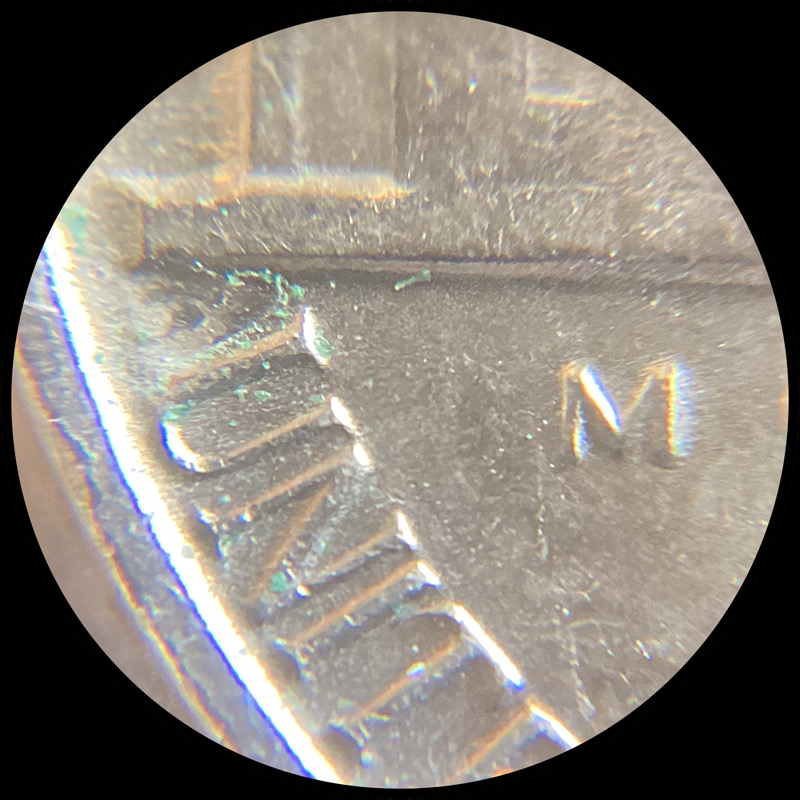 Figured out a workaround by saving the image from Photos to the Files app. |
|
Pillar of the Community
United States
6880 Posts |
I'm a little skeptical that thorns or keratin quills are any softer than wet bamboo, for example. I rather doubt that you can scratch a 75/25 cupronickel alloy with a toothpick. I thought the concern was that the light corrosion and dirt that constitutes a patina can be visibly scratched by much softer objects like wood or nylon.
The issue with these flecks is that wiping just moves them around, but they are determined to adhere to the metal. I would assume that as the flecks dry, they will just strongly bond to the metal again.
|
|
Bedrock of the Community
United States
94367 Posts |
I've used wood toothpicks my whole life and never had a problem.
|
|
Moderator
 United States
194970 Posts |
Quote:
I've used wood toothpicks my whole life and never had a problem. Same. It is my weapon of choice when "physical persuasion" is needed. |
|
Bedrock of the Community
United States
27316 Posts |
Brandmeister, if acetone isn't removing it try a different solvent. Xylene, perhaps, or water. Maybe peroxide, although I don't know if it is recommended for coins.
Inordinately fascinated by bits of metal with strange markings and figures
|
|
Pillar of the Community
United States
6880 Posts |
Per the recommendations made by the inventor of Verdicare (whose CCF username escapes me at the moment), I start with just ordinary hot water. That does a decent job of removing many kinds of circulation crud. If hot water doesn't work, I escalate to pure acetone. I start with an hour, then overnight, then 3-7 days.
Alas, I do not have xylene.
|
|
Moderator
United States
194970 Posts |
Quote:
Per the recommendations made by the inventor of Verdicare (whose CCF username escapes me at the moment), I start with just ordinary hot water. BadThad. He posted his recommendation to follow the polarity ladder (Water -> Acetone -> Xylene or Hexane) http://goccf.com/t/57008#447106 |
|
Moderator
United States
105865 Posts |
Quote:
I've used wood toothpicks my whole life and never had a problem. I've used a moistened Bamboo skewer (a longer tool for me to handle) with no issues.. |
|
Bedrock of the Community
United States
20031 Posts |
Light verdigris, easy removed with VC but always try the Polarity Ladder first.
Lincoln Cent Lover!VERDI-CARE™ INVENTOR https://verdi.care/
|
|
Pillar of the Community
Canada
9661 Posts |
Quote:
but always try the Polarity Ladder first. Can you please explain? |
|
Moderator
United States
194970 Posts |
Quote:
Can you please explain? See the link I posted above. BadThad gives a great explanation. |
|
Valued Member
United States
293 Posts |
Try Q-tipping it with Coin Care that might work. If that doesn't you might want to let it soak in mineral oil for a day.
|
| |
Replies: 17 / Views: 1,662 |







 Posted 02/20/2024 12:36 pm





