Quote:
& of course the 00000099 to 00000011 will also draw more attention (as 2 digit notes). Not sure if its the symmetry (or what) but I have seen some frothy bidding for notes with these type of patterns (compared to a random # like 00000256 for example).
Yes those notes are binaries as well (two digits only) so its not just the serial number being low in those cases. The 0 and 1 are true binaries but even the 0 and 9 are considered binaries but just with lower demand and value than a true binary.
Quote:
I have never seen a #1000 numbered note (nor a 2000, 3000, etc) go for FV in UNC. Maybe in lower grades but most collectors I know will cough up a premium for a sufficient # of 0's in their serial numbers.
I see these do go for more than face value as mentioned above to casual collectors. Serial numbers higher than 999 just aren't truly rare or collectible. However, just like many lower value errors and varieties on coins, this does not mean they are worthless - only that serious collectors who know this typically might not be interested in them and wont generally pay for such notes as they really arent that special. You will still find others who like them and would pay for them over their face value.
Quote:
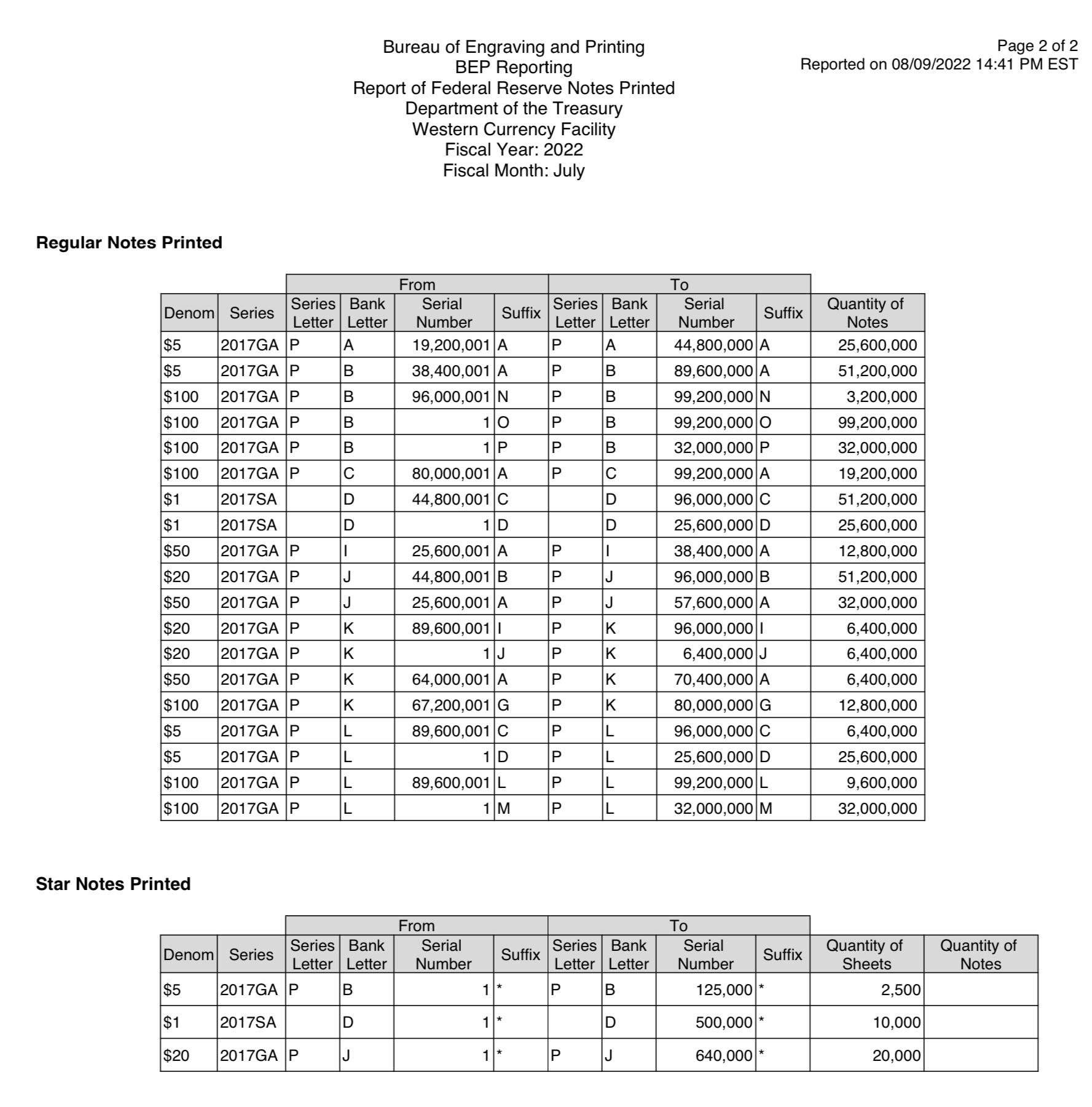
I collected serial number 12 for years before selling my collection. I never once considered the suffix letter. And, when sheets are having the overprint added, along with the serial numbers, the BEP prints the highest serial numbers first and count down to serial 00000001.
Your info has always been valuable Steve. I can say that the suffix may cause a much higher demand if its something like A00000001A (serial 1 in A suffix) or serials 1-10 in A suffix is all, but generally people don't really think much of the suffix otherwise unless perhaps they were trying to collect low serials in all the suffix for a specific year but there can't be that many collectors out there doing that.








 First Page


 Posted 06/17/2024 10:53 am