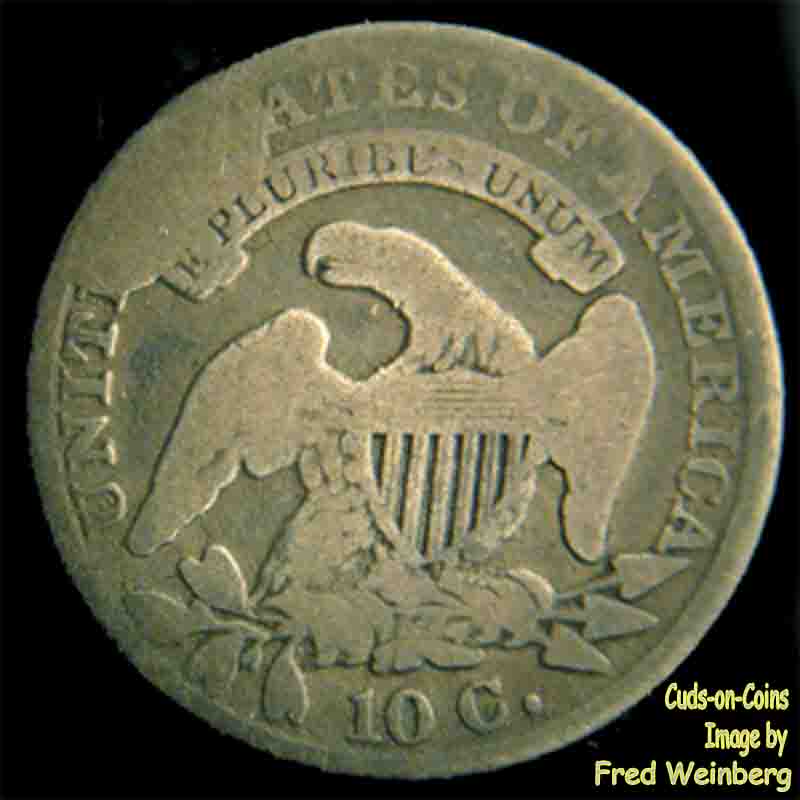
Hello, capped bust dime specialist here!
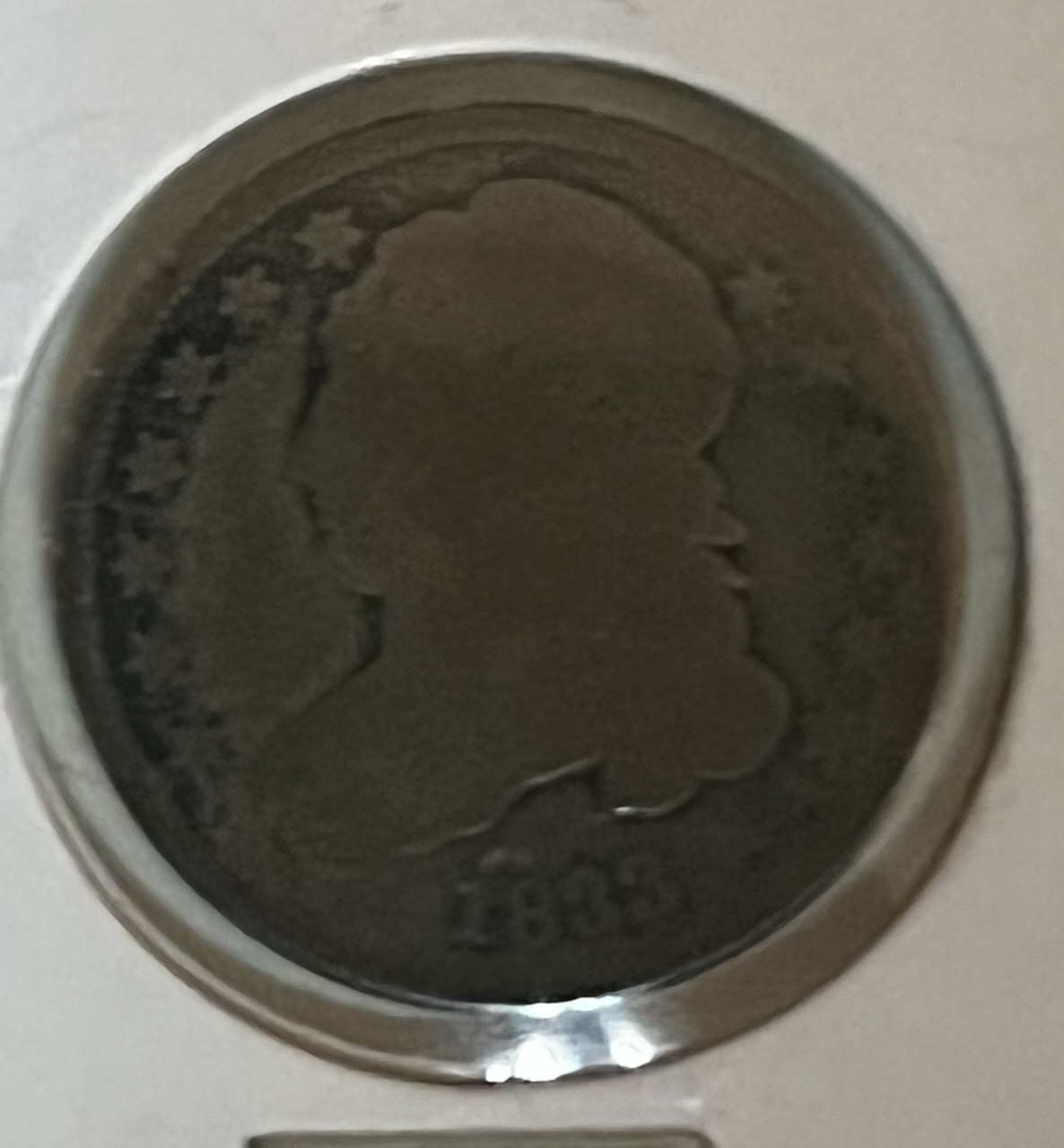
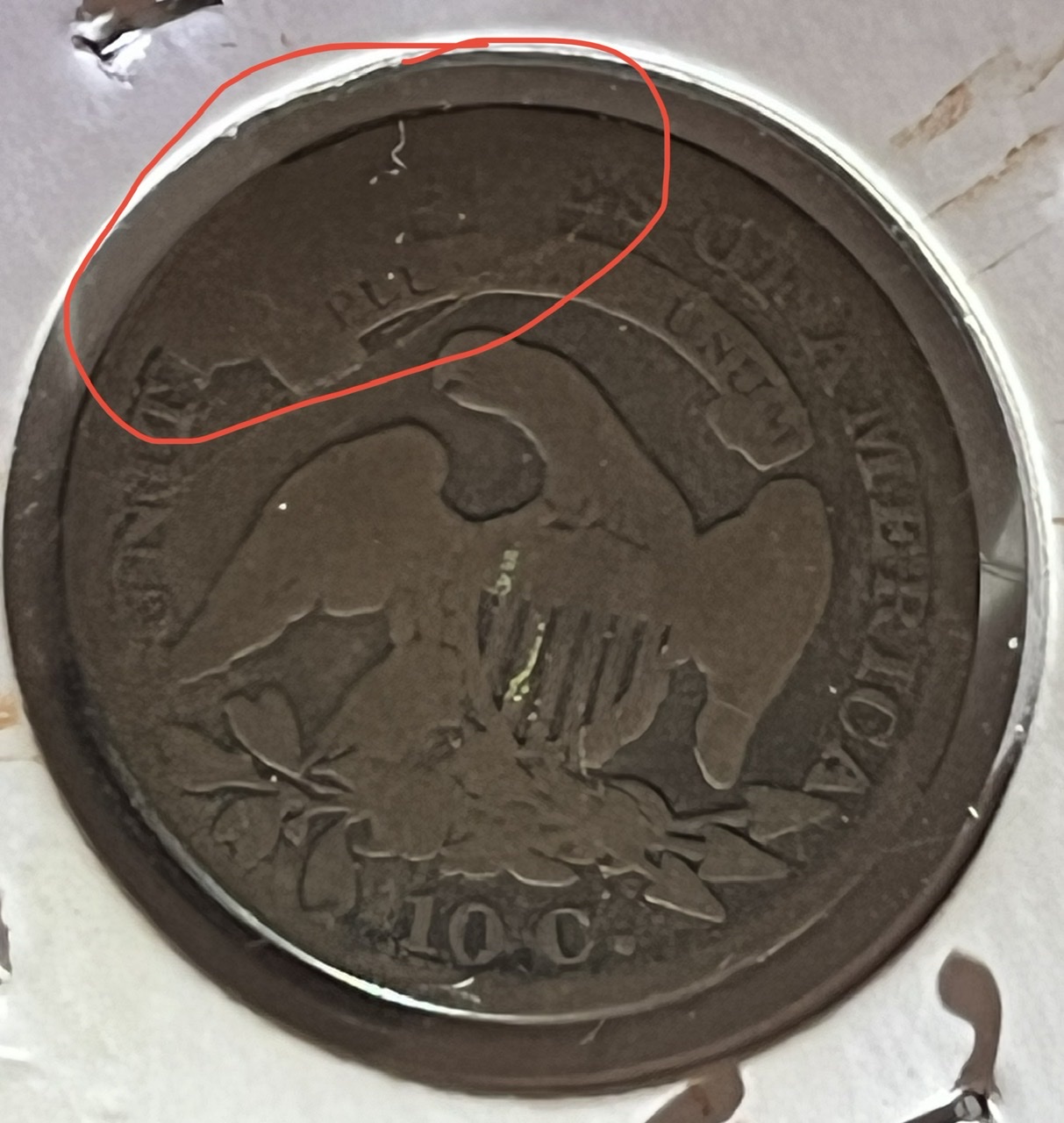
Your coin is an 1833 JR-4, a common variety for the year, nearly all of which show some form of
Retained Cuds. However, this is *not* a proper
Cud but rather a
Retained Cud. It only looks like a full
Cud because of the great deal of wear, which commonly leads to a mis-identification of a
Retained Cud. Specifically, it looks like your JR-4 is in Reiver state f, but it is difficult to confirm the exact die state with such a worn coin.
The JR-4 developed three distinct but overlapping
Retained Cuds before the reverse die was finally retired. The first
Retained Cud begins at E1, the second at E2 and the third at A2. In Reiver state f, the second
Retained Cud at E2 has fully formed, and there is a die crack from A2 to the ribbon.
As far as I'm aware, JR-4 never developed a full
Cud. If it did, such a terminal die state would be very to extremely rare (i.e. either R6 or R7).










 Posted 06/20/2024 4:38 pm