| Author |
 Replies: 5 / Views: 1,492 Replies: 5 / Views: 1,492 |
|
|
Valued Member
Ireland
215 Posts |
Hi all, and thanks in advance for any help once again, this hammered penny if it is even a penny has me totally stumped once again, I know its in poor condition, but I have spent the last 4 days, trying to make sense of the legend on both the OB and REV. Under a loup, the letters identifiable on the legend are, A.A at 7 oclock, and what looks like B H at 11 oclock then from 12 oclock ? ? R A ? ? The Reverse makes even less sense through the loup, at 10 oclock it looks like "N" O R the at 12 oclock E T and from 3 oclock ? ? ? R Did any other countries use the 3 pellets per quarter on the long cross. Well I will leave it to the experts to see what you think. 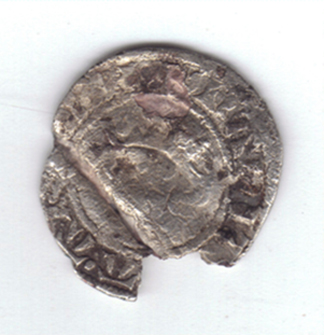 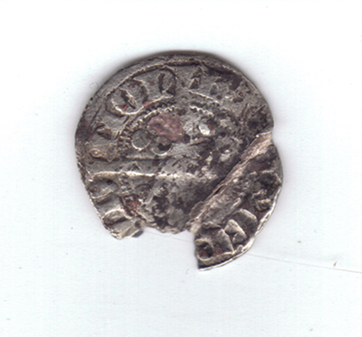 |
|
|
|
Moderator
 Australia
17002 Posts |
I'm not sure about the identity of your coin, but I can offer a little bit extra info. Quote:
Did any other countries use the 3 pellets per quarter on the long cross. Yes. The English penny was widely accepted in Europe, and some of the more mercenary European rulers, particularly in the low countries, issued base-silver coins which looked very similar to English pennies in the hope that their coins would be accepted on par. This UKDFD page has several examples of such coins. Don't say "infinitely" when you mean "very"; otherwise, you'll have no word left when you want to talk about something really infinite. - C. S. Lewis
|
|
Moderator
Australia
17002 Posts |
Forgot to add: the next letter after NOR appears to be "h".
Don't say "infinitely" when you mean "very"; otherwise, you'll have no word left when you want to talk about something really infinite. - C. S. Lewis
|
|
Valued Member
 Ireland
215 Posts |
This is my possible understanding of the letters visible. 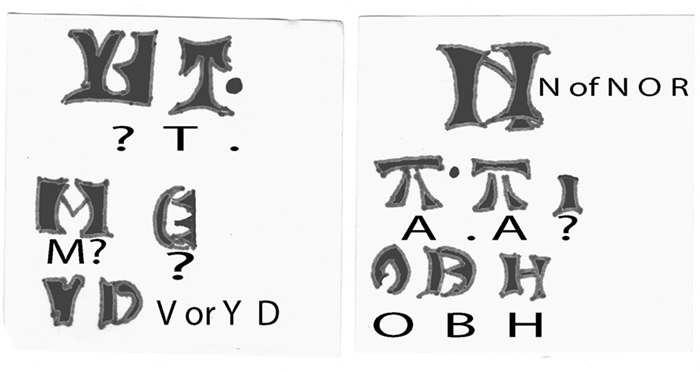 Starting at the TOP LEFT working down the picture ? T . is the letters after NOR on image 2 M? ? is the letters at 10 / 11 oclock on image 1 V or Y D the letters before NOR on image 2 NOW the right hand side of the picture N of NOR on image 2 this looks like it has been struck over something. A . A ? at 7 oclock on Image 1 O B H after the A . A ? on Image 1 Hope this helps? |
|
Valued Member
Netherlands
376 Posts |
The British had a colony in nowadays France Bordeaux-Bretagne-Normandy. It was the time of Jeanne dÁrc legend. This is a silver penny of one of the many henry's there were, more presumably number II or III or the canterbury penny 0f 1242-1272, which bears no date.
|
|
Moderator
Australia
17002 Posts |
It may well come from that part of the world, but it's not an official "Anglo-Gallic" coin; those coins typically look very French, rather than English.
The mint-name is what's confusing for me. An official long cross penny should say either CIVI TAS (city of) or VIL LA (town of) in two of the four quarters; I can't see either; top-left is clearly NOR; top-right begins with "h"; bottom right looks like MET.
I think I can also see signs of a "silver layer" peeling away on both sides, with coppery-looking base-metal showing underneath. On that basis, I'd assume this was a contemporary counterfeit, possibly a "Low Countries" imitative penny. It's quite possible on that basis that the letters are nonsensical random letters, not intending to mean anything.
Don't say "infinitely" when you mean "very"; otherwise, you'll have no word left when you want to talk about something really infinite. - C. S. Lewis
|
| |
Replies: 5 / Views: 1,492 |
|










 Posted 04/30/2009 9:13 pm


