| Author |
 Replies: 10 / Views: 1,139 Replies: 10 / Views: 1,139 |
|
|
Pillar of the Community
 United States
5713 Posts |
I recently returned from a vacation to the UK, and one of our stops was in Portsmouth. We visited the Historic Dockyard, where the salvaged wreckage of the Mary Rose is exhibited. This ship was built for Henry VIII in 1511 and sailed in the English navy for decades, before sinking in a naval battle with France in 1545 near Portsmouth. There were a couple attempts at salvaging the ship over the years, but it was essentially lost under the sea bed until it was re-located in 1971. The half of the ship that was buried was nicely preserved and the ship's contents were salvaged over several years, before they finally raised the remains of the ship in 1982. Since the ship was a warship, there weren't a lot of coins that were salvaged, but they did locate the purser's chest that contained several gold and silver coins. They included some gold half sovereigns, which were first minted by The Royal Mint in 1544, as well as some gold Angels, which had been minted since the late 1400's. A very fascinating story and well worth a visit if you're ever in Portsmouth. 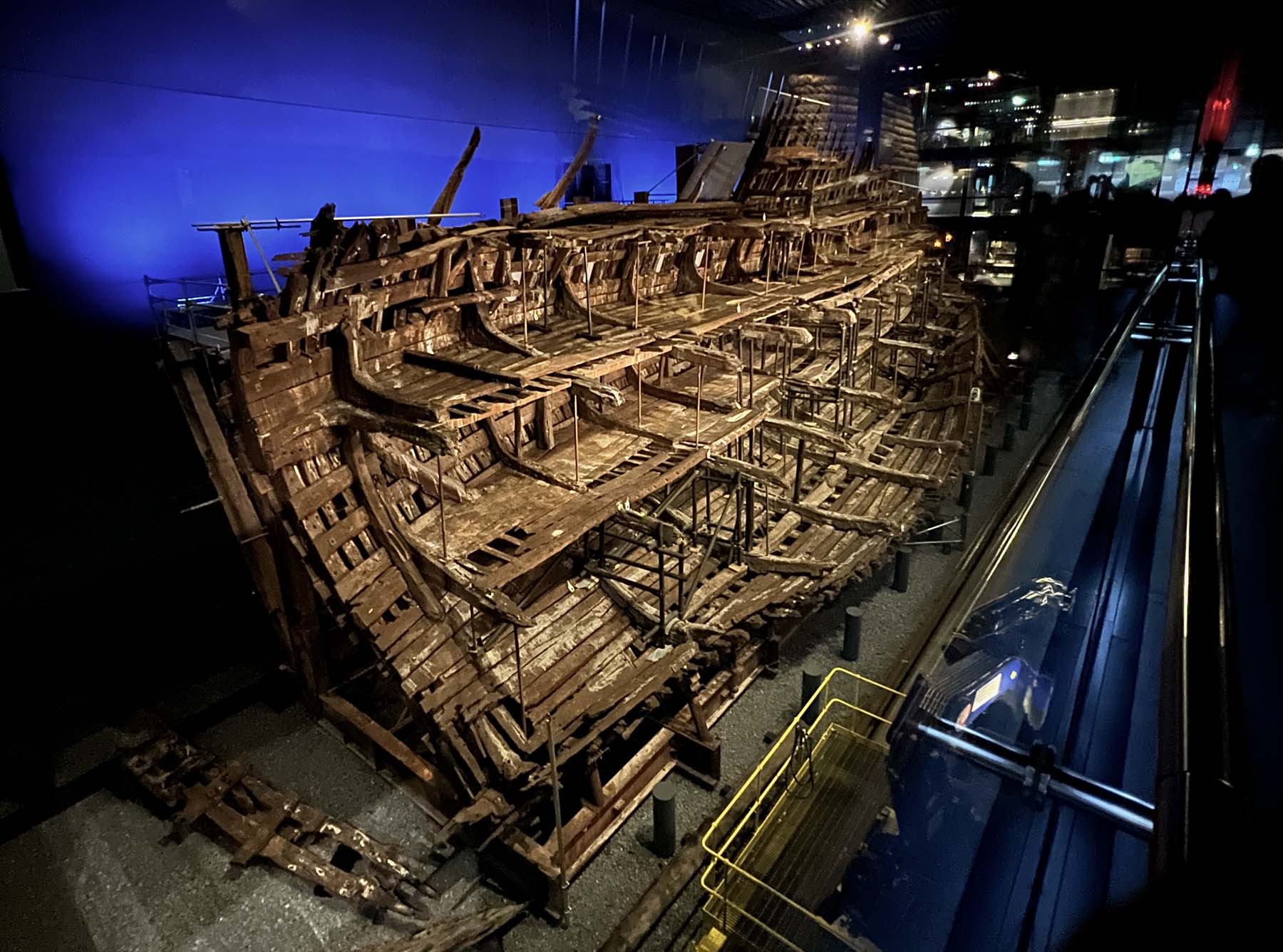 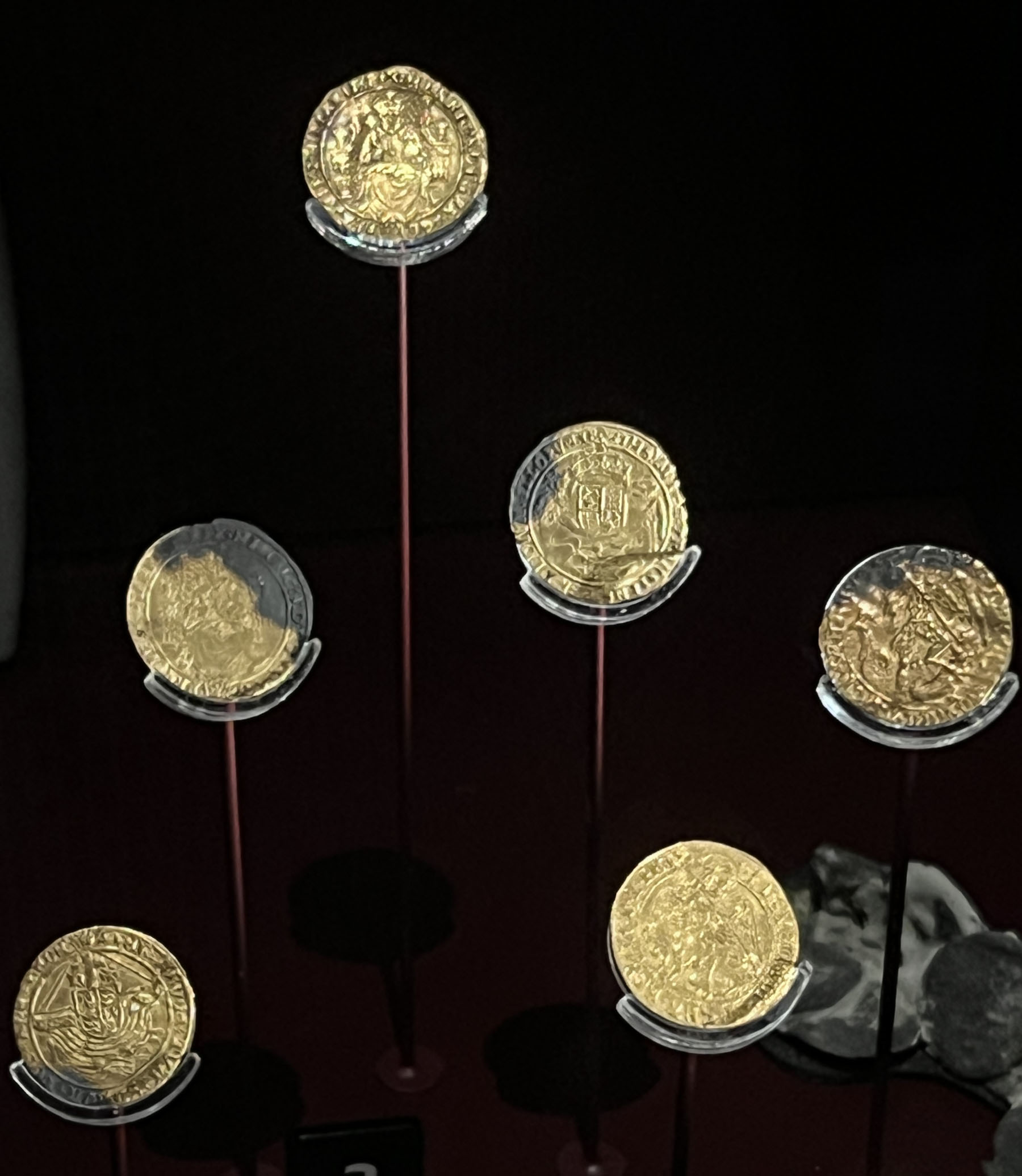 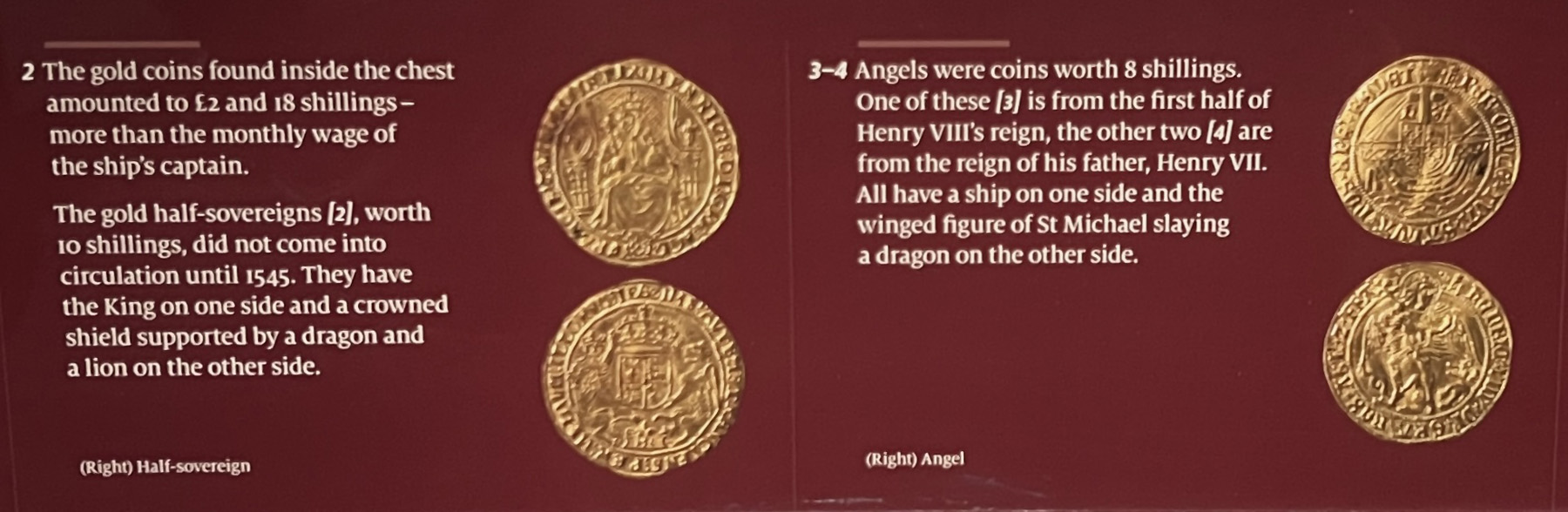 |
|
|
|
Pillar of the Community
Canada
9647 Posts |
Thank you for posting Zurie very interesting read.
|
|
Pillar of the Community
United States
2332 Posts |
Thanks for sharing, really interesting and fun to read about sunken ships and salvage efforts.
|
|
Pillar of the Community
2226 Posts |
Good piece of history, thanks for sharing!
|
|
Moderator
 United States
194816 Posts |
Very interesting!  |
|
Bedrock of the Community
United States
27287 Posts |
Fascinating, Zurie - thank you for sharing this with us!
Inordinately fascinated by bits of metal with strange markings and figures
|
|
Bedrock of the Community
United States
78480 Posts |
Very cool! Thank you for posting. Errers and Varietys.
|
|
Moderator
United States
105745 Posts |
wow, such great history! thanks Zurie!!
|
|
Pillar of the Community
Portugal
717 Posts |
Those dark spots would be where the gold coins were in contact with silver ones.
Always wondered why museums do not clean those spots. Impossible to do it without causing surface damage?
|
|
Moderator
Australia
16968 Posts |
Quote:
Always wondered why museums do not clean those spots. Impossible to do it without causing surface damage? Archaeologists have learned the hard way that well-meaning "modern" cleaning and restoration attempts of certain artifacts can prove detrimental and even self-destructive in a hundred years time. Thus, the modern archaeological mindset for cleaning and restoring artifacts is "do the absolute minimum cleaning necessary to identify the object, and then leave the rest of the accretions in place", on the theory that in the future, superior preservation and analysis techniques will one day arrive. Museums of course have a balancing act in this; they need to be archaeologically correct but they also need to prepare visually interesting and educational displays, and a bunch of "coins" that look like rocks aren't as appealing to the general public as a bunch of shiny silver and gold treasure. So museum curators might push slightly more towards "making them look nice" than the archaeologists on their team would prefer. Don't say "infinitely" when you mean "very"; otherwise, you'll have no word left when you want to talk about something really infinite. - C. S. Lewis
|
|
Moderator
United States
194816 Posts |
Great perspective, Sap. |
| |
Replies: 10 / Views: 1,139 |
|







 Posted 09/01/2024 3:54 pm





