| Author |
 Replies: 31 / Views: 3,353 Replies: 31 / Views: 3,353 |
|
|
|
Bedrock of the Community
 United States
10601 Posts |
Quote:
I challenge you to take a photo of a proof set as OP did and NOT have reflections / glare on the coins. Right Hondo - it doesn't even have to be a set - could just be a grouping........... A 25% success rate.......  EDIT: Was wearing a red sweat shirt. 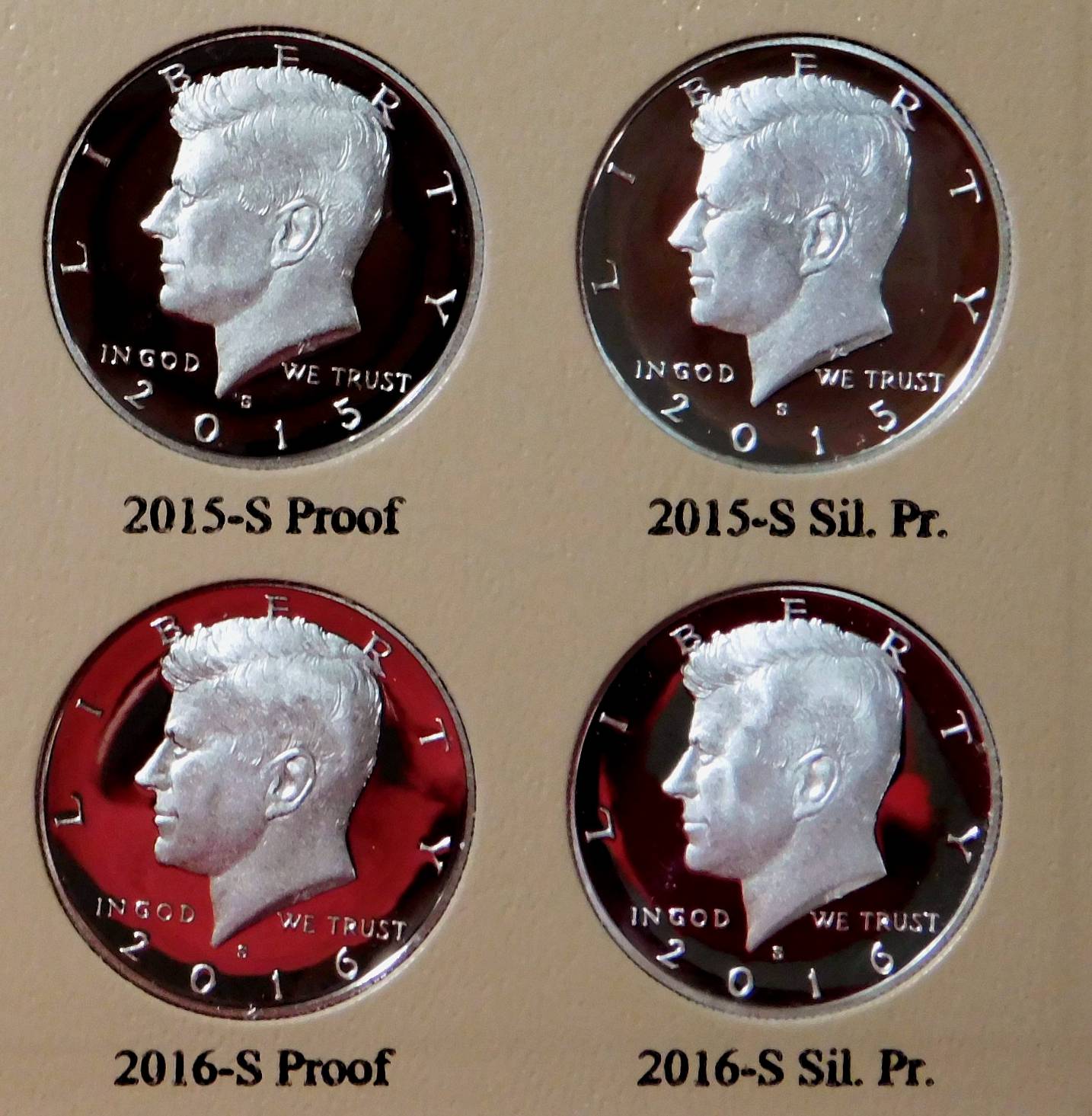 Edited by Marv65
12/27/2024 6:58 pm
|
|
Moderator
United States
196946 Posts |
 to the Community! |
|
New Member
 United States
10 Posts |
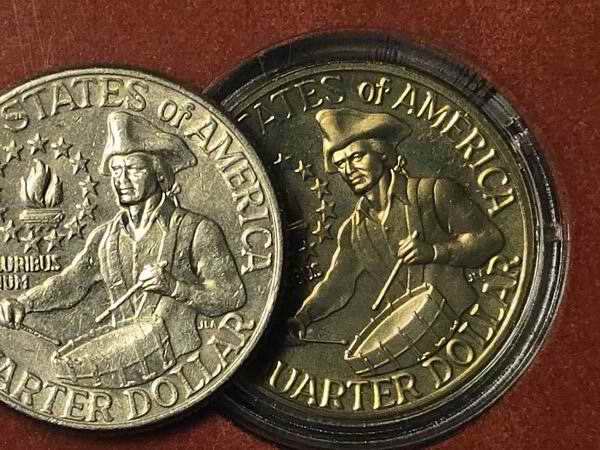 This shows proof set coin (Red background) and another coin. After reviewing many TONING articles, I understand that even coins in a proof set can experience toning. So I now ask the following: 1. Would only one silver coin in the set tone and others not? 2. Since I noticed the so-called toned coin upon delivery from the Mint, would the toning come from conditions in the Mint itself. 3. How does Toning to this specific coin in the set affect value? |
|
Pillar of the Community
United States
7174 Posts |
Quote:
. Since I noticed the so-called toned coin upon delivery from the Mint, 50 years. I can't remember things from yesterday. Edited by Cujohn
12/29/2024 5:27 pm
|
|
Valued Member
United States
120 Posts |
Oxidation can happen during the minting process. Old proof bag sets would tone the coin because of the chemical in the bag, but I am not sure about the plastic container. Value depends on quality of strike, luster and/or if it has an FS-101 or FS-102. The grading scale on this coin is mainly graded as a (1776) because the (1775) proof clad is in the case. (1776) FS-101 at MS68 at $4000.) a (1776-D at 68 is $3750) (no information on value of (1775) because not that many people submitted them and if I remember correctly the highest know was possibly 66/66+.) I added that in there for the slim chance if it's an FS-101/102. Proof 70 is N/A and proof dcam is $125 for ms70. Front of the case would help out a lot. Cheers 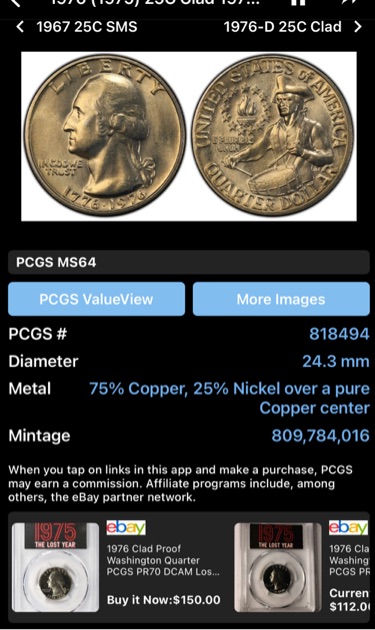 |
|
New Member
United States
10 Posts |
Dykil93,
I appreciate the response re oxidation at Mint. Wouldn't that affect BOTH sides of the coin? Font silver luster.
Also, is it considered an error coin if MINT was responsible for the abnormality?
I can understand some contaminant on the Reverse side that may have interacted and just affect that side. But, wouldn't that constitute an error at the Mint? Or doe a coin error specifically rule this out?
|
|
Valued Member
United States
120 Posts |
Toning is a natural process and certain chemicals can speed up the oxidation process, but doing that is considered a damaging the coin or devaluing the coin. If it was a super rainy month and a very humid environment it can start the process faster, as well a wrong metal alloy composition, the combining of planchets or the metal cooled down too fast or slow.Heat is a big factor in toning. Toning can happens on one side for a while then it will eventually reach the other side depending on the metal compositions. When you say if the mint is responsible for it, it will either not get caught and leave the mint, and the mint won't know if a toning issue happened because of them so they wouldn't do anything If they catch it at the mint they will melt it back down and try again. If your coin is missing a clad layer? Does the edge of the reverse meet the obverse (Washington side) is it rugged? Or smooth? I see the close up of the reverse side edge has rugged like particles where it's supposed to be sharp and smooth. Does it look like the finish have shiny at all? Is it rusty or, does it look like a piece of metal with a white haze?
|
|
New Member
United States
10 Posts |
Thanks again. The images of the coin within its individual plastic case and within the plastic set case obvious can lead to any of the imperfections you described. Meaning imperfections in the plastic itself make the coin suspect of toning, as you describe it. If you could point out (use clock hands time) on the Comparisons or separate image areas you think indicate either toning or clad problems (please note which), I would appreciate it. I am unable to look at the outside edge of the coin because of the way it is packaged. We can only see the surfaces up to the edge. If you note on the Comparisons image, 3:00 shows the screw securing the inside separate case for the coin and thus the outer edge of the coin versus the beginning of the individual case. Looking at the coin edge I see only possible plastic imperfections (individual case or set case) and can't discern any actual coin imperfections other than the color which is solid and consistent across the entire Reverse surface. Is it likely that toning would be this consistent? Is it likely that toning of this nature came directly from the mint like this (I mentioned previously that the color has not changed since day one 48 years ago)? Is it likely that after 48 years the obverse is still not colored like the Reverse? What would a missing exterior clad look like (silver?) compared to the previous clad(color?). So far, the only conclusion I can come up with is the take it to a professional in its natural state to look at rather than to continue to take photos which have proved to present more problems than ever. What do you say? Given that, can you recommend someone in the Southern CA area with the solid experience to assess this set? Thanks.
|
|
New Member
United States
10 Posts |
DYkil93,
I you look at your image of the 4 proof coins you posted you will see what I was referring to. Look at 11:00 and 5:00 at the sizes of the rims. These differences have to be the angles at which it was shot. Hence, my point that I need an expert to visually see the set itself in person. RIght?
|
|
New Member
United States
10 Posts |
More about Proof Error Clads: The following articles explain the clad layers and errors that can occur at the mint. There are definitively proof mint coins that are designated as either Obverse-Missing-Clad-Layer or Reverse-Missing-Clad Error or both as described in the first article below: https://www.pcgs.com/news/missing-c...lar%20coins. https://nnp.wustl.edu/library/dicti...ped%20letter. Note: Some images of missing clad coins are in the first article. I am no longer interested in responses related to the photos submitted by me or others. Imperfections in the separate plastic case and set case prevent showing the natural set compared to the native eye. I only seek whether anybody has ever reported/posted or seen a Reverse-Missing-Clad-Layer quarter in a 1975 Proof Set other than me. |
|
Pillar of the Community
United States
3535 Posts |
It would be amazing if your quarter was missing the clad layer, but look at the pictures in your latest post.
Look at the obvious copper core (color) on the known missing clad layer coin.
Does your coin look like that? Your coin is just a little bit off color from the normal clad layer, not copper.
I'd be the first to congratulate you, if it was a true "missing clad layer" find.
|
|
Forum Dad
United States
24238 Posts |
|
|
New Member
United States
10 Posts |
Taac,
Now that was a good comparison and if all missing clads are brown or maybe reddish-brown like that one, then you nailed it and proved not the same. I do thank you.
And Bobby, we do have a second no error set and can weigh them.
I'm satisfied with the Toning now and quite a bit more educated. It is am impressive color and will keep in our storage.
Thank you everybody for contributing.
|
|
Valued Member
United States
120 Posts |
If you weight them, then get a scale that does two 0's after the decimal, example(5.67 grams). Or make a basic scale with two coins and put both coins on the same piece of wood and balance them. If you can't balance them at the same position then one is obviously heavy than the other, obviously scale is better though. Just a quick comparison option.
|
|
Forum Dad
United States
24238 Posts |
Quote:
If you weight them, then get a scale that does two 0's after the decimal, example(5.67 grams). People always say this, but honestly, with the US Mint Weight Tolerances, one decimal place is just fine. Hundredths are pointless. You don't need to go buy a new scale if you have one with just tenths. |
| |
Replies: 31 / Views: 3,353 |




 First Page


 Posted 12/28/2024 8:44 pm





