| Author |
 Replies: 10 / Views: 1,173 Replies: 10 / Views: 1,173 |
|
|
New Member
United States
46 Posts |
|
|
|
|
Pillar of the Community
 United States
4623 Posts |
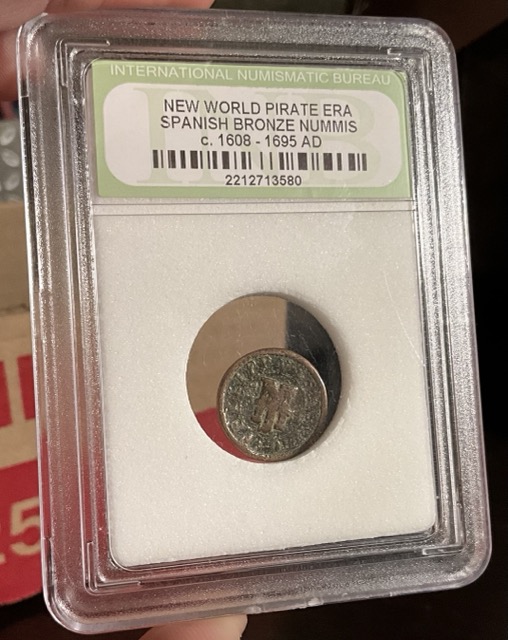
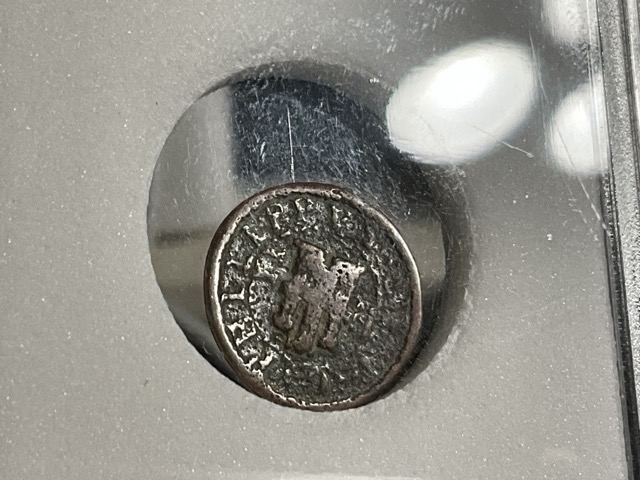
In THAT slab? I'd want to be sure it's really a coin and not a button. Pop it out of the slab (they're not sealed) and weigh it, plus measure the diameter. As a very very rough guess, something like this https://en.numista.com/catalogue/pieces112769.html-----Burton 50+ year / Life / Emeritus ANA member (joined 12/1/1973) Life member: Numismatics International, CONECA Member: TNA, FtWCC, NETCC, EveryCountry (online) coin club Owned by three cats and a wife of 40+ years (joined 1983) Author: 3rd Edition of the Sample Slabs book, https://www.sampleslabs.info/ |
|
New Member
 United States
46 Posts |
have more info: 16mm in diameter and 1.22 grams
|
|
Bedrock of the Community
 United States
27514 Posts |
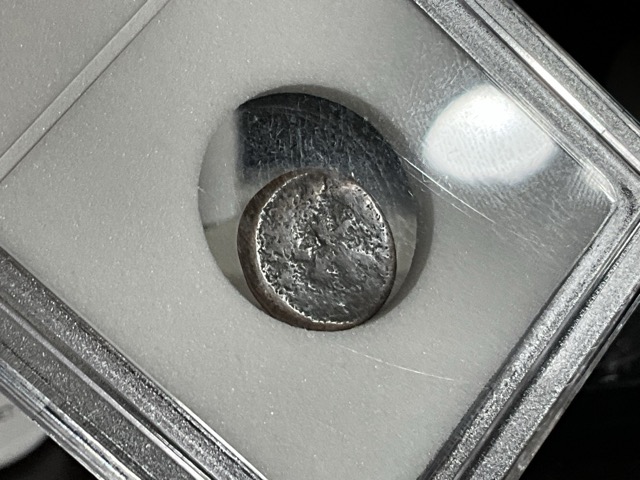
I think that BStrauss3 has put you in the right neighborhood. It's very similar to a Philip III coin with a castle on one side and rampant lion on the other. Check through these and see if you can find a match: https://en.numista.com/catalogue/in...71&e=espagneInordinately fascinated by bits of metal with strange markings and figures
|
|
Pillar of the Community
United States
8071 Posts |
Quote:
My guts say that its not the coin exactly said on the slab label so I just wanna ask other experts to verify if it's really a spanish pirate coin. Congrats @Wheat! Thanks to the nice work done by Bstrauss3 and Hondo, you can be confident you've got an authentic late 16th/early 17th century Spanish coin. That means the word "Spanish" is 100% accurate and "New World" is not. The coin cannot be both. The date range on the slab is close enough. There is no 17th century Spanish coin called a nummis (the slabber could have used "maravedis" and been accurate, but apparently wasn't inclined to put out the effort to get that close) As for "pirate era," that term has no numismatic meaning, and only a vague historical one. Go forth and sin no more: don't buy coins that say "pirate" or "crusader" or "used in American colonies." These are selling gimmicks that more often than not eventually lead to buyer's remorse (inaccurate labeling, overgrading, overpaying). Edited by tdziemia
01/02/2025 08:07 am
|
|
Moderator
United States
197327 Posts |
Interesting example.
Good work on getting it identified, everyone.
|
|
Bedrock of the Community
United States
94367 Posts |
|
|
Moderator
Australia
17021 Posts |
Quote:
New World Pirate Era? As Tdziemia said, it's a marketeering slogan. As in "You know back when Pirates were roaming the New World (as opposed to, I don't know, Barbary pirates off Africa, or ancient Roman pirates in the Mediterranean, or modern pirates off Somalia)? Yo ho ho, bottle o' rum and all that? Yeah, this coin was made at around about the same time as those guys. Did pirates actually use or see Spanish maravedis in their everyday business? Maybe, but probably not. It's like calling literally any coin made from the 1100s to the 1300s as "Crusader Era", whether Crusaders actually made saw or used those coins or not. Don't say "infinitely" when you mean "very"; otherwise, you'll have no word left when you want to talk about something really infinite. - C. S. Lewis
|
|
Pillar of the Community
United States
8071 Posts |
Yep. Any beat up 10th - 16th century coin with a cross on one side can be labeled a "Crusader Coin!" on ebay ... And many worn, corroded duits are "American Colonial!" Of course there is a (fleeting) element of truth in each such statement. If those elements encourage a few new hobbyists for the right reasons (the linkage of money to history) that's not such a bad thing. But there's also a potential downside to that kind of hype. |
|
New Member
United States
46 Posts |
did some research and I think its a 2 Maravedis - Philip III. how much is it worth?
|
|
Bedrock of the Community
United States
27514 Posts |
In this condition, perhaps $5.
Inordinately fascinated by bits of metal with strange markings and figures
|
| |
Replies: 10 / Views: 1,173 |
|






 Posted 01/01/2025 11:40 pm





