| Author |
 Replies: 11 / Views: 1,223 Replies: 11 / Views: 1,223 |
|
|
Valued Member
United States
265 Posts |
The package that this coin came in has 1595 written on it which would coincide with Philip's reign. But that is all I have to go on as far as dating this coin or medal. I am saying medal because its alignment is medal alignment and, as I understand it, coins from this period should be in coin alignment. But I also understand that it could be a coin made in error. The inscription on the reverse includes VLTOR and FDEIS which I believe are abbreviations commemorating Philip's Defender of the Faith status. Would appreciate some help here because, as usual, I could be wrong about all of the above.  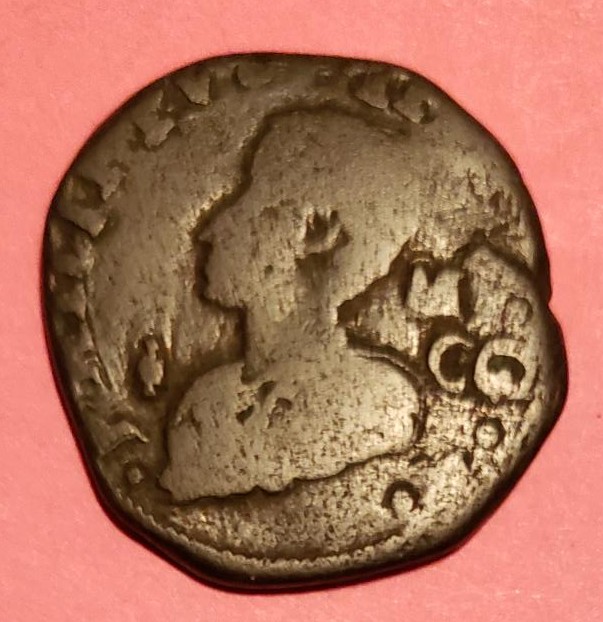 Edited by jdsstrat
03/16/2025 01:01 am
|
|
|
|
Pillar of the Community
 United States
8038 Posts |
Phillip IV often had his name as PHILIPPVS IIII on his coins, and I think this is what I see, combined with a date of 16 2? divided by that tower, which is consistent with his era. So I think this object pertains to Phillip IV rather than Philip II, though this does not look like any portrait of his that I've seen.
The question is what is it?
He was a prolific coiner in the Low Countries, but I don't think this matches any coins from there, so either a coin from someplace else, or a token?
Edited by tdziemia
03/16/2025 08:04 am
|
|
Pillar of the Community
United States
8038 Posts |
Edited by tdziemia
03/16/2025 08:29 am
|
|
Pillar of the Community
Sweden
2124 Posts |
Well done, tdziemia!  |
|
Valued Member
 United States
265 Posts |
Outstanding! Now the 1629 almost seems obvious. Thank you! This coin is oriented in medal alignment, so that's a match with the Numista link. The diameter is spot on at 31mm, too, but I am getting a weight closer to 9 grams than the 7.21 at the link. Could that be the difference between cavallis minted in Naples and Madrid, which I am assuming this one was because of the M and C (C for the assayer Bacerra?). Also, the mark to the left of the bust, I was assuming was a pillar. The coins at the link don't seem to have the same symbol. More thoughts?
|
|
Pillar of the Community
United States
8038 Posts |
1. I think this type was only struck in the Kingdom of Naples, not in Spain. The two places had different currencies, different denominations, etc. Not sure the significance of M C, but you will see in the Numista date table that all years have this (somehow the picture on the Numista listing magically improved, too  ). 2. According to Krause, the symbol in front of the bust was probably added by the diecutter. Edited by tdziemia
03/16/2025 1:24 pm
|
|
Moderator
 United States
194816 Posts |
Nice example and well done, tdziemia. |
|
Valued Member
United States
265 Posts |
OK, so let me see if I got this: the coin above is a 9 cavalli Italian States coin minted in Naples in 1629. Philip III of Spain, for whom this coin was minted, was known as Philip IV of the Kingdom of Naples, hence the IIII, which has partially been worn away in the coin above. MC is, I believe, the mintmark for the Naples mint, further supporting the Italian States identity of this coin. The diameter matches the diameter in the Numista link above, too, and the mark to the left of Philip's left facing bust was probably some sort of mark of the diecutter in Naples. The only detail that still irks is the weight: about 9 grams for the example above and 7.21 grams for the example at Numista.
That's where we are so far. Again, thank you, Tdziemia, for your insight!
|
|
Pillar of the Community
United States
8038 Posts |
I would not worry about the weight. In my experience, there was less attention paid to the weight of base metal coins (bronze/copper) than coins containing silver at this time. |
|
Valued Member
United States
265 Posts |
Right back at you. |
|
Pillar of the Community
Russian Federation
5186 Posts |
Quote:
Philip III of Spain, for whom this coin was minted, was known as Philip IV of the Kingdom of Naples, hence the IIII, which has partially been worn away in the coin above. The exact reverse: Philip IV of Spain, for whom this coin was minted, was known as Philip III of the Kingdom of Naples. Otherwise, yes, the description looks correct. Interesting coin! |
|
Valued Member
United States
265 Posts |
There is a history lesson in every coin I've posted to date. For me! Thank you for the correction.
Edited by jdsstrat
03/17/2025 3:52 pm
|
| |
Replies: 11 / Views: 1,223 |
|










 Posted 03/16/2025 08:00 am


