








 Posted 04/08/2025 03:18 am


This is one serious frankencoin. The reason you're having difficulty telling whether it's Greek or Roman, is because it's trying to be both simultaneously.
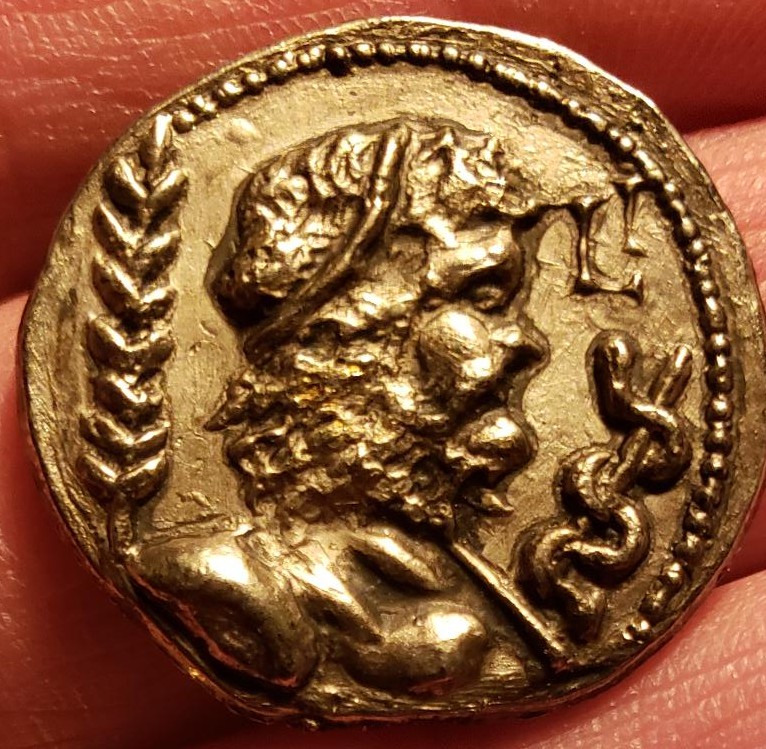
The "obverse" is actually the reverse of a Roman Provincial coin from Roman Egypt. It depicts who I assume is Asklepios, god of medicine, with his snake-on-a-stick. "LI" would be Egyptian-Greek for "Year 10" of whichever emperor would have been on the actual obverse (the original coin would have been a two-headed coin). And also would have been made of debased-silver, not gold.
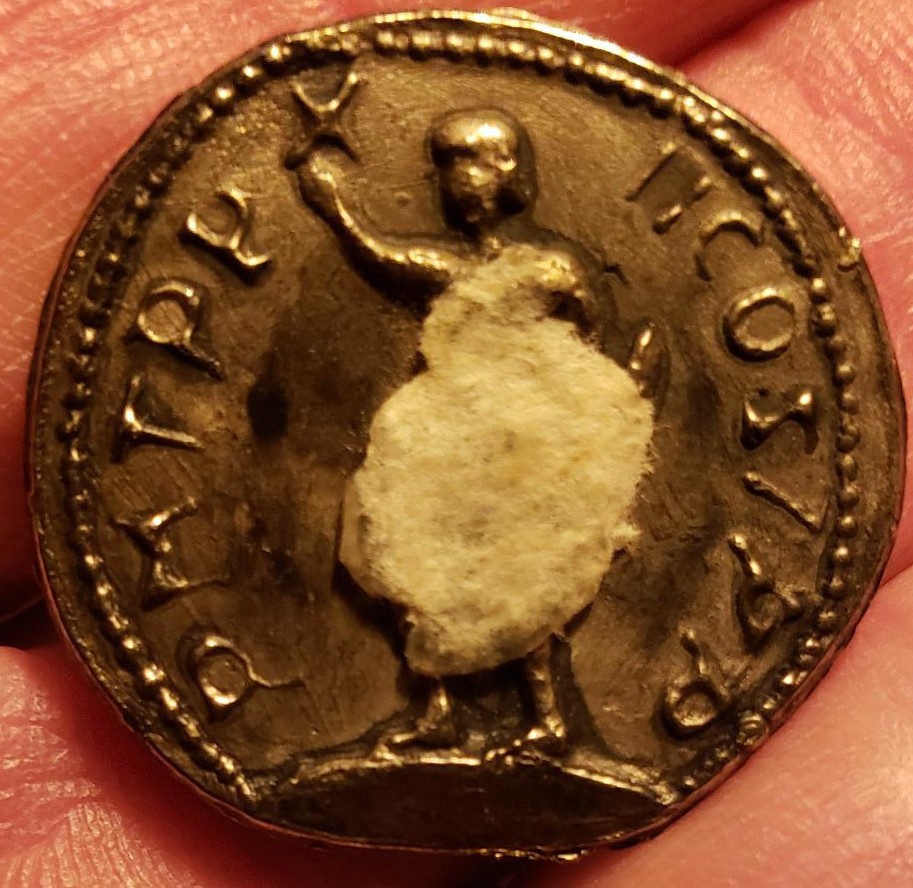
On the reverse, we have a fairly standard Roman Imperial design, with the somewhat-blundered Latin inscription PM TR P XII COS V PP. Emperor Gallienus issued coins with that particular combination of inscriptions; those coins have the Egyptian god Serapis on the reverse, so I'm guessing that's who this is supposed to be. Example.
The "obverse" is actually the reverse of a Roman Provincial coin from Roman Egypt. It depicts who I assume is Asklepios, god of medicine, with his snake-on-a-stick. "LI" would be Egyptian-Greek for "Year 10" of whichever emperor would have been on the actual obverse (the original coin would have been a two-headed coin). And also would have been made of debased-silver, not gold.
On the reverse, we have a fairly standard Roman Imperial design, with the somewhat-blundered Latin inscription PM TR P XII COS V PP. Emperor Gallienus issued coins with that particular combination of inscriptions; those coins have the Egyptian god Serapis on the reverse, so I'm guessing that's who this is supposed to be. Example.
Don't say "infinitely" when you mean "very"; otherwise, you'll have no word left when you want to talk about something really infinite. - C. S. Lewis


