| Author |
 Replies: 12 / Views: 422 Replies: 12 / Views: 422 |
|
|
New Member
United States
27 Posts |
Edited by Levi2487
03/15/2026 9:34 pm
|
|
|
|
Moderator
 United States
104890 Posts |
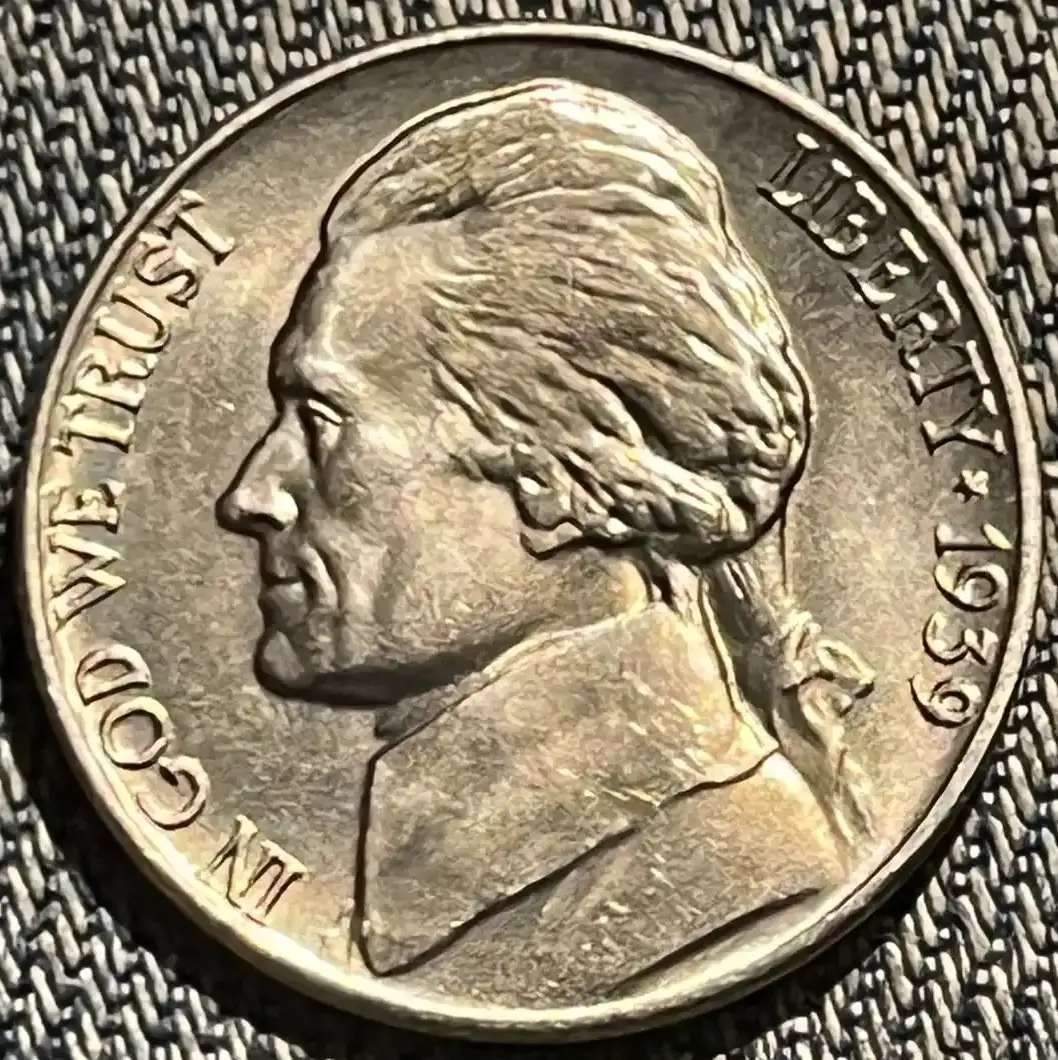
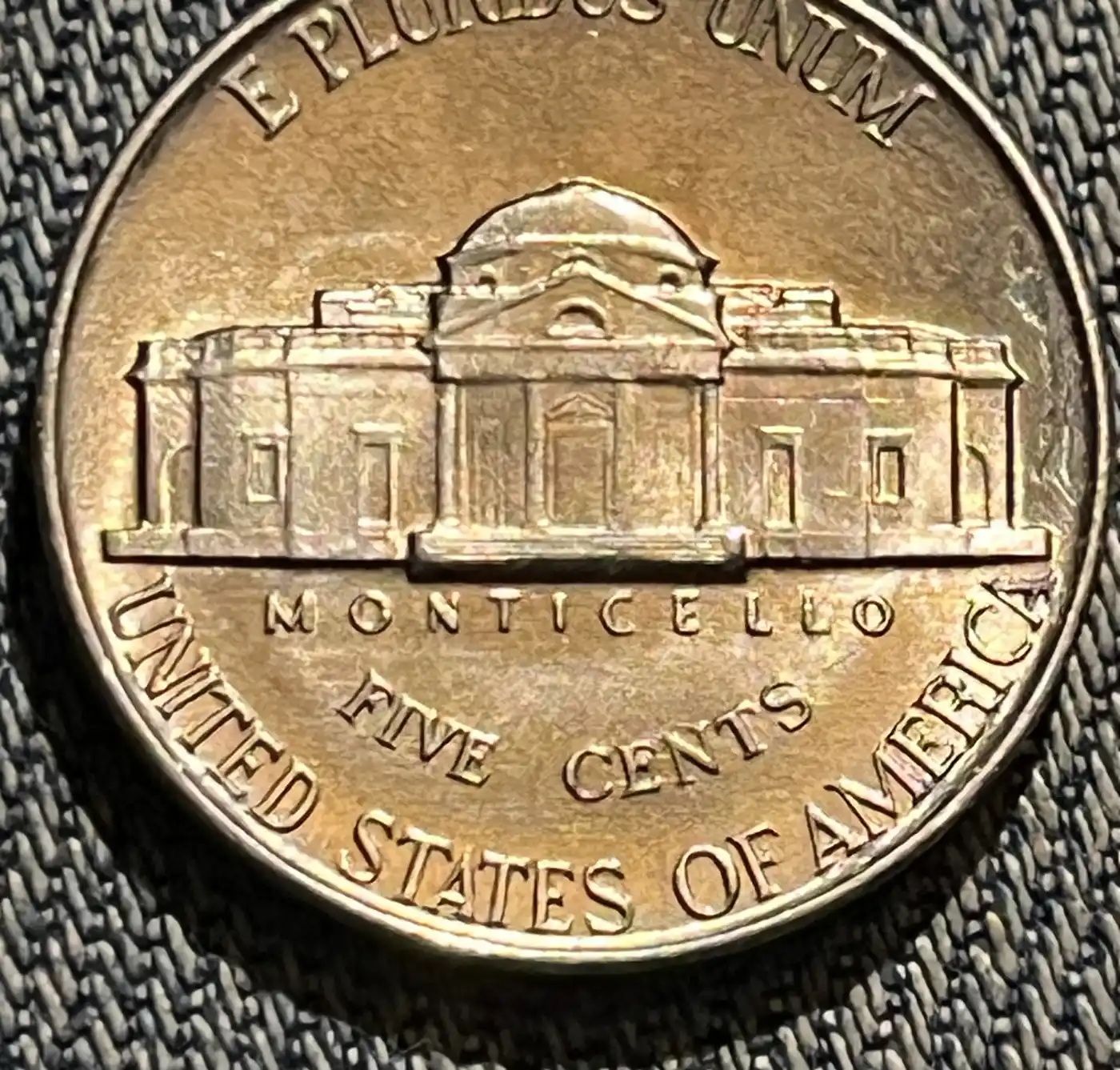
It appears like you nave a normal 1939 nickel - and No, I do not see FS on it either.
|
|
Bedrock of the Community
United States
78077 Posts |
|
|
Bedrock of the Community
United States
10601 Posts |
Quote:
Is This A Reverse 1940? And Fs? Yes, it is the reverse of 1940 and No FS.  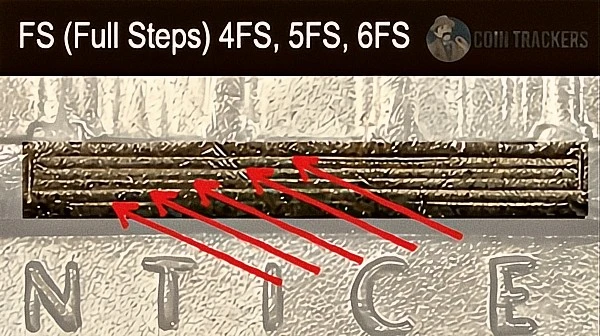 |
|
Pillar of the Community
United States
3340 Posts |
I'm looking at this on my tiny phone screen, but based on the S in Pluribus, I'd say that this is rev of '38. When I can see the photo on a larger screen, I may change my mind.
"Nummi rari mira sunt, si sumptus ferre potes." - Christophorus filius Scotiae
|
|
Moderator
United States
194256 Posts |
I agree with the above commenters.
|
|
Pillar of the Community
United States
3340 Posts |
I was able to view the reverse of this nickel on my larger computer screen and still think this is rev of '38. Below is a comparison of the S in Pluribus - note that the 1938 reverse has no serif on the S while the 1940 has a notable serif. 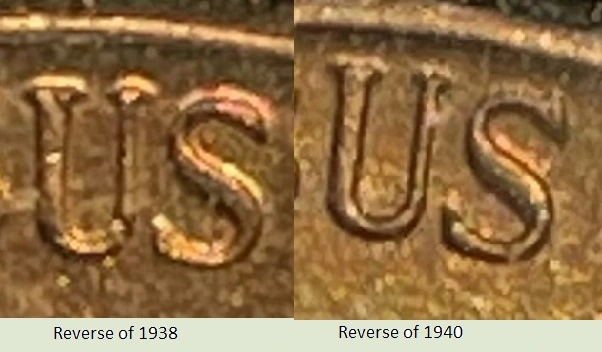 "Nummi rari mira sunt, si sumptus ferre potes." - Christophorus filius Scotiae
|
|
Pillar of the Community
 United States
6868 Posts |
That was my immediate sense as well, Bump. Those wavy steps look like a Reverse of 1938. As you pointed out, the S in Pluribus is the easiest way to distinguish '38 vs. '40 if the steps aren't completely intact.
|
|
Moderator
United States
104890 Posts |
ok, so what does the 'normal' 1939 reverse look like then?
|
|
Pillar of the Community
United States
6868 Posts |
Approximately two-thirds of 1939 Philadelphia nickels are the Reverse of 1940. The remaining one-third were struck with the Reverse of 1938. The proportion is approximate and varies with the source you consult. Both reverses are widely available, although the Reverse of 1940 is—by intentional redesign—way more likely to be struck with Full Steps.
|
|
Bedrock of the Community
United States
10601 Posts |
Quote:
Yes, it is the reverse of 1940 and No FS. Definitley 38 reverse - I was totaly wrong with my wording........ |
|
Bedrock of the Community
United States
10601 Posts |
Found this article on the internet - lots of great info in this........ Author only known as "HOOT"........ "The Jefferson nickels of 1939 come with a single obverse and two distinctly different reverses: the reverse of 1938 and 1940. The two distinct reverses herald the Type 1 and Type 2 Jefferson nickels. Dies for each were employed simultaneously during 1939 and at all three Mints. The reverse of 1938 has daintier lettering and weaker definition of Monticello, particularly the door and window details, as well as the steps. The steps of 1938 are wobbly, i.e., not straight and with uneven depths of the incuse lines that define the steps, thus many "bridge points" between the steps. The 1938 reverse in this issue is a challenge to find, especially with full steps. There were six steps in the design and imago, but it appears that all six were virtually never translated to a die in 1938 or 1939, reverse of '38. The straight, razor sharp, and deeply incuse steps of 1940 were initially employed in 1939, but by calling them steps of 1940, it makes a clear distinction. In 1939, Philadelphia coined most of the reverse of 1940 pieces, sending most of the reverse of 1938 dies to San Francisco and about equal numbers of '38 and '40 reverses to Denver that year. Thus, the reverse of 1940 is most common on Philadelphia issues, the least common on San Francisco issues, and about equally common on Denver issues. Bern Nagengast, author of The Jefferson nickel Analyst, estimates that Philadelphia coined about 10% rev. of '38 pieces, while Denver coined about 50% and San Francisco coined about 75%. I believe that one's perception of the relative distributions can be affected by geography. (I've collected a lot of these coins from the intermountain west and western states.) My own collecting experience tells me that Nagengast's distribution is about right, but I'd say the Denver issues were about 60% rev of 38 and 40% rev of 1940, at least for surviving mint state coins. I've not found any reference material that indicates the number of dies manufactured for each facility and a breakdown of their reverse types, and frankly, I doubt this is known." |
|
Pillar of the Community
United States
3340 Posts |
Interesting article, @Marv. Thanks!
I've endeavored to collect MS examples of each 1939 reverse variety and found that the r40 D-mint coins are somewhat less common in my area. Still on my list to find is a 1939 / r40 proof.
"Nummi rari mira sunt, si sumptus ferre potes." - Christophorus filius Scotiae
|
| |
Replies: 12 / Views: 422 |
|









 Posted 03/15/2026 11:11 pm





