The first part of this story can be found here: 1975-76 American Revolution Bicentennial - Success - We Have Coin! - P 1 I highly encourage those who have not already done so, to review the first part of this story at the link provided.Independence Hall - Philadelphia, PA - Site of the Adoption of the Declaration of Independence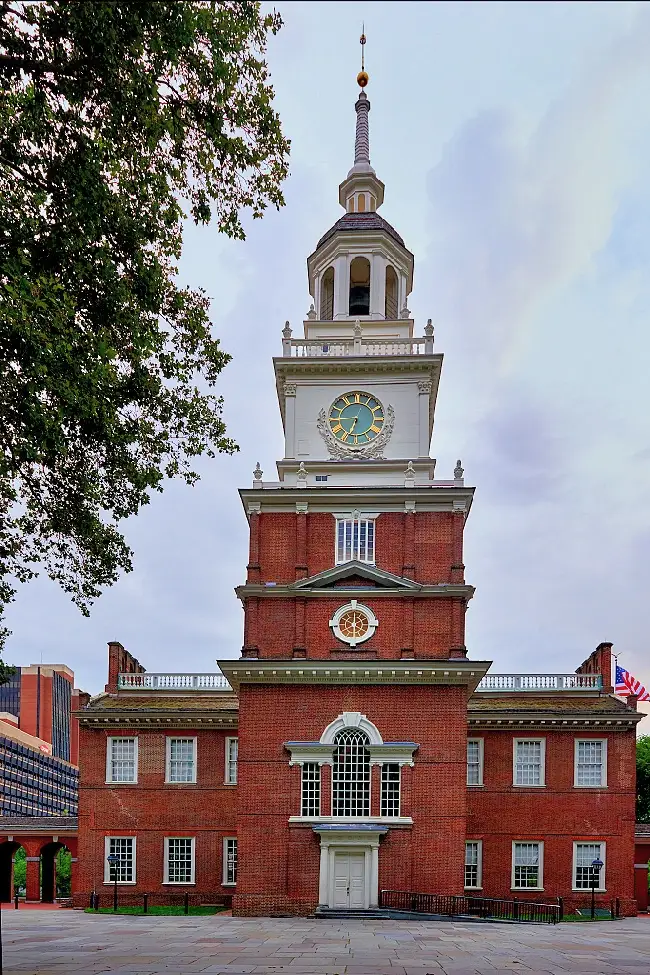 (Image Source: Library of Congress, Prints and Photographs Division. Public Domain.)
 In September 1973, the Senate disagreed with the House amendments to its Bicentennial coinage bill - it had worked hard on crafting it! - and requested a conference with the House of Representatives ("House"). The House agreed to the conference request; conferees from each chamber were designated for participation.
Understanding the time-sensitive nature of the bill, the conferees met in September and reached a consensus by the end of the month.
Their agreement:
1. The Dollar, Half-Dollar and Quarter-Dollar coins issued for circulation on or after July 4, 1975 were to feature a Bicentennial-themed design on their reverse. The designs were to continue until the Secretary of the Treasury called for a change.
2. The three denominations were to bear the dual "1776-1976" date on all coins issued between July 4, 1975 and January 1, 1977.
3. The Mint was authorized to use any of its facilities to produce and store Bicentennial coinage and medals.
4. Up to 60 million (45 million minimum) 40% Silver (Clad) Bicentennial coins were authorized; the coins were to be produced in Proof and Uncirculated qualities for collectors/souvenir seekers (not general circulation).
5. The Senate would recede from its disagreement with the House amendments to its original bill.
6. The Title of the bill would be changed to:
An Act to provide a new coinage design and date emblematic of the Bicentennial of the American Revolution for dollars, half dollars, and quarter dollars, to authorize the issuance of special silver coins commemorating the Bicentennial of the American Revolution, and for other purposes.The House and Senate each accepted the Conference Report and the bill, as specified in the Conference Report, was passed by each chamber. It was then sent on to the President, with US President Richard Milhous Nixon signing the bill into law on October 18, 1973. The US had its Bicentennial coinage!
Adopted US Bicentennial Designs


For other of my posts about commemorative coins and medals, including more "What If?" stories, see:
Commems Collection 



 Posted 04/08/2026 09:21 am





