| Author |
 Replies: 8 / Views: 3,097 Replies: 8 / Views: 3,097 |
|
|
Pillar of the Community
United States
673 Posts |
|
|
|
|
Valued Member
United States
183 Posts |
Ok. The Book of Breen :D states 4853 is listed as "Rare".
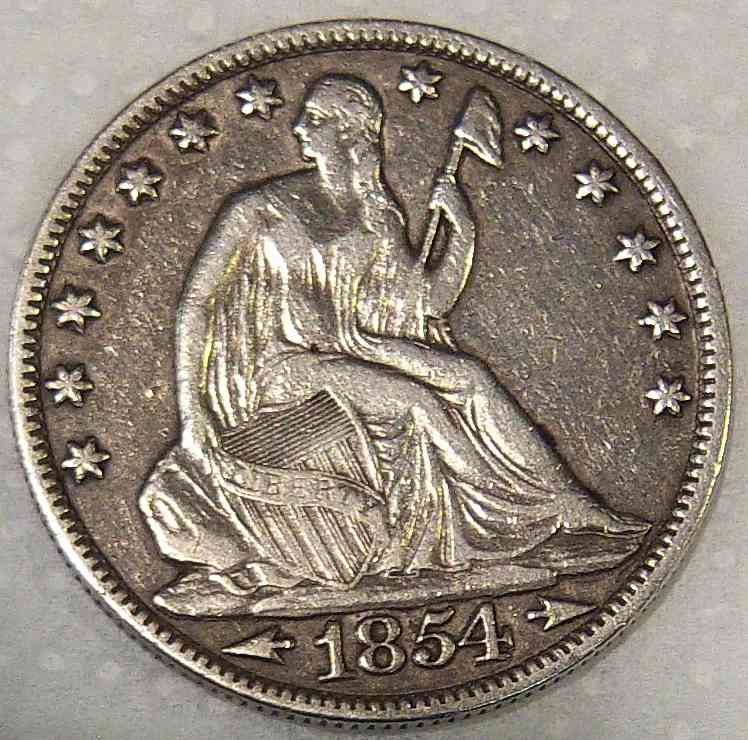
Nice coin by the way. Hope some seated half experts have a look at this as well.
Bruce
|
|
Bedrock of the Community
United States
12437 Posts |
|
|
Pillar of the Community
 United States
673 Posts |
Thanks biokemist6, that site will come in handy.
|
|
Pillar of the Community
United States
2540 Posts |
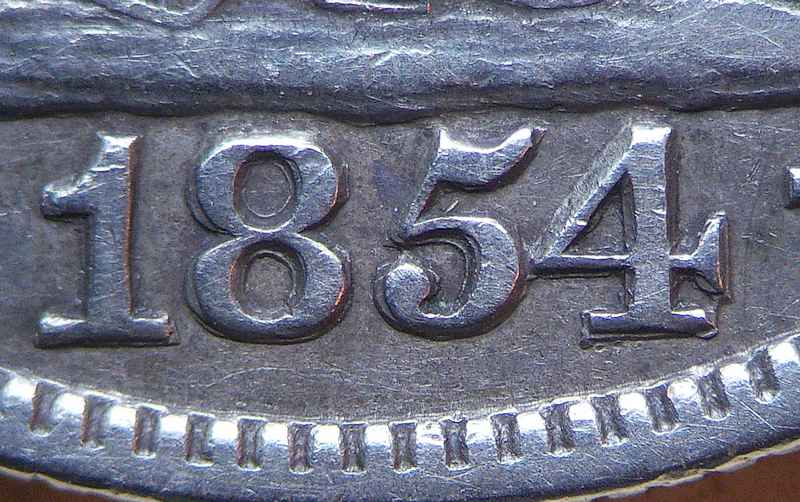
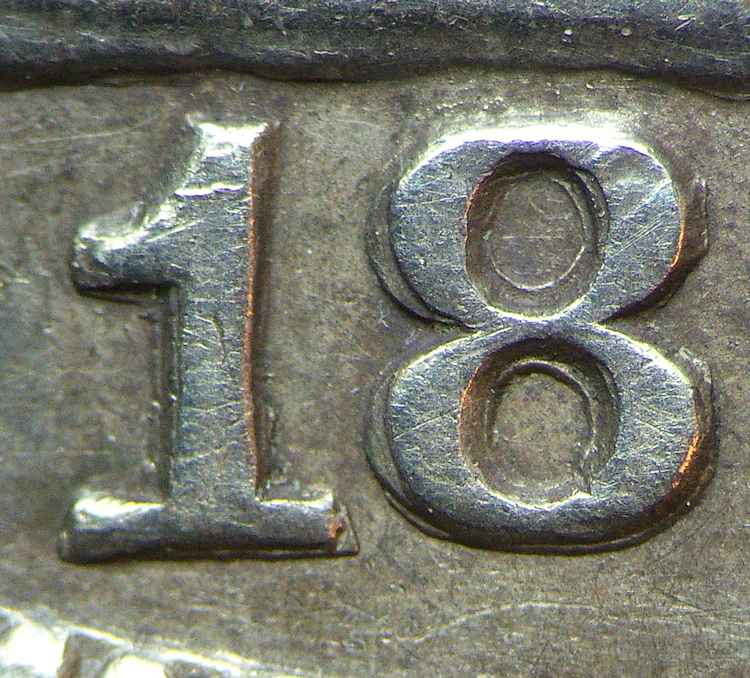
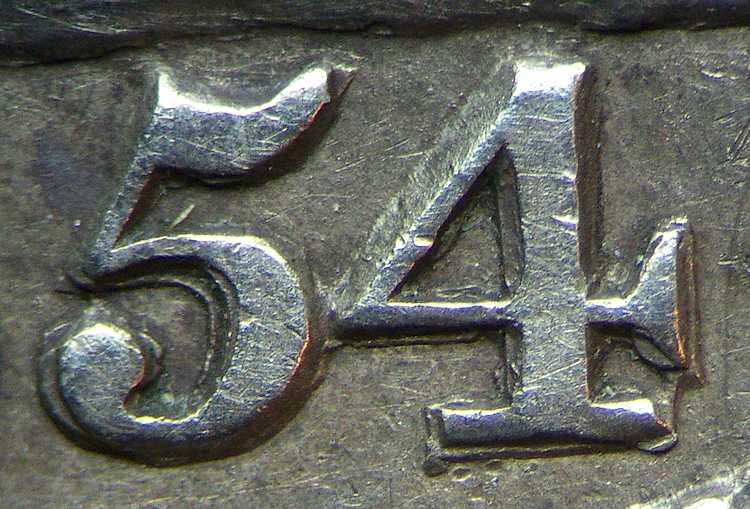
That appears to be Longacre doubling, not a repunched date.
Note: the 'effect' is around the entire digit of the date, so not doubled.
Also, as an aside, don't get too excited when you see Breen call something rare.
Walter Breen was never shy about making up details or facts when he needed them.
|
|
Valued Member
United States
183 Posts |
LOL, oh well so much for Breen, eh? I've seen a lot of entries where he states something is "rare" or "extremely rare". Can you elaborate a bit, TreasHunt?
Bruce
|
|
Bedrock of the Community
United States
17884 Posts |
It does have the look of Longacre doubling, but I've never seen Longacre doubling on a date before. And Longacre doubling is typically something present on the Master die and working hub that is transfered tot he working die. The date is punched into the die later. I supposed it could be possible though.
One thing else you have to rmember abut the Breen book, although it was published in the 1980's much of it was WRITTEN in the early 1950's an much of the knowledge an experienc we have toay about what varieties are rare an which are not was not availale to Breen when he wrote it. A great deal of his commentary on rarity had to come from his personal experience.
Dr Sheldon did the same thing when he listed the rarities of the Large cent varieties in Early American Cents an then later in Penny Whimsy. Since them many of the cents he listed as being of very high rarity are known today to be much more common, but no one criticises him for his "inflated" rarity estimates.
|
|
Pillar of the Community
United States
673 Posts |
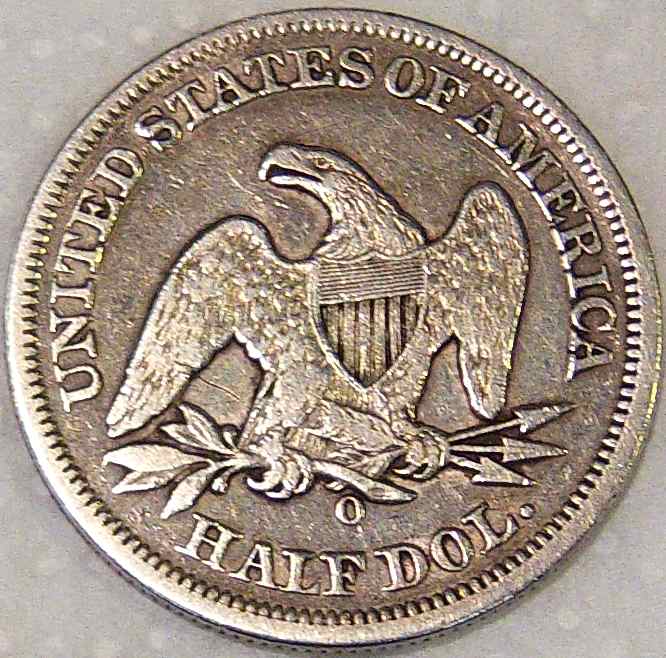
I agree That the date has some Longacre doubling, but the serifs of the 1 , 5, and 4 all have areas that do not appear the same as the end serifs. The ball of the 5 has two different cuts on the outside, and the doubling on the ball on the inside is only on the inside, not all the way around (as in the Longacre "halo" effect). Above that on the 5 the tip where the bottom loop meets the straight part of the serif has different cuts, one to a point, the next rounded to a point and then the actual 5 with a rounded tip. The 1 has a small nub to the left of the bottom and a angled cut to the right of the bottom, neither matching the size or cut of the final 1. I am just trying to make sure the attribution is correct, take another look and tell me if these anomalies can still be attributed to Longacre doubling. After writing all of the above, I copied the below section from the site mentioned above, describing how the "halo" can happen. The reason I question this for some of the apparent re-punching on this particular coin is that the "halo" does not always match the serifs of the final punches. I have not seen enough of this type of thing on these coins to make an accurate judgment , I thank all of you for your input !  "Halos" can often be found around the stars, the digits in the date, and to a lesser extent, the central device of many head dies for this date. We believe that the cause for this "halo" phenomenon can be traced back to the construction of a temporary master die for this date as well as 1853 and 1855. In each year, a regular working die was converted to a temporary master die by repunching all stars and heavily impressing a date and arrows heads. All elements were impressed with such force that the bases of the punches transferred to the die as halos around each element. These halos transferred from the master die to the working hub and subsequent working dies and coins such that early die state coins of all early dies show the phenomenon. We believe this accounts for the doubling and tripling of features (e.g. date and stars) found on many dies of this date. "Halos" can often be found around the stars, the digits in the date, and to a lesser extent, the central device of many head dies for this date. We believe that the cause for this "halo" phenomenon can be traced back to the construction of a temporary master die for this date as well as 1853 and 1855. In each year, a regular working die was converted to a temporary master die by repunching all stars and heavily impressing a date and arrows heads. All elements were impressed with such force that the bases of the punches transferred to the die as halos around each element. These halos transferred from the master die to the working hub and subsequent working dies and coins such that early die state coins of all early dies show the phenomenon. We believe this accounts for the doubling and tripling of features (e.g. date and stars) found on many dies of this date. |
|
Pillar of the Community
United States
2540 Posts |
In a simplistic sense: Breen never met a fact that he couldn't make up.
If he wasn't sure, he simply made up the info.
In his early days, when he wrote under Wayte Raymond, he was pretty accurate.
In fact, Raymond paid for Breen to spend time at the National Archives to research many things. This was the first time that anyone did this.
|
| |
Replies: 8 / Views: 3,097 |
|








 Posted 07/06/2009 10:57 am





