| Author |
 Replies: 7 / Views: 1,536 Replies: 7 / Views: 1,536 |
|
|
Pillar of the Community
Philippines
1156 Posts |
Hi, know of another way to remove dried tar? this is a 1884 British North Borneo Copper. Been submerged in tropical rivers for some time. Have practiced on removing similar coatings previously (on expendable coins) with no success. The coating is black and like dried Tar, feels like plastic to the touch, is unaffected with detergent & toothbrush scrubbing, Any oil immersion will not take it off, Vinegar just erodes the exposed copper at same rate as the tar- no good appearance at the end. and trying to flake it off with a knife isn't possible. It's like a tough skin stuck on the copper surface  . the blue coloration is sky reflection. suggestions welcome. thank you  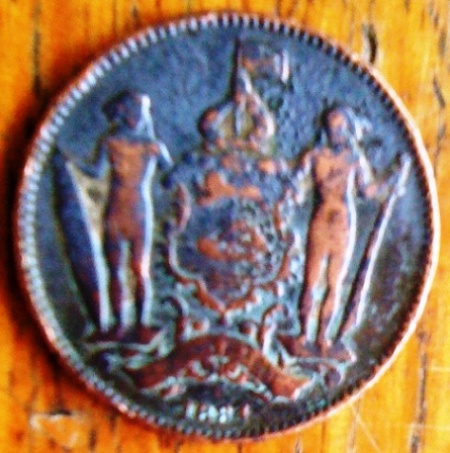 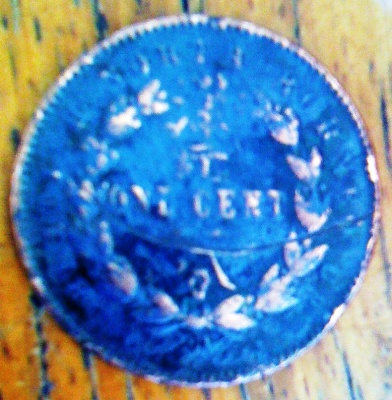 |
|
|
|
Moderator
 Australia
16961 Posts |
Quote:
...1884 British North Borneo Copper. Been submerged in tropical rivers for some time... It might look like "tar", but it isn't - not unless the rivers in your locality flow over a deposit of pitch or crude oil. If you've tried all of the suggestions made in your earlier thread, then I suspect it's corrosion, probably mixed up with the river sediment. These coins are made of pure copper, which corrodes readily in fresh water. In seawater, it corrodes much faster. A strong alkali solution, such as ammonium hydroxide (also known as ammonia) or sodium hydroxide (also known as "lye" or "caustic soda"), will remove corrosion byproducts and leave the copper metal alone. It'll also remove all traces of patina, so your coin will definitely look "cleaned" once you're done, but I don't think there's any way to avoid that at this point. If the corrosion is deep you'll be left with a pitted surface. Ammonia has been known to make a corroded coin looking bright orange, so if it's available, I'd try the lye first. Don't say "infinitely" when you mean "very"; otherwise, you'll have no word left when you want to talk about something really infinite. - C. S. Lewis
|
|
Pillar of the Community
 Philippines
1156 Posts |
thanks sap! will try the lye, a.k.a. sodium hydroxide or caustic soda,never tried it before, swish it around while under observation. Will post pics later |
|
Bedrock of the Community
United States
12437 Posts |
If you use sodium hydroxide, make sure you wear eye protection and rubber gloves- it can be quite nasty  |
|
Pillar of the Community
Philippines
1156 Posts |
thanks biokemist6! I appreciate the warning sign you just posted
|
|
Pillar of the Community
United States
2669 Posts |
ugh.. yes, definitely eye and hand protection! Also, add the lye to the water, not the other way around. Have a large bottle of white vinegar handy to neutralize any lye spills. Good luck and let us know how it goes  |
|
Bedrock of the Community
United States
20753 Posts |
Don't know if you've tried the cheapest, easiest methods yet but have you tried making a paste of baking soda and water and just rubbing that coin? The safer and also easier additional methods to attept are solutions such as Tomato or Lemon Juice, warm Vinegar or any other acidic juices including Coke.
|
|
Pillar of the Community
Philippines
1156 Posts |
thank you! yes will post pic of "after" just have to go to store first to buy the "caustic soda" |
| |
Replies: 7 / Views: 1,536 |
|







 Posted 11/24/2009 7:50 pm





